
Types of Solar Connectors Explained: MC4, MC3, T4, & Amphenol Compared

AI Overview
Types of solar connectors in PV are mainly connector families like MC4, H4, T4, and TS4, plus a few non-PV ecosystems used at other system boundaries. For distributors, “type” matters because compatibility, locking mechanism, and outdoor sealing determine reliability. The “best” choice depends on the mate pair, correct crimp/termination, and your required connector voltage rating and connector current rating for the PV design.
Key Takeaways
Types of solar connectors aren’t interchangeable: compatibility depends on connector geometry, locking mechanism, and terminal design.
MC4 families (MC4, MC4-compatible, TS4/H4/T4) dominate PV string connections, but cross-matching must follow documented pairing guidance.
Outdoor performance is a system outcome: prioritize weatherproof solar connectors, UV resistant connectors, and correct sealing/termination.
Procurement should verify more than “plug fit”: confirm connector compatibility, connector voltage rating, and connector current rating from datasheets.
Installation quality is part of connector quality: wrong crimping tool or wire gauge can increase contact resistance and failure risk.
Non-PV connector ecosystems (e.g., battery-side connectors) should be selected by system boundary, not convenience.
Reduce risk with an acceptance workflow: sample inspection, mating/lock checks, and termination verification before large orders.

Introduction
If you’re sourcing for PV projects, the phrase types of solar connectors can be dangerously oversimplified—many listings imply “same shape, same performance.” In the field, mismatches show up as partial mating, weak locking, or moisture ingress, which can increase contact resistance and cause premature failures.
Here’s the direct answer: types of solar connectors for PV are usually connector families (most commonly MC4, plus variants like H4, T4, and TS4) with a few non-PV connector ecosystems used at other system boundaries. For distributors and procurement teams, the decisive factors are connector compatibility, correct crimp/termination, outdoor sealing (weatherproof solar connectors), and verified connector voltage rating/connector current rating for your PV design.
In this guide, you’ll learn how to interpret the main types of solar connectors, compare MC4 vs H4 vs TS4/T4, and use a procurement-ready checklist to buy the right connector family with fewer surprises.
Types of solar connectors—what “type” really means in PV procurement
When people search types of solar connectors, they often want a simple list. In procurement, “type” should mean the connector family: housing design + contact/terminal system + sealing interface + locking behavior.
Connector compatibility in PV is the ability of two connector halves to mate fully, lock securely, maintain low contact resistance, and preserve weatherproofing under operating conditions.
For distributors, this matters because outdoor reliability depends on internal contact geometry and the way sealing is achieved when cables are correctly terminated—not just whether the connector halves “look similar.”
The 3 procurement questions to ask before comparing brands
Start with these questions every time your team evaluates types of solar connectors:
Will it lock reliably (not just “it plugs in”)?
Is it rated for PV conditions (DC voltage/current + outdoor exposure)?
Can installers terminate it correctly (approved wire gauge and crimp/termination method)?
If you can’t answer one of these, you’re buying risk—not a connector “type.”
Quick takeaway: In types of solar connectors, compatibility and termination are the highest-leverage variables.

Types of solar connectors in PV strings—the main families distributors see
Most PV module-to-string wiring uses PV-panel solar panel connectors designed for outdoor installations and repeated service disconnects. The most common types of solar connectors in PV stringing include:
MC4 compatible connectors
H4 solar connectors
T4 solar connectors
TS4 solar connectors
snap-in solar connectors (sometimes used in specific harness/workflows)
a limited set of non-PV connector ecosystems used at other boundaries (e.g., battery-side)
These families are typically expected to support weatherproof solar connectors performance goals such as moisture resistance, UV aging resistance, and stable electrical contact during outdoor cycling.
Why procurement should align connectors with cable assemblies
Even if a connector is “compatible in theory,” real projects depend on cable prep and installation discipline:
correct conductor size
jacket prep and stripping length
sealing interface integrity
installer tooling consistency
So evaluation must be based on the connector plus your cable assembly workflow, not connector halves alone.
Small summary: In types of solar connectors, the system (connector + cable + termination) is what performs.
MC4 vs H4 vs T4 vs TS4—types of solar connectors compared for reliability
MC4 vs H4 vs TS4/T4 are often treated as interchangeable, but they differ in housing, sealing interfaces, and locking behavior. That’s why MC4-compatible should be treated as “same ecosystem intent,” not universal interchangeability.
Comparison table
Connector family (“type”) | Common use | Compatibility reality | Outdoor durability expectation | Procurement focus |
MC4 connectors | PV module/string | Usually paired within MC4 family guidance | Positioned as weatherproof solar connectors | Datasheet + termination alignment |
MC4 compatible connectors | Cost-optimized sourcing | Verify mating/locking per approved pairing | Depends on seal quality + termination method | Require samples + acceptance tests |
H4 solar connectors | PV installations using H4 ecosystem | Often best within H4 mate pairings | UV/water suitability claims by product | Wire gauge + crimp tool compatibility |
T4 solar connectors | PV modules/strings using T4 ecosystem | Cross-mating may be unreliable | Outdoor-rated per product lines | Locking + sealing verification |
TS4 solar connectors | PV systems using TS4 ecosystem | Typically best within TS4 pairings | Outdoor-suitable positioning | Locking behavior + termination checks |
snap-in solar connectors | Some harness/workflows | Varies widely | Must verify PV outdoor claims | Confirm outdoor suitability & safety listing |
Bottom line: For types of solar connectors, cross-family pairing is an exception you validate, not a default you assume.

Locking mechanism + sealing are the two “make-or-break” features
In PV, two failure drivers show up repeatedly:
Loose/partial mating → higher contact resistance
Moisture ingress → corrosion risk over time
So when you evaluate types of solar connectors, prioritize evidence of:
a clearly described locking mechanism
sealing approach (seal/O-ring and how it engages)
UV/outdoor suitability claims supported by documentation
Closing note: If a supplier can’t explain sealing + locking at datasheet level, treat it as an engineering gap.
Are solar connectors waterproof? A procurement checklist for outdoor sealing
The question “are solar connectors waterproof?” is common—but procurement needs an evidence-based approach.
What to request from suppliers
For types of solar connectors intended for outdoor PV, request:
outdoor suitability evidence (including any IP rating concept or equivalent test summary)
operating temperature range
UV/ozone resistance statements
termination/seal compatibility details (what cable prep is required)
Fast scoring questions for supplier meetings
Ask:
Which exact connector pair is validated for PV mating?
What wire gauge and insulation thickness does the terminal system support?
What acceptance tests do you recommend for distributors (mating/lock + sample inspection)?
One-line summary: Waterproofing in types of solar connectors is a system outcome—connector + seal + correct termination must align.

Connector voltage/current rating—how procurement should verify electrical compatibility
Searchers include connector voltage rating and connector current rating because those numbers matter. But in procurement, ratings matter only when tied to your installation context.
How to evaluate ratings without ambiguity
For types of solar connectors, verify:
the rating is DC-relevant for PV applications
stated conditions match expected temperature and installation method
your planned current doesn’t exceed the limiting component in the chain (connector, cable, termination)
If documentation is vague, request test/standard references. When in doubt, require clearer datasheet evidence or test summaries.

Crimping, wire gauge, and termination—where types of solar connectors succeed or fail
If types of solar connectors are the hardware, termination is the performance.
Common procurement-to-install mismatches
Common failure drivers include:
incorrect wire gauge for the connector terminal system
using the wrong crimping tool
cable jacket trimming mistakes that affect sealing
inconsistent strip length leading to partial contact
These issues raise contact resistance and can trigger heat and intermittent failure.
Definition: Crimping is mechanical compression of the terminal onto the conductor; when done correctly, it creates reliable electrical contact and supports the connector’s sealing design.
Numbered process—how to check solar connector compatibility
Use this workflow before large volume rollout:
Confirm the intended connector pair (e.g., MC4-to-MC4, TS4-to-TS4) per datasheet pairing guidance.
Match cable spec: conductor material, insulation type, and jacket thickness.
Verify wire gauge range supported by the approved terminal/crimp system.
Confirm crimp tooling: require approved tool list and demonstrate correct crimps on samples.
Perform mating + locking checks (visual + tactile + documented sample test).
Inspect sealing integrity after assembly (seals seated correctly; no jacket damage).
Run a small field-representative sample with your installer team before rollout.
Closing micro-summary: In types of solar connectors, compatibility is proven through repeatable termination and verified locking—not “plug fit.”
Non-PV ecosystems—Anderson Powerpole and snap-in connectors
Some connector ecosystems (e.g., Anderson Powerpole connectors) are common on battery and off-grid DC sides. Procurement should use them within system boundaries—not as universal PV replacements.
When Anderson Powerpole may fit
It may be suitable for battery/inverter-side wiring where your design and safety requirements are validated. But it’s not automatically interchangeable with PV panel solar panel connectors.
When snap-in solar connectors may fit
snap-in solar connectors can work in certain harness builds, but procurement should confirm:
PV string outdoor suitability (UV, sealing, locking)
safety expectations and termination quality
that the connectors are intended for outdoor PV string use
One-line wrap: Treat types of solar connectors as “by where they live in the system,” not only by appearance.
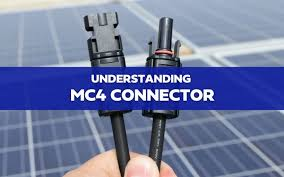
How to choose which types of solar connectors to stock
Your goal isn’t to find the single “best connector type.” It’s to reduce returns, callbacks, and installation variability while staying competitive.
A procurement decision matrix for stocking
Prioritize types of solar connectors that score high on:
documented connector compatibility (approved mate pairs)
weatherproof solar connectors claims with evidence (UV/water/seal)
clear wire gauge + crimp tooling guidance
traceable certifications and stable lead times
predictable installer adoption (training and repeatability)
IEC 62852 / EN 62852 (PV connector safety requirements)Type: Standards/technical documentation Use: Cite connector safety and test expectations for “connector types.”
IEC 60529 (IP Code / Ingress Protection)Type: Standards Use: Support how to interpret “waterproof/weatherproof” via IP concepts.
NEC Article 690 (Solar PV installations—wiring context)Type: Regulatory reference Use: Provide system-level wiring safety context for PV components.
Conclusion
The most reliable procurement approach to types of solar connectors is to treat “type” as an engineering system: connector family pairing, the locking mechanism, outdoor sealing behavior, and verified connector voltage rating/connector current rating. MC4 and PV ecosystems like H4/T4/TS4 are widely used, but cross-family pairing should be validated with samples and termination acceptance—not assumed from appearance.
Your next step: build a small acceptance workflow (mating/lock check + crimp/tool validation + sealing inspection) for each connector family you plan to stock. This process prevents most “it fit in the box” failures before they reach the jobsite.
Frequently Asked Questions Answers about Solar Connectors
Q1: What are the main types of solar connectors used on PV panels?
Most PV systems use connector families designed for series string connections. The most common types of solar connectors include MC4 connectors and variants such as H4, T4, and TS4. Some harness workflows may use snap-in connectors, but PV string use requires outdoor suitability verification.
Q2: Are MC4 connectors compatible with H4 or TS4?
MC4 compatibility with H4/TS4 is not guaranteed by appearance. Types of solar connectors may physically mate yet still fail in locking, sealing, or contact geometry. For procurement, require datasheet-defined mate pairing and confirm with sample mating/lock tests and termination compatibility.
Q3: Are solar connectors waterproof, or just weather-resistant?
In PV, connectors are usually marketed as outdoor-ready, but “waterproof” claims should be supported by documentation such as IP rating concepts, UV/ozone resistance, and sealing design. For types of solar connectors, real water resistance is system-level: connector + seal + correct termination.
Q4: How do I choose the right solar connector for my wire gauge?
Use the connector’s specified wire gauge range and approved terminal/crimp system from the datasheet. Picking “MC4-like” size by guess can lead to incorrect contact geometry or insufficient conductor compression. For types of solar connectors, match wire gauge + tool + termination method.
Q5: What should distributors test before stocking MC4-compatible connectors?
Test sample mating quality (full lock engagement), sealing integrity, and retention after typical handling. Then validate installer termination performance: correct crimp, correct strip length, and seal-area inspection. This acceptance approach reduces compatibility risk per connector “type.”
Q6: Can I use snap-in solar connectors for rooftop PV strings?
Snap-in connectors may work in some harness or DIY workflows, but rooftop PV strings typically require connectors engineered for outdoor sealing, locking, and PV-grade safety expectations. When evaluating types of solar connectors, confirm product suitability and termination/sealing design for long-term exposure.
Q7: Do Anderson Powerpole connectors belong in PV string wiring?
Anderson Powerpole connectors are common on battery and off-grid DC sides, not as universal PV string replacements. Procurement should use connector ecosystems within system boundaries. If mixing is considered, validate safety expectations, outdoor/termination requirements, and electrical performance for your specific PV wiring design.


Comments