
How to Use an Ampacity Calculator (Step-by-Step Guide for Accurate Wire Sizing)

Introduction
Choosing the correct wire size is critical for electrical safety, performance, and code compliance. Undersized conductors can overheat, while oversized cables increase unnecessary costs.
Instead of manually interpreting complex NEC tables, an ampacity calculator allows you to determine the safe current-carrying capacity of a wire in seconds.
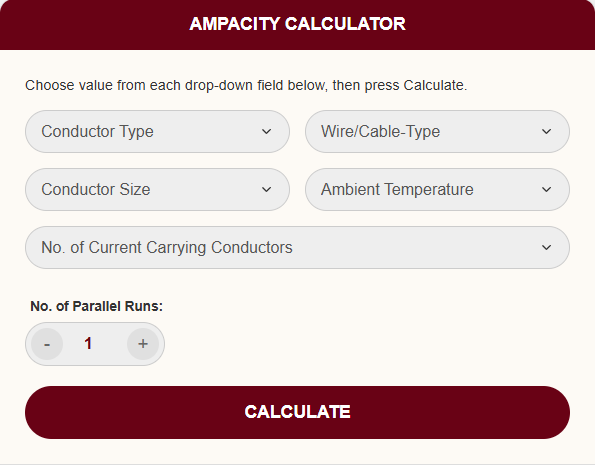
This guide will show you exactly how to use an ampacity calculator step by step using a real interface, so you can get accurate, code-compliant results quickly.
In real-world electrical installations, ampacity is not just a theoretical value—it directly affects system safety, efficiency, and long-term reliability. Electrical engineers and installers rely on accurate ampacity calculations to prevent overheating, insulation failure, and costly downtime.
Because modern installations often involve complex conditions such as elevated temperatures, bundled conductors, and continuous loads, using a calculator has become the standard approach in both residential and industrial applications.
What Is an Ampacity Calculator?
An ampacity calculator is a tool used to determine the maximum electrical current a conductor can safely carry under specific conditions.
Unlike static ampacity charts, a calculator dynamically adjusts for:
Ambient temperature
Number of conductors
Insulation type
Installation conditions
This ensures results are far more accurate than manual lookup tables.
Quick Steps Summary
Select conductor type
Choose wire/cable type
Pick conductor size (AWG)
Enter ambient temperature
Input number of conductors
Set parallel runs
Click calculate
Step-by-Step: How to Use the Ampacity Calculator
Below is a practical walkthrough based on a real calculator interface.
Step 1: Select Conductor Type
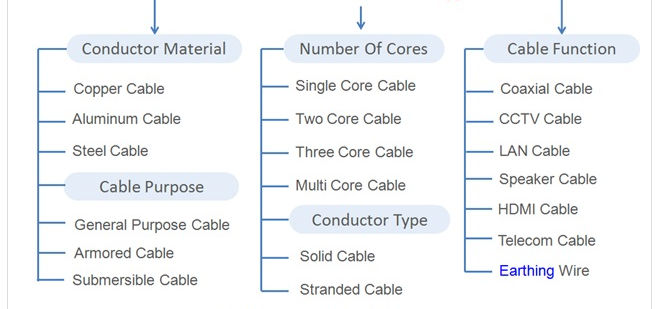
Choose between:
Copper – higher conductivity, lower resistance (recommended)
Aluminum – lower cost but reduced ampacity
For most applications, copper provides better performance and reliability.
Step 2: Choose Wire/Cable Type
Select insulation type such as:
THHN
THWN
XHHW
Why it matters:
Different insulation types have different temperature ratings (60°C / 75°C / 90°C), which directly impact allowable current.
Step 3: Select Conductor Size (AWG)
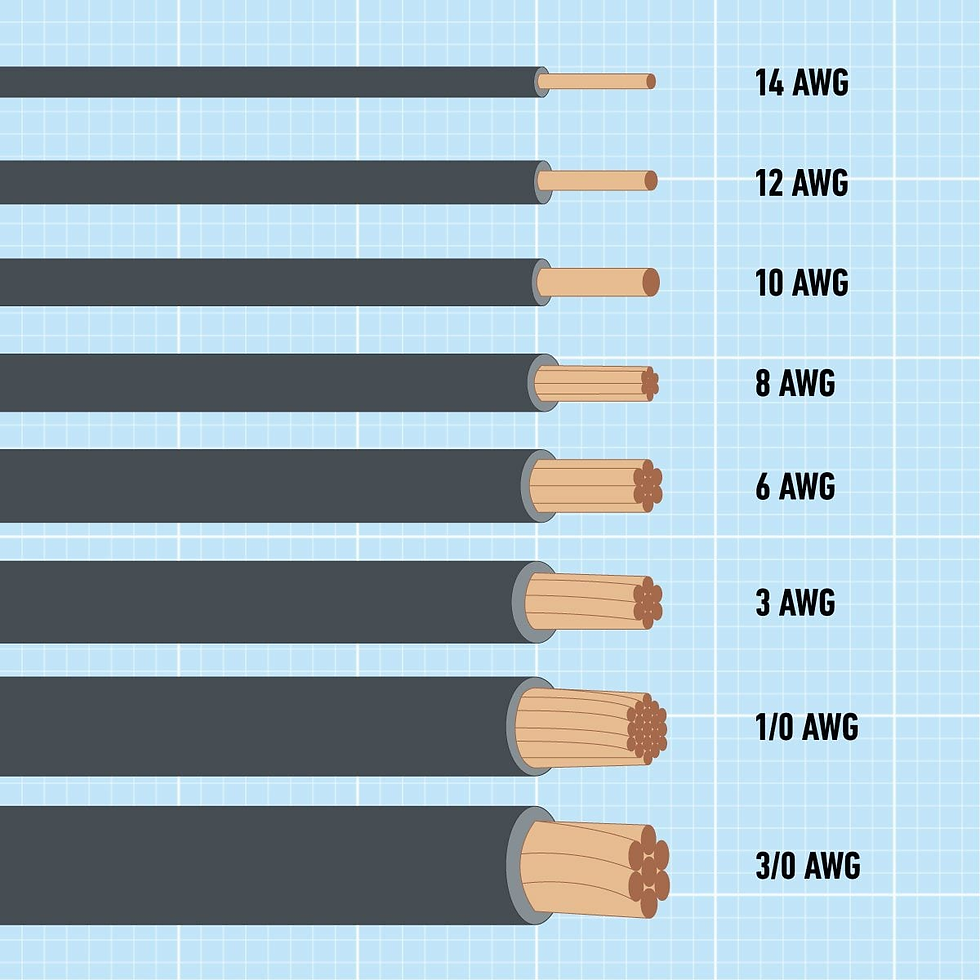
Choose the wire gauge based on your application.
Typical examples:
10 AWG → ~30A
8 AWG → ~40–55A
6 AWG → ~55–75A
Rule: The smaller the AWG number, the higher the current capacity.
Step 4: Set Ambient Temperature
Input the surrounding temperature where the cable operates.
Critical impact:
Higher temperature → reduced heat dissipation
Lower allowable ampacity
Ignoring temperature correction is one of the most common electrical design mistakes.
Step 5: Input Number of Current Carrying Conductors
Enter how many conductors carry current.
Key concept:
More conductors = more heat buildup
NEC requires derating when bundled
Example:
3 conductors → no derating
6+ conductors → reduced ampacity
Step 6: Set Number of Parallel Runs
This feature is especially important for high-current systems.
What it does:
Distributes load across multiple conductors
Increases total system capacity
Common in industrial and large-scale installations.
Step 7: Click CALCULATE
The calculator will instantly provide:
Base ampacity
Adjusted ampacity (after all corrections)
The final value already includes all NEC correction factors—no manual calculation needed.
Example: Real Ampacity Calculation
Inputs:
Conductor Type: Copper
Wire Type: THHN
Size: 8 AWG
Temperature: 40°C
Conductors: 6
Parallel Runs: 1
Result:
Base ampacity ≈ 55A
Adjusted ampacity ≈ 35–40A
This clearly shows why relying on charts alone can lead to unsafe assumptions.
When Should You Use an Ampacity Calculator?
Ampacity values are typically based on standards such as the National Electrical Code (NEC), which defines allowable current levels under controlled conditions. However, real installations rarely match these ideal conditions, which is why correction factors must be applied.
A well-designed ampacity calculator integrates these NEC correction rules automatically, reducing the risk of human error and improving calculation consistency.
You should use an ampacity calculator in the following scenarios:
Installing new electrical circuits
Designing solar (PV) systems
Sizing EV charger wiring
Industrial cable planning
Upgrading existing wiring
If temperature or conductor count varies, a calculator is essential.
Ampacity Calculator vs NEC Ampacity Chart
Method | Accuracy | Speed | Error Risk |
NEC Chart | Medium | Slow | High |
Calculator | High | Fast | Low |
NEC tables provide baseline values, but real-world conditions require adjustments.
Using Ampacity Calculator for Solar Cable Sizing
This is especially important in photovoltaic (PV) systems.
Solar installations often involve:
High rooftop temperatures
Continuous current flow
Multiple bundled cables
Important rule:
Solar systems typically require 125% continuous load adjustment, plus temperature derating.
Using an ampacity calculator ensures safe and compliant PV system design.
Key Factors That Affect Ampacity
Several variables influence ampacity:
Ambient temperature
Conductor material
Insulation rating
Installation method
Number of conductors
Even small changes can significantly impact current capacity.
Common Mistakes to Avoid
Ignoring temperature correction
Overlooking conductor bundling
Selecting wrong insulation type
Not considering parallel runs
Relying on guesswork instead of calculation
These mistakes can lead to overheating, failure, or code violations.
How Accurate Is an Ampacity Calculator?
When properly used, an ampacity calculator is highly reliable because it:
Applies NEC-based correction factors
Eliminates manual calculation errors
Adjusts dynamically to real-world conditions
In most cases, it is more accurate than manual table lookup.
FAQS
What is ampacity in simple terms?
Ampacity is the maximum current a wire can safely carry without overheating.
Is an ampacity calculator NEC compliant?
Yes, most calculators are based on NEC standards and include required correction factors.
Can I use an ampacity calculator for solar systems?
Yes, especially for PV systems where temperature and continuous load are critical.
What happens if ampacity is exceeded?
Exceeding ampacity can cause overheating, insulation damage, and potential fire hazards.
Do I still need ampacity charts?
Charts provide baseline values, but calculators are more practical for real-world applications.


Comments