
How Temperature Rating Affects 4 AWG Ampacity (60°C vs 75°C vs 90°C)

In the world of electrical engineering and contracting, selecting the correct wire size is not merely a matter of physical thickness—it is a calculation of heat, resistance, and safety margins.
The 4 AWG ampacity temperature rating is one of the most frequently referenced specifications in both residential and industrial applications. Whether you are wiring a high-speed EV charger or a sub-panel for a workshop, understanding how temperature ratings dictate current capacity is the difference between a high-performance system and a potential fire hazard.
Quick Answer: What is the Ampacity of 4 AWG Wire?
According to the National Electrical Code (NEC) Table 310.16, the ampacity of 4 AWG copper wire depends directly on its insulation temperature rating:
60°C (140°F): 70 Amps
75°C (167°F): 85 Amps
90°C (194°F): 95 Amps
Note: In most residential and commercial applications, the ampacity is limited by the temperature rating of the terminals (breakers and lugs), which are typically rated at 75°C. Therefore, even if you use 90°C rated wire (like THHN), you often must calculate your load based on the 85 Amp (75°C) column.
Key Takeaways for Electrical Professionals
Insulation is the Limit: The copper doesn’t melt at these temperatures; the insulation does. The temperature rating refers to the maximum heat the insulation can withstand before degrading.
The Weakest Link Rule: You must size your circuit based on the lowest temperature-rated component in the entire run (usually the circuit breaker terminals).
Material Matters: Copper 4 AWG wire has significantly higher ampacity than 4 AWG aluminum wire.
Derating is Mandatory: High ambient temperatures or bundling more than three conductors in a conduit will lower these base ampacity numbers.
The Science of Ampacity: Why Temperature Ratings Matter
Ampacity—short for "ampere capacity"—is the maximum current, in amperes, that a conductor can carry continuously under the conditions of use without exceeding its temperature rating.
Understanding Insulation vs. Conductor Temperature
Electricity flowing through a wire encounters resistance, which generates heat through a process known as Joule heating. While the copper conductor itself can withstand several hundred degrees Celsius, the plastic or thermoplastic insulation (such as PVC or XLPE) surrounding it has a much lower failure point. If the insulation reaches its thermal limit, it can become brittle, melt, or ignite.
The Joule Heating Effect and Thermal Dissipation
The formula for heat generated is P=I*I*R. This means that as you double the current (I), you quadruple the heat. The temperature rating of a 4 AWG wire tells us how much heat the assembly can safely dissipate into the surrounding environment without the insulation failing. This is why a wire rated for 90°C can carry more current than one rated for 60°C—it is simply allowed to run "hotter."

4 AWG Ampacity Breakdown: 60°C, 75°C, and 90°C Explained
To choose the right cable, you must understand the common insulation types associated with each temperature column in the NEC charts.
60°C Rating (The "Standard" Baseline)
Common Cable Types: NM-B (Romex), UF-B (Underground Feeder).
4 AWG Ampacity: 70 Amps.
Context: While the internal conductors of NM-B might be rated for 90°C, the NEC requires that the ampacity be limited to the 60°C column for these specific cable types to account for the heat-trapping nature of the outer jacket and thermal insulation in walls.
75°C Rating (The Industrial Sweet Spot)
Common Cable Types: THW, THWN, USE.
4 AWG Ampacity: 85 Amps.
Context: This is the most common rating used for commercial and industrial terminations. Most modern circuit breakers and distribution panels are rated for 75°C.
90°C Rating (High-Performance Applications)
Common Cable Types: THHN, THWN-2, XHHW-2.
4 AWG Ampacity: 95 Amps.
Context: While 95 Amps is the "book value," this column is primarily used for derating calculations. If you are running wires through a hot attic or bundling many wires together, you start your "math" at 95 Amps, allowing you more headroom before the wire is effectively forced down into a lower ampacity category.
Critical NEC Rules: The "Terminal Temperature" Limitation
A common mistake is assuming that because you bought 90°C-rated 4 AWG THHN wire, you can safely run 95 Amps through it.
NEC Article 110.14(C) states that the temperature rating of the wire must be coordinated with the temperature rating of the equipment terminals. If your 100-amp breaker is rated for 75°C terminals (which almost all are), you must use the 75°C ampacity column for 4 AWG, which is 85 Amps.
Using a 90°C ampacity on a 75°C terminal would cause heat to transfer from the wire into the breaker, potentially causing nuisance tripping or internal damage to the breaker’s thermal trip mechanism.
Environmental Factors Affecting 4 AWG Ampacity
The figures provided in the NEC tables assume an "ambient temperature" of 30°C (86°F) and no more than three current-carrying conductors in a raceway. If your environment differs, you must apply adjustment factors.
Ambient Temperature Derating
If 4 AWG wire is installed in a location where the temperature exceeds 30°C (e.g., a roof-mounted solar conduit or a hot industrial ceiling), the wire's ability to dissipate heat is reduced.
Example: At an ambient temperature of 50°C (122°F), a 90°C rated 4 AWG wire must be derated by a factor of 0.82.
Calculation: 95A x 0.82 = 77.9A.
Multiple Conductors in a Raceway (Bundling)
When multiple wires are packed into a single conduit, they "share" their heat. The NEC requires a reduction in ampacity if more than three current-carrying conductors are bundled.
4–6 conductors: 80% adjustment.
7–9 conductors: 70% adjustment.
Comparison: 4 AWG Copper vs. Aluminum Ampacity
Material choice significantly impacts the 4 gauge wire ampacity. Aluminum is less conductive than copper and has higher resistance.
Temperature Rating | 4 AWG Copper Ampacity | 4 AWG Aluminum Ampacity |
60°C | 70 Amps | 55 Amps |
75°C | 85 Amps | 65 Amps |
90°C | 95 Amps | 75 Amps |
Pro Tip: To achieve the same 85-amp capacity of a 75°C 4 AWG copper wire using aluminum, you would typically need to step up to 2 AWG aluminum.
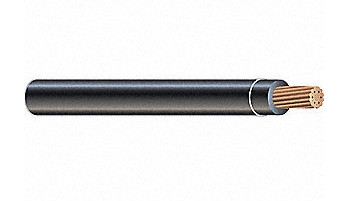
Real-World Applications for 4 AWG Wire
EV Charger Installation (Level 2)
Many high-end EV chargers (like the Tesla Wall Connector or Ford Charge Station Pro) can draw 48 Amps continuously. Per the 125% continuous load rule, you need a circuit rated for at least 60 Amps. While 6 AWG is sometimes sufficient, 4 AWG is frequently used for longer runs to minimize voltage drop and heat buildup, ensuring the charger operates at peak efficiency.
Sub-panel Feeders and Residential Service
4 AWG is a staple for feeding 60A to 80A sub-panels in detached garages or home additions. When using 4 AWG copper in the 75°C column (85 Amps), it provides a robust solution for a medium-sized sub-panel capable of running several power tools, lighting, and HVAC equipment simultaneously.
Conclusion: Ensuring Safety Through Proper Rating Alignment
Understanding the 4 AWG ampacity temperature rating is about more than just reading a chart; it’s about understanding the environment and the hardware connected to the wire. For most projects, the 75°C rating (85 Amps) serves as your functional limit due to terminal equipment constraints.
Always remember to:
Check your terminal temperature ratings.
Account for ambient heat and conduit fill.
Consult the latest NEC (or local equivalent) before final installation.
By respecting these thermal limits, you ensure an electrical system that is not only code-compliant but also optimized for longevity and safety.
FAQ
1. How many amps can 4 AWG wire handle at 60°C?
At a 60°C rating, 4 AWG copper wire can handle up to 70 Amps. This is typically the rating used for NM-B (Romex) or UF-B cables.
2. Can I use 4 AWG wire for a 100-amp service?
Generally, no. For a 100-amp service, 4 AWG copper is rated for a maximum of 95 Amps at 90°C, and most terminals will limit you to 85 Amps. For a true 100-amp residential service, you typically need 3 AWG copper or 1 AWG aluminum (subject to NEC 310.12).
3. Does temperature rating affect wire ampacity?
Yes, significantly. Higher insulation temperature ratings (like 90°C) allow the wire to carry more current because the insulation can withstand the higher heat generated by the increased flow of electrons.
4. Why is THHN 4 AWG rated for 95 amps?
THHN stands for Thermoplastic High Heat-resistant Nylon-coated. This specific insulation chemistry allows the wire to operate safely at 90°C, which correlates to a 95-amp capacity in the NEC tables.
5. Can I use the 90°C ampacity for 4 AWG wire in a breaker calculation?
Only if the entire system—including the breaker, the lugs, and the equipment it connects to—is also rated for 90°C. Since most breakers are rated for 75°C, you must usually use the 85-amp limit for your final calculation.


Comments