
How to Identify Male and Female MC4 Connectors?

Identifying male and female MC4 connectors seems straightforward, but their design often causes confusion. Many people assume that the connector with a protruding outer housing is male and the one with a recessed housing is female. In reality, this is the opposite of how MC4 connector gender is determined.
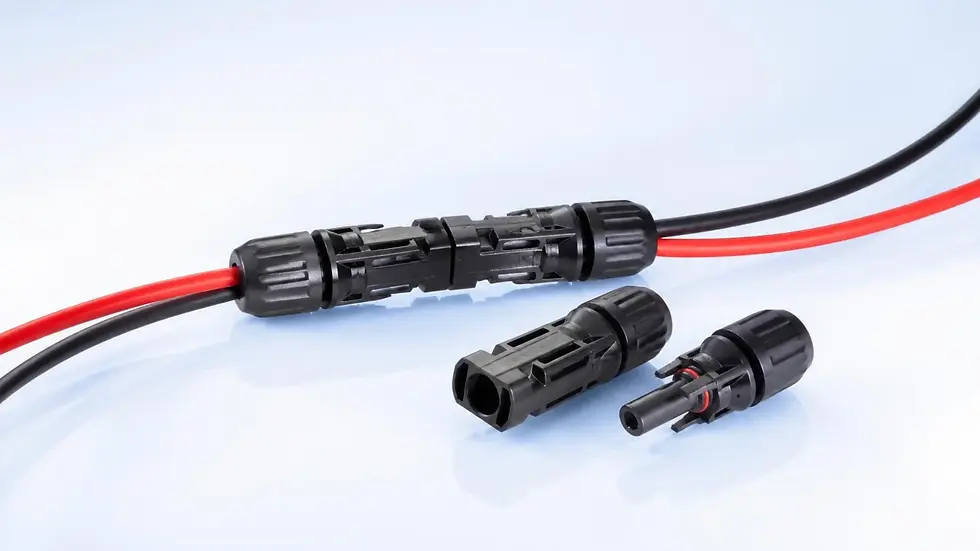
The most reliable way to identify an MC4 connector is to look at its internal metal contact:
Male MC4 connector: Has a solid metal pin.
Female MC4 connector: Has a hollow metal socket.
Understanding this distinction is important when installing solar panels, assembling PV cables, replacing connectors, or connecting photovoltaic systems to inverters and portable power stations.
This guide explains how to identify male and female MC4 connectors, understand their structural differences, check connector polarity, and avoid common wiring mistakes.

1. What Is the Difference Between Male and Female MC4 Connectors?
The primary difference between male and female MC4 connectors is the design of their internal metal contacts, not the shape of their outer plastic housings.
Male MC4 Connector (Solid Metal Pin)
A male MC4 connector contains a solid metal pin that extends from the cable contact assembly.
Key characteristics:
Contains a solid, projecting metal pin.
The outer plastic housing is typically recessed.
Also referred to as a plug.
Designed to mate with a compatible female socket.
Female MC4 Connector (Hollow Metal Socket)
A female MC4 connector contains a hollow metal socket designed to receive the solid pin of a compatible male connector.
Key characteristics:
Contains a hollow metal socket.
The outer plastic housing typically has a protruding shape.
Also referred to as a socket.
Designed to receive a compatible male pin.
Male vs. Female MC4 Connectors: Quick Comparison
Feature | Male MC4 Connector | Female MC4 Connector |
Metal contact | Solid pin | Hollow socket |
Connector name | Plug | Socket |
Outer housing | Typically recessed | Typically protruding |
Mating function | Enters the female socket | Receives the male pin |
Gender identification | Based on the metal pin | Based on the metal socket |
The easiest way to remember: Solid Pin = Male; Hollow Socket = Female.
Do not identify connector gender based only on the external plastic housing. Its shape can be misleading because the housing and internal contact have opposite gender characteristics.
2. How to Identify Male and Female MC4 Connectors Step by Step
You do not need to disassemble a connector to identify its gender in most cases. A visual inspection of the contact area is usually sufficient.
Step 1: Look at the Metal Contact
Examine the front opening of the MC4 connector.
A connector with a solid metal pin is male. A connector with a hollow metal socket is female.
Avoid relying on the overall length or shape of the plastic housing because different connector designs may look slightly different.
Step 2: Check the Outer Housing Shape
The outer housing can provide an additional visual clue:
A typically recessed housing corresponds to a male contact.
A typically protruding housing corresponds to a female contact.
However, this is only a secondary identification method. Always use the internal metal contact as the determining feature.
Step 3: Check the Connector Markings
Some connectors have polarity markings, such as:
Positive (+)
Negative (-)
POS
NEG
These markings help identify electrical polarity, but they do not determine whether the connector is male or female.
For replacement connectors, also check the manufacturer's model number and technical documentation.
3. Why Do MC4 Male and Female Connectors Look Opposite to Their Names?
This is one of the most common sources of confusion when identifying MC4 connectors.
In everyday objects, people often identify male and female components based on their external shapes. For MC4 connectors, however, the naming convention refers to the internal electrical contact.
Consider the following:
The male connector has a solid metal pin, but its plastic housing is generally recessed.
The female connector has a hollow metal socket, but its plastic housing generally protrudes.
This design allows the two compatible connector housings to fit together while their internal metal contacts establish the electrical connection.
The locking mechanism also helps prevent accidental separation after the connectors are properly mated.
The important distinction is that connector gender describes the metal contact, not the outer housing or locking mechanism.
4. Are Male and Female MC4 Connectors the Same as Positive and Negative?
No. Male and female describe the physical design of the metal contacts, while positive and negative describe electrical polarity.
These are two different characteristics.
For a typical solar panel output connection using the common MC4 configuration:
Solar Panel Output | Connector Gender | Metal Contact | Polarity |
Positive (+) | Female | Hollow socket | Positive |
Negative (-) | Male | Solid pin | Negative |
This is the common arrangement found on many photovoltaic module output leads.
However, you should not assume that every male connector is negative or every female connector is positive.
Why Does Connector Gender Change Depending on the Device Side?
Consider a solar panel connected to a portable power station.
The solar panel produces electricity and sends it to the power station. For the positive electrical path to connect correctly, the two mating connectors must have opposite physical genders while maintaining positive-to-positive polarity.
For example:
Connection Side | Positive (+) | Negative (-) |
Solar panel output | Female | Male |
Example power station input | Male | Female |
This illustrates why connector gender alone cannot establish electrical polarity.
The exact connector arrangement on an inverter, portable power station, extension cable, or other equipment must be checked against its manufacturer's wiring diagram and polarity markings.
5. How to Identify the Positive and Negative Polarity of MC4 Connectors
Identifying the connector gender is only one part of checking a solar cable. Before making an electrical connection, you also need to verify its positive and negative polarity.

Check the Cable Color
Many solar cable assemblies use the following color convention:
Red: Positive (+)
Black: Negative (-)
Color coding is useful during installation, but it should not be treated as definitive proof of polarity. Replacement cables and customized assemblies may use different colors.
Check the Polarity Markings
Look for the + and - symbols on the connector housing, cable, solar panel junction box, or equipment input.
Use the markings provided by the component manufacturer and compare them with the system wiring diagram.
Use a Multimeter to Verify Polarity
A properly rated digital multimeter can help confirm the actual DC polarity.
The general verification process is:
Use a multimeter with an appropriate DC voltage range and rating for the PV circuit.
Follow the equipment manufacturer's safe test procedure.
Connect the test leads to the designated measurement points without touching exposed conductive parts.
Read the voltage display.
Check the polarity indicated by the reading against the expected wiring configuration.
A positive voltage reading indicates that the probes are aligned with the meter's positive and negative reference connections. A negative sign indicates the opposite probe orientation.
Only qualified personnel should perform electrical measurements on PV circuits using appropriately rated equipment and suitable protective procedures. Solar modules can generate DC voltage whenever they receive light.
Important: Do not rely on connector gender or cable color alone to confirm polarity. Verify the electrical connection before connecting the PV circuit to an inverter, battery system, or other equipment.
6. Common Mistakes When Identifying MC4 Connectors
Even experienced installers can encounter confusion when working with replacement connectors or unfamiliar cable assemblies.
Here are five mistakes to avoid.
Mistake 1: Identifying Gender by the Plastic Housing
A protruding plastic housing does not necessarily mean the connector is male.
The correct identification method is to examine the internal metal contact.
Mistake 2: Assuming Male Always Means Negative
On many solar panel output leads, the male connector is used on the negative conductor. However, the corresponding input connection on another device may use a male contact for positive polarity.
Connector gender and electrical polarity must be evaluated separately.
Mistake 3: Relying Only on Cable Colors
Red and black are common polarity conventions, but customized cable assemblies may use different colors.
Always verify the cable markings and electrical polarity.
Mistake 4: Assuming Any Male and Female Connectors Are Compatible
Two connectors may appear to fit together but still be unsuitable for electrical use.
Connector compatibility depends on more than physical gender. Check the manufacturer, product series, contact design, electrical ratings, cable size, assembly requirements, and approved mating combinations.
Do not assume that connectors from different manufacturers can be safely cross-mated simply because one is male and the other is female.
Mistake 5: Ignoring the Locking Mechanism
After connecting compatible MC4 connectors, make sure the locking mechanism is fully engaged.
Follow the manufacturer's assembly instructions and perform the specified engagement check. A connection that is not properly locked may separate or develop an unreliable connection.
7. How to Choose the Correct Male and Female MC4 Connectors for Solar Cables
When purchasing MC4 connectors or solar cable assemblies, buyers should check more than connector gender.
The following factors help ensure the selected components are suitable for the intended PV application.
Connector Compatibility
Confirm that the male and female connectors are approved for use together.
Do not assume that all products marketed as MC4-compatible have interchangeable mating interfaces.
Cable Size
Check whether the connector is designed for the conductor cross-section and cable outer diameter being used.
For example, a connector intended for a particular 4 mm² or 6 mm² solar cable should not automatically be used with a different cable construction or diameter.
Voltage and Current Ratings
Verify that the connector's electrical ratings meet the requirements of the photovoltaic system.
The relevant ratings should be checked against the module, inverter, system design, and manufacturer's technical documentation.
Environmental Protection
For outdoor PV installations, confirm the connector's specified protection and operating conditions.
Check the manufacturer's requirements for sealing components, cable diameter, assembly, and installation environment.
Assembly Tools and Instructions
Use the specified crimping tools, dies, and assembly procedures.
Incorrect crimping or incomplete connector assembly can compromise the electrical and mechanical performance of the connection.
For OEM solar cable assemblies, buyers should define the connector model, contact gender, cable specification, polarity, and required testing or inspection documentation before production.
Frequently Asked Questions
Is a Male MC4 Connector the One with the Pin?
Yes. A male MC4 connector has a solid metal pin. It is also called a plug and is designed to mate with a compatible female socket.
Is a Female MC4 Connector the One with the Hole?
Yes. A female MC4 connector has a hollow metal socket that receives the solid pin of a compatible male connector.
Does the Protruding MC4 Housing Mean It Is Male?
No. The typically protruding plastic housing corresponds to the female connector, which contains a hollow metal socket. The male connector usually has a recessed housing and a solid pin.
Is the Positive MC4 Connector Male or Female?
For many standard solar panel output connections, the positive lead uses a female socket and the negative lead uses a male pin. However, the arrangement on the receiving equipment can be the opposite. Always verify the polarity markings and manufacturer's wiring diagram.
Can I Connect Any Male MC4 Connector to Any Female MC4 Connector?
No. Matching physical gender does not guarantee electrical or mechanical compatibility. Check the manufacturer's approved connector combinations, product specifications, and installation requirements before mating connectors.
How Do I Know If an MC4 Connector Is Fully Connected?
Follow the manufacturer's instructions. Compatible connectors should engage their locking mechanism fully. Some designs produce an audible click when correctly mated. Perform the specified engagement check rather than relying on sound alone.
Can MC4 Connectors Be Disconnected Under Load?
No. Do not disconnect PV connectors while current is flowing. Interrupt the circuit using the appropriate equipment and follow the manufacturer's isolation and disconnection procedures. PV modules can generate dangerous DC voltage in sunlight.
Conclusion
Identifying male and female MC4 connectors is simple once you understand the difference between the metal contact and the outer plastic housing.
A solid metal pin identifies a male connector, while a hollow metal socket identifies a female connector. The plastic housing can look opposite to what its contact gender suggests, which is why it should not be used as the primary identification method.
However, identifying connector gender is not the same as verifying electrical polarity or compatibility. Before connecting solar cables, check the positive and negative markings, confirm the approved mating components, and follow the manufacturer's assembly instructions.
For solar installers, distributors, and PV cable buyers, understanding these distinctions helps reduce wiring mistakes and supports more reliable photovoltaic cable connections.


Comments