
How to Choose the Right MC4 Connectors for Solar PV Cables: A Complete Procurement Guide

Updated: 3 days ago
Choosing the right MC4 connectors is an important part of solar photovoltaic (PV) cable procurement. Although MC4 connectors may look similar across different manufacturers, their electrical ratings, cable compatibility, sealing structures, certification requirements, and mating specifications can vary significantly.
For solar cable importers, distributors, EPC contractors, installers, and photovoltaic equipment manufacturers, selecting the wrong connector can create installation problems, unreliable electrical connections, and unnecessary maintenance costs.
A professional purchasing decision should consider more than connector price. Buyers need to evaluate the connector manufacturer, cable cross-section, cable outer diameter, system voltage, current rating, environmental protection, certification, and compatibility with existing PV equipment.
This guide explains how to select suitable MC4 connectors for solar PV cables and what B2B buyers should verify before placing an order.
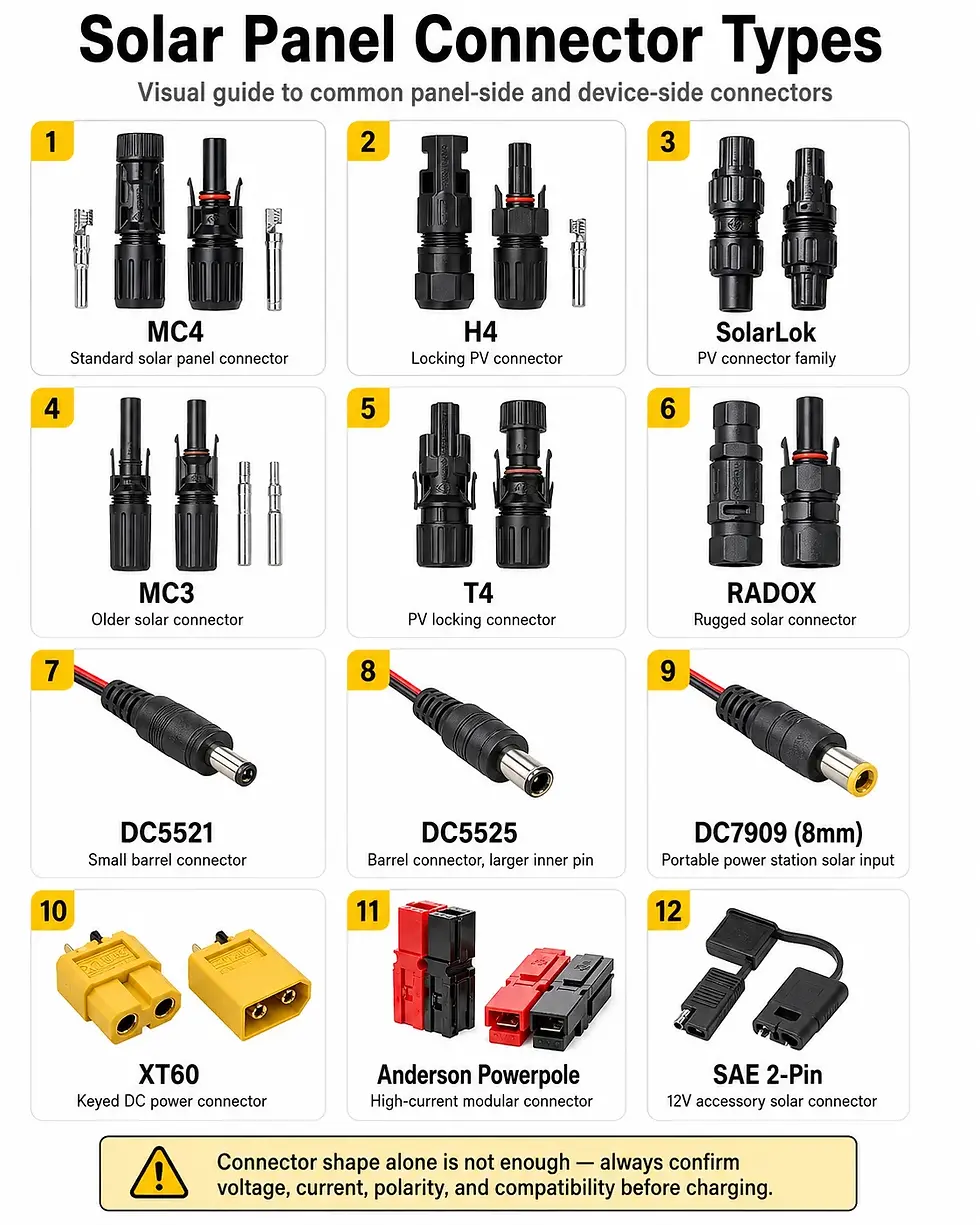
1. Identify the Correct MC4 Connector Type
The first step is identifying the connector type required by the photovoltaic system.
MC4 is a widely recognized photovoltaic connector format originally developed by Stäubli. It uses male and female connector components to establish secure electrical connections between solar modules, extension cables, and other PV system components.
Common purchasing options include:
Original Stäubli MC4 connectors.
Original Stäubli MC4-Evo 2 connectors.
Other independently manufactured photovoltaic connectors using similar connection formats.
Preassembled PV extension cables with factory-installed connectors.
These products should not automatically be treated as interchangeable.
For example, Stäubli Original MC4 and MC4-Evo 2 belong to its established photovoltaic connector portfolio. Other manufacturers may advertise products as MC4-compatible, but physical compatibility does not establish approved electrical or mechanical compatibility.
According to Stäubli, photovoltaic connectors from different manufacturers should not be cross-mated unless the specific combination is explicitly approved under the applicable requirements. IEC 62852 and UL 6703 address photovoltaic connector safety and testing, but certification of an individual connector does not automatically approve its connection with another manufacturer's product.
Therefore, buyers should identify the connector manufacturer and exact model installed on the solar modules before ordering replacement or extension connectors.
2. Match the Connector with the Solar Cable Size
Cable compatibility is one of the most important technical considerations when purchasing MC4 connectors.
Solar PV cables are commonly available in 2.5 mm², 4 mm², 6 mm², and 10 mm² conductor sizes, although availability depends on the cable and connector product range.
The connector's contact system must match the conductor cross-section specified by its manufacturer.

Common Solar Cable Sizes and Connector Selection
Solar Cable Size | Approximate AWG | Purchasing Consideration |
2.5 mm² | 14 AWG | Confirm the connector's approved conductor range |
4 mm² | 12 AWG | Common PV string cable configuration |
6 mm² | 10 AWG | Common choice for PV wiring and extension cables |
10 mm² | 8 AWG | Requires a connector specifically approved for this conductor size |
These are approximate AWG equivalents. Actual conductor dimensions and connector compatibility must be checked against the manufacturer's technical documentation.
A connector designed for 4 mm² or 6 mm² cable should not automatically be used with 10 mm² cable.
An incorrect contact size or crimp configuration can result in poor electrical contact, excessive contact resistance, overheating, or mechanical failure.
When requesting a quotation, specify the exact cable cross-section rather than simply asking for standard MC4 connectors.
3. Check the Solar Cable Outer Diameter
Conductor cross-section is not the only measurement that determines connector compatibility.
The overall outside diameter of the insulated solar cable is equally important because the connector's sealing system must fit around the cable jacket.
Most MC4-style connectors use a cable gland and sealing components to provide environmental protection.
If the cable diameter is outside the approved sealing range, the connector may not achieve its specified waterproof performance.
Before purchasing, confirm:
Cable conductor cross-section.
Overall cable outer diameter.
Insulation and sheath construction.
Connector sealing insert size.
Approved cable diameter range.
For example, FRCABLE's EN 50618 H1Z2Z2-K solar cable range includes 4 mm², 6 mm², and 10 mm² options. Its published product specifications also identify different cable dimensions and XLPE cross-linked insulation and sheathing constructions.
A connector should therefore be selected using the actual FRCABLE cable datasheet and the connector manufacturer's approved cable configuration, rather than conductor size alone.
4. Select the Correct Voltage and Current Rating
Solar PV connectors must be suitable for the maximum electrical conditions of the intended installation.
Two important specifications are rated voltage and rated current.
Voltage Rating
Common photovoltaic connector applications include 1,000 V DC and 1,500 V DC systems.
For modern commercial and utility-scale PV installations, 1,500 V DC connector systems are widely used.
Buyers should verify that the connector's certified voltage rating is equal to or greater than the maximum system voltage specified by the project design.
A connector rated for 1,000 V DC should not be selected for a 1,500 V DC application.
Current Rating
The connector must also support the expected operating current under the manufacturer's specified conditions.
Current capacity can depend on:
Contact design.
Conductor cross-section.
Cable construction.
Ambient temperature.
Contact resistance.
Installation conditions.
Applicable derating requirements.
For example, Stäubli's MC4-Evo 2 product information identifies a maximum current rating of up to 69 A for specified configurations. This is not a universal rating for every MC4 connector or cable combination.
Always check the applicable product datasheet and certification conditions before purchasing.

5. Evaluate Connector Materials and Environmental Protection
Solar connectors are installed outdoors and may remain exposed to sunlight, rain, temperature changes, moisture, and other environmental conditions for many years.
Material quality and sealing performance therefore deserve careful consideration.
Contact Materials
The metal contact is responsible for transferring electrical current between the connected conductors.
Buyers should examine:
Contact material.
Surface plating.
Contact resistance.
Contact geometry.
Mechanical retention.
Long-term corrosion resistance.
Stäubli's original MC4 connector range uses its MULTILAM contact technology, which is designed to maintain stable electrical contact and low contact resistance.
FRCABLE's published Original MC4 product information specifies a maximum contact resistance of 0.25 mΩ.
Housing and Sealing
The connector housing and sealing system protect the electrical contact from external environmental exposure.
Important specifications include:
IP protection rating.
UV resistance.
Temperature range.
Moisture resistance.
Mechanical durability.
Resistance to outdoor ageing.
FRCABLE lists the following specifications for its published Original Stäubli MC4 product:
Parameter | Published Specification |
Ambient temperature | -40°C to +85°C |
Upper limiting temperature | 105°C |
Protection rating when mated | IP65/IP68 |
Protection rating when unmated | IP2X |
Maximum contact resistance | 0.25 mΩ |
These specifications should be checked against the exact connector model and its applicable technical documentation.
For projects involving coastal installations, agricultural environments, or high-temperature locations, buyers should also consider the relevant environmental qualification and connector installation requirements.
6. Verify Certifications and Product Compliance
Certification is a critical purchasing consideration, particularly for international solar projects.
Two important photovoltaic connector standards are:
IEC 62852
IEC 62852 specifies safety requirements and testing for connectors used in DC photovoltaic systems. It addresses important aspects of electrical and mechanical performance.
UL 6703
UL 6703 is a relevant North American safety standard for connectors used in photovoltaic systems.
Depending on the destination market and project requirements, buyers may also need TÜV certification or other applicable regional approvals.
When reviewing certificates, verify:
Manufacturer and product identification.
Exact connector model.
Applicable voltage and current ratings.
Certified cable cross-section and diameter range.
Approved mating configuration.
Certification number and issuing organization.
Validity and current certification status.
An important distinction is that a connector's individual certification does not mean it can be connected to any other connector advertised as MC4-compatible.
Stäubli specifically warns against cross-mating its connectors with products from other manufacturers. Buyers should follow the exact manufacturer instructions and applicable installation standards.
For EPC projects, obtaining the certificate and installation documentation before bulk purchasing can help prevent technical approval problems later.
7. Check Connector Compatibility with Existing Solar PV Equipment
Before purchasing connectors for a new project, identify the connectors already installed on the solar modules, inverters, or extension cables.
This is especially important when purchasing replacement connectors or additional cable assemblies.
A professional compatibility check should include:
Existing connector manufacturer.
Connector model or product family.
Approved mating combinations.
Cable size and outer diameter.
Electrical ratings.
Installation instructions.
Do not rely solely on the appearance of the connector or the fact that it can physically plug into another component.
For example, Stäubli publishes specific mating information for its Original MC4 and MC4-Evo 2 product families. Approved combinations should be confirmed using the manufacturer's documentation.
For large PV projects, buyers should standardize connector models across the relevant equipment and cable assemblies whenever possible.
This helps reduce procurement errors, simplifies installation, and makes future replacement and maintenance easier.
8. Evaluate the Connector Supplier Before Bulk Purchasing
Choosing a suitable connector is only part of the purchasing process. The supplier's product authenticity, technical support, documentation, and supply capability also matter.
For importers and solar cable distributors, supplier evaluation should cover several areas.
Product Authenticity
If purchasing original Stäubli connectors, confirm that the products are genuine and supplied in identifiable original packaging.
Request product identification, applicable certificates, and traceable purchasing documentation.
Do not assume that a product is original simply because its listing uses the words "MC4" or "compatible."
Technical Documentation
A professional supplier should be able to provide:
Connector datasheets.
Installation instructions.
Applicable certificates.
Approved cable specifications.
Product identification information.
Relevant testing documentation.
Supply Consistency
For repeat orders, confirm that the supplier can maintain consistent product models, packaging, and specifications.
This is particularly important for distributors and OEM customers who need predictable inventory and product identification.
Samples and Bulk Quotations
Before placing a large order, request samples where appropriate.
Evaluate the product against the technical specification and confirm that the proposed connector is suitable for the intended cable and equipment.
Compare quotations based on the complete product specification, not price alone.
A lower-priced connector may not provide the required certification, cable compatibility, or manufacturer traceability.
9. What Should Buyers Include in an MC4 Connector RFQ?
A clear request for quotation helps suppliers identify the correct product and avoid unnecessary clarification.
The following information should be included:
Purchasing Requirement | Information to Provide |
Connector brand | Stäubli original or specified manufacturer |
Connector model | Original MC4, MC4-Evo 2, or other model |
Connector type | Male, female, or complete pairs |
Cable size | 4 mm², 6 mm², 10 mm², etc. |
Cable outer diameter | Actual measured or datasheet dimension |
System voltage | 1,000 V DC, 1,500 V DC, or other requirement |
Current rating | Required project operating conditions |
Certification | IEC 62852, UL 6703, TÜV, or applicable approval |
Quantity | Number of pairs or individual connectors |
Packaging | Standard or customized packaging |
Destination | Country and delivery location |
Documentation | Datasheets, certificates, and inspection records |
For customers purchasing assembled PV extension cables, additional requirements should include cable length, conductor cross-section, polarity, connector configuration, and assembly testing.
Providing these details allows suppliers to prepare more accurate technical and commercial quotations.
10. Why Source MC4 Connectors and Solar PV Cables Together?
For distributors, solar installers, and EPC contractors, purchasing solar cables and connectors together can simplify material coordination.
Instead of sourcing cables and connectors independently, buyers can work with a supplier that understands both product specifications.
FRCABLE provides several related sourcing options:
EN 50618 H1Z2Z2-K solar cables.
IEC 62930 photovoltaic cables.
4 mm², 6 mm², and 10 mm² solar cable options.
Original Stäubli MC4 connectors.
Original Stäubli MC4-Evo 2 connectors.
QC4 and TT02 photovoltaic connectors.
Assembled PV extension cables.
Customized solar harnesses.
Its H1Z2Z2-K solar cable range uses stranded tin-plated copper conductors with electron-beam cross-linked insulation and sheathing. The company also publishes technical datasheets and product certification information for its solar cable products.
This broader portfolio creates opportunities for buyers to coordinate cable specifications, connector selection, customized assemblies, and wholesale purchasing through one sourcing channel.
For distributors, it can support a more complete photovoltaic wiring product range. For EPC contractors, it can simplify project material planning. For OEM customers, customized cable assemblies can reduce the need for separate component sourcing and assembly coordination.
Conclusion
Choosing the right MC4 connectors for solar PV cables requires more than matching the connector shape or selecting the lowest-priced product.
Professional buyers should verify connector manufacturer, cable cross-section, cable outer diameter, voltage rating, current capacity, contact materials, environmental protection, certification, and approved mating compatibility.
For large-volume procurement, supplier reliability, product authenticity, technical documentation, and consistent supply are equally important.
By evaluating the complete cable-and-connector configuration before ordering, solar distributors, EPC contractors, and installers can reduce compatibility problems and make more reliable purchasing decisions.
FRCABLE offers a range of photovoltaic cables, original Stäubli MC4 and MC4-Evo 2 connectors, QC4 and TT02 connectors, assembled PV extension cables, and customized solar harnesses for international B2B customers.
Contact FRCABLE for solar cable and connector selection, product datasheets, samples, OEM customization, and wholesale quotations.


Comments