
4mm² vs 6mm² vs 10mm² Solar Cable: A Complete Buying Guide for PV System Installers

Solar cable selection is a critical decision that directly affects the efficiency, safety, and long-term reliability of photovoltaic (PV) systems.
In many solar projects, cable costs represent only a small percentage of the total installation budget. However, the performance of the cable determines how efficiently generated electricity is transferred from solar modules to inverters and other electrical equipment.
For professional PV installers, EPC contractors, and solar distributors, choosing between 4mm², 6mm², and 10mm² solar cable requires more than comparing prices.
The correct cable size depends on multiple engineering factors:
Maximum operating current
Cable installation distance
Voltage drop requirements
System voltage
Ambient temperature
Installation environment
Future expansion plans
A cable that is too small may create unnecessary power losses and overheating risks. A cable that is oversized may increase project costs without providing meaningful performance improvements.
Therefore, professional buyers should evaluate solar cable selection from both technical and economic perspectives.
This guide explains the practical differences between 4mm², 6mm², and 10mm² solar cables, helping PV installers make better purchasing decisions for residential, commercial, and utility-scale solar projects.

Why Solar Cable Size Matters in PV System Performance
Solar cable size refers to the cross-sectional area of the conductor inside the cable, measured in square millimeters (mm²).
The conductor size directly influences:
Electrical resistance
Current carrying capacity
Voltage drop
Heat generation
Overall system efficiency
Although two cables may look similar externally, their internal conductor quality can be significantly different.
A professional solar cable is not simply a thick wire. It is an engineered component designed to operate outdoors for 25 years or longer under demanding conditions.
The Relationship Between Cable Size and Electrical Resistance
Electrical resistance is one of the most important factors when selecting PV cable size.
According to electrical principles, resistance decreases when conductor cross-sectional area increases.
This means:
A 10mm² conductor has lower resistance than a 6mm² conductor.
A 6mm² conductor has lower resistance than a 4mm² conductor.
Lower resistance provides several advantages:
Reduced energy loss
Lower operating temperature
Improved efficiency
Better long-term reliability
For example, in a large commercial solar installation with hundreds of meters of DC cable, selecting a larger conductor may reduce lifetime energy losses significantly.

How Voltage Drop Influences Solar System Efficiency
Voltage drop occurs when electrical current passes through a cable and loses energy due to conductor resistance.
The amount of voltage drop depends on:
Cable length
Current level
Conductor size
Cable material
Operating temperature
A short residential installation may experience minimal voltage loss even with 4mm² cable.
However, the same cable size may create unacceptable losses in a commercial or utility project with longer cable distances.
Excessive voltage drop can result in:
Lower inverter input voltage
Reduced energy production
Lower system efficiency
Reduced return on investment
Professional PV designers usually calculate voltage drop before selecting cable size.
Understanding 4mm², 6mm², and 10mm² Solar Cable Specifications
The three most common PV cable sizes used in solar installations are:
4mm² solar cable
10mm² solar cable
Each size has different advantages and suitable applications.
Cable Size | Typical Application | Main Advantage |
4mm² Solar Cable | Residential and small PV systems | Lower cost and high flexibility |
6mm² Solar Cable | Commercial and industrial systems | Best balance between cost and performance |
10mm² Solar Cable | Large-scale PV projects | Lower voltage loss and higher capacity |
What Does 4mm², 6mm², and 10mm² Actually Mean?
The mm² value represents the conductor cross-sectional area.
It does not refer to:
Outer cable diameter
Insulation thickness
Total cable size
The conductor is the copper part inside the cable responsible for carrying electrical current.
A larger conductor area generally provides:
More copper material
Lower resistance
Better current performance
However, buyers should remember that conductor size alone does not determine cable quality.
Two manufacturers may produce a “6mm² solar cable” with different electrical performance depending on:
Copper purity
Stranding method
Resistance value
Manufacturing control
Why Cable Marking Alone Is Not Enough When Purchasing
One common purchasing mistake is assuming all cables with the same specification are equal.
For example, two suppliers may quote:
“6mm² PV cable”
but the actual products may differ in:
Copper Content
Some low-cost cables reduce copper quantity while maintaining similar external dimensions.
Lower copper content results in:
Higher resistance
Greater power loss
More heat generation
Conductor Resistance
Professional buyers should request resistance specifications because this directly reflects electrical performance.
Insulation Quality
Solar cables must withstand:
UV exposure
Moisture
Mechanical stress
A low-quality insulation layer may deteriorate much faster under outdoor conditions.

4mm² Solar Cable Buying Guide: Applications, Benefits, and Limitations
4mm² solar cable is widely used in small and medium PV applications where current levels and cable distances are relatively limited.
It remains popular because it offers:
Lower material cost
Good flexibility
Easy installation
Suitable electrical performance
However, installers should understand when 4mm² is appropriate and when upgrading to 6mm² or 10mm² is a better choice.
Typical Applications of 4mm² Solar Cable
4mm² PV cable is commonly used for:
Residential Rooftop Solar Systems
Residential systems often have:
Short cable routes
Lower current requirements
Limited installation space
Therefore, 4mm² cable can provide an economical solution.
Small Commercial Installations
Small offices, shops, and agricultural buildings may use 4mm² cable when:
Cable distance is short
Current remains within design limits
Module-to-Inverter Connections
For short DC connections between PV modules and inverters, 4mm² cable can provide reliable performance.
Advantages of 4mm² Solar Cable
Lower Project Cost
The main advantage of 4mm² cable is cost efficiency.
Because it contains less copper material compared with larger cables, it reduces:
Material cost
Transportation cost
Installation effort
Easier Installation
Smaller cables are easier to:
Bend
Route through cable channels
Install in limited spaces
This can reduce labor time during installation.
Limitations of 4mm² Solar Cable
Despite its advantages, 4mm² cable has limitations.
Higher Voltage Drop Over Long Distances
For long cable runs, the smaller conductor creates higher resistance.
This can increase energy losses.
Limited Current Capacity
Large PV systems producing higher current may require larger conductors.
Less Suitable for Extreme Environments
In high-temperature regions, cable performance must be carefully evaluated because higher temperatures reduce allowable current capacity.

6mm² Solar Cable Buying Guide: The Most Common Choice for Professional PV Installations
6mm² solar cable has become one of the most widely used PV cable sizes in the global solar industry.
For many professional installers and EPC contractors, 6mm² represents the best balance between:
Electrical performance
Installation convenience
Material cost
Long-term reliability
Compared with 4mm² cable, 6mm² provides a larger conductor area, which reduces resistance and improves current carrying capability.
Compared with 10mm² cable, 6mm² remains easier to install and more cost-effective for many medium-sized PV projects.
For this reason, 6mm² solar cable is often considered the "standard choice" for commercial and industrial solar installations.
Why 6mm² Solar Cable Is Popular Among PV Installers
The popularity of 6mm² cable comes from its practical advantages in real-world projects.
Most solar systems require a balance between:
Keeping installation costs reasonable
Minimizing electrical losses
Maintaining long-term reliability
A larger cable is not automatically better because additional copper increases project costs.
A smaller cable may reduce initial costs but create higher energy losses over the system lifetime.
6mm² cable often provides the optimal middle ground.
Typical Applications of 6mm² PV Cable
6mm² solar cable is commonly used in:
Commercial Rooftop Solar Projects
Commercial buildings usually have:
Higher PV capacity than residential systems
Longer cable routes
Higher operating currents
Examples include:
Warehouses
Factories
Shopping centers
Office buildings
In these applications, 6mm² cable often provides better performance than 4mm² cable without significantly increasing installation costs.
Industrial Solar Installations
Industrial PV systems typically operate at higher power levels.
The cable selection must consider:
Higher current output
Continuous operation
Long service life expectations
6mm² cable is frequently selected because it reduces power losses while maintaining manageable installation requirements.
Distributed Solar Systems
For distributed PV projects where multiple solar arrays connect to centralized equipment, cable distance becomes an important factor.
6mm² cable can provide better efficiency when the distance between:
Solar strings
Combiner boxes
Inverters
is longer.
Advantages of 6mm² Solar Cable
Better Efficiency Compared with 4mm² Cable
The larger conductor reduces electrical resistance.
Benefits include:
Lower voltage drop
Reduced power loss
Better system efficiency
Although the initial cable cost is higher than 4mm², the additional investment may be recovered through improved energy performance over the project lifetime.
Better Current Carrying Capacity
6mm² cable can handle higher current levels than 4mm² cable.
This makes it suitable for modern PV modules that increasingly produce higher output current.
Solar module technology continues to improve, and professional installers must consider future system requirements rather than only current conditions.
Good Balance Between Cost and Performance
From a procurement perspective, 6mm² is attractive because:
It avoids excessive oversizing
It provides sufficient electrical performance
It remains relatively easy to install
For many projects, it delivers the best overall value.

When Should Buyers Choose 6mm² Instead of 4mm²?
Professional installers should consider upgrading from 4mm² to 6mm² when:
Cable Distance Increases
Longer cable routes increase voltage losses.
For example:
A short residential rooftop system may work well with 4mm².
However:
A commercial project with longer DC cable routes may benefit from 6mm².
System Power Increases
As PV system capacity increases, operating current also increases.
A larger conductor helps maintain:
Lower resistance
Better efficiency
Safer operation
Project Lifetime Performance Is Important
For large commercial investments, the goal is not only reducing installation cost.
The goal is maximizing energy production over 25 years or more.
A slightly larger cable may provide better lifetime value.
10mm² Solar Cable Buying Guide: When Larger Cable Is the Right Choice
10mm² solar cable is designed for applications requiring:
Higher current capacity
Lower voltage drop
Longer cable distances
It is commonly used in larger PV projects where electrical performance is more critical than minimizing cable cost.
Typical Applications of 10mm² Solar Cable
Utility-Scale Solar Farms
Large solar farms often contain:
Thousands of solar modules
Long DC cable routes
High operating currents
In these applications, reducing cable losses becomes extremely important.
Even small efficiency improvements can represent significant energy gains over the project lifetime.
Large Commercial PV Projects
Large industrial facilities may require 10mm² cable when:
Roof areas are extensive
Inverter locations are far from PV arrays
System output is high
Long-Distance DC Connections
Cable length is one of the most important factors affecting cable selection.
A longer cable route creates higher resistance losses.
Using a larger conductor can help reduce:
Voltage drop
Heat generation
Energy waste
4mm² vs 6mm² vs 10mm² Solar Cable Comparison Guide
The following comparison helps installers quickly understand the practical differences.
Feature | 4mm² Solar Cable | 6mm² Solar Cable | 10mm² Solar Cable |
Conductor Size | Small | Medium | Large |
Material Cost | Lowest | Medium | Highest |
Resistance | Higher | Lower | Lowest |
Voltage Drop | Higher | Medium | Lowest |
Current Capacity | Moderate | High | Highest |
Flexibility | Excellent | Good | Lower |
Installation Difficulty | Easy | Moderate | Higher |
Typical Use | Residential PV | Commercial PV | Utility-scale PV |
How to Select Between 4mm², 6mm², and 10mm² Solar Cable
There is no single cable size that is suitable for every solar project.
Professional installers should evaluate the following factors.
1. Determine Maximum Operating Current
The first step is understanding how much current the cable must carry.
Important factors include:
Solar module current
Number of parallel strings
Inverter input requirements
Higher current requires a larger conductor.
2. Evaluate Cable Length
Cable distance has a major impact on selection.
General guideline:
Short Distance
4mm² may be sufficient.
Examples:
Residential rooftop systems
Small installations
Medium Distance
6mm² is often preferred.
Examples:
Commercial rooftops
Industrial PV systems
Long Distance
10mm² may be more suitable.
Examples:
Utility-scale solar farms
Large ground-mounted projects
3. Calculate Acceptable Voltage Drop
Professional designers usually calculate voltage drop before selecting cable size.
A typical calculation considers:
Current
Cable resistance
Cable length
Operating voltage
A cable with a lower resistance value helps maintain higher system efficiency.
4. Consider Installation Temperature
Environmental conditions affect cable performance.
High temperatures increase conductor resistance and reduce current capacity.
Projects in regions such as:
Middle East
Africa
Australia
Desert environments
require careful temperature consideration.
5. Consider Future Expansion
Some projects may increase capacity in the future.
Selecting a slightly larger cable initially may provide:
Additional capacity
Easier future upgrades
Better long-term flexibility
Real Project Examples: Choosing the Right Solar Cable Size
Example 1: Residential Rooftop Solar System
Project conditions:
Small PV array
Short cable distance
Moderate current
Recommended choice:
4mm² solar cable
Reason:
The cable distance is short, and the additional cost of larger cable may not provide significant benefits.
Example 2: Commercial Warehouse Solar Project
Project conditions:
Larger PV capacity
Longer cable routes
Higher current demand
Recommended choice:
6mm² solar cable
Reason:
It provides a strong balance between:
Cost
Efficiency
Installation convenience
Example 3: Utility-Scale Solar Farm
Project conditions:
Large number of PV modules
Long DC cable distances
High current transmission
Recommended choice:
10mm² solar cable
Reason:
Reducing voltage loss becomes more important than minimizing cable purchase cost.
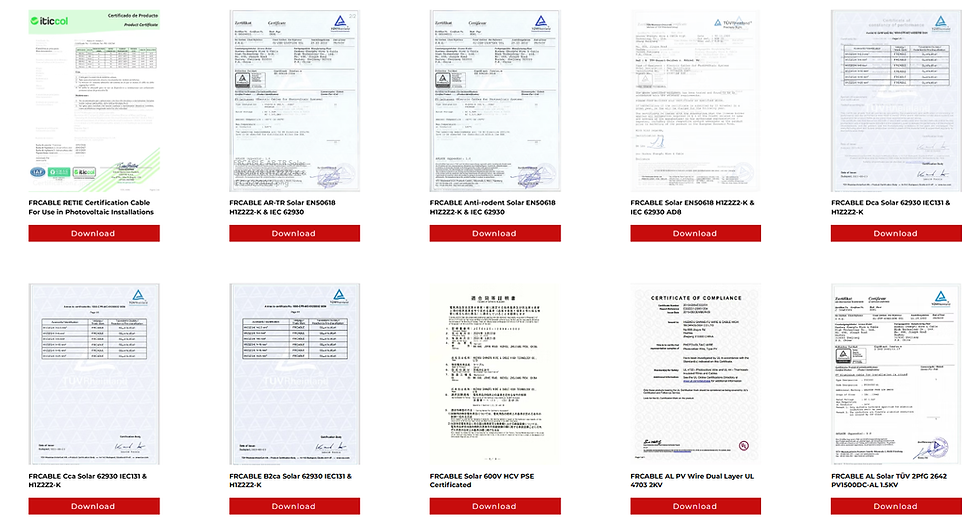
Solar Cable Standards and Certifications Buyers Should Check
For international PV projects, certification compliance is an important purchasing requirement.
A professional supplier should provide clear documentation showing that the cable meets applicable standards.
IEC 62930 Solar Cable Standard
IEC 62930 is an international standard specifically developed for photovoltaic cable applications.
It covers requirements related to:
Cable construction
Electrical performance
Mechanical properties
Environmental durability
Solar cable complying with IEC 62930 is commonly used in global PV markets.
When purchasing, buyers should request:
Certificate number
Testing organization
Product model information
Validity details
EN 50618 Solar Cable Standard
EN 50618 is widely recognized in European solar markets.
The common cable designation is:
H1Z2Z2-K
These cables are designed for:
Long-term outdoor operation
UV resistance
Halogen-free performance
High durability
For projects targeting European markets, EN 50618 compliance is often a key requirement.
TÜV Certification
Many international solar cable buyers also look for TÜV certification.
TÜV certification can provide additional confidence regarding:
Product testing
Manufacturing quality
Compliance verification
However, buyers should verify that certificates match the actual manufacturer and product model.
A certificate image displayed on a website alone is not sufficient evidence.
Frequently Asked Questions About Solar Cable Sizes
Is 6mm² solar cable better than 4mm²?
Not necessarily.
6mm² cable provides lower resistance and higher current capacity compared with 4mm² cable.
However, the correct choice depends on:
Cable length
System current
Installation conditions
Project requirements
For small residential systems with short cable distances, 4mm² may be sufficient.
For many commercial PV projects, 6mm² provides a better balance between cost and performance.
Can I use 10mm² solar cable instead of 6mm²?
In many cases, yes.
A larger cable can reduce voltage drop and improve current capacity.
However, using 10mm² cable when it is unnecessary may increase:
Material cost
Installation difficulty
Project expenses
The correct approach is selecting the cable size based on electrical calculations.
What solar cable size is most commonly used?
Among professional PV installers, 6mm² solar cable is one of the most commonly used sizes.
This is because it provides a practical balance between:
Electrical performance
Cost
Installation convenience
However, 4mm² and 10mm² remain important for specific applications.
How long can a 4mm² solar cable run?
There is no single maximum distance.
The suitable length depends on:
Current
Voltage
Allowable voltage drop
System design
A short residential system may use 4mm² successfully, while a longer commercial project may require a larger cable.
Conclusion: Selecting the Right Solar Cable Size for Long-Term PV Performance
Choosing between 4mm², 6mm², and 10mm² solar cables requires a balance between technical requirements and project economics.
For residential and small PV systems:
4mm² solar cable can provide a cost-effective solution when cable distances and current levels are limited.
For most commercial and industrial solar installations:
6mm² solar cable offers an excellent balance between efficiency, reliability, and cost.
For large-scale PV projects with higher current and longer cable routes:
10mm² solar cable provides improved performance by reducing resistance and voltage losses.
However, cable size is only one part of a successful procurement decision.
Professional buyers should also evaluate:
Conductor quality
Certification compliance
Environmental resistance
Manufacturer capability
Long-term reliability
Selecting the correct solar cable at the beginning of a project helps ensure safer operation, higher energy output, and better lifetime value for photovoltaic systems.




Comments