
10 AWG Cable Buying Guide: Specifications, Ampacity, Applications, and How to Choose

1. Introduction to 10 AWG Cable
Choosing the right electrical cable is essential for maintaining safe, efficient, and reliable electrical connections. Among the commonly used American Wire Gauge (AWG) sizes, 10 AWG cable is widely applied in residential electrical wiring, commercial installations, industrial equipment, and solar photovoltaic systems.
Its conductor size provides a practical balance between electrical conductivity, current-carrying capability, mechanical flexibility, and installation requirements. Depending on the conductor material and insulation construction, 10 AWG cable can be used in different electrical environments, including dry locations, wet locations, outdoor installations, and photovoltaic DC circuits.
However, not all 10 AWG cables are the same. A 10 AWG copper cable and a 10 AWG aluminum cable have different electrical properties. Similarly, THHN, THWN-2, XHHW-2, and PV Wire have different insulation constructions, ratings, and intended applications.
For electrical contractors, solar installers, wholesalers, and cable distributors, selecting the correct product requires more than checking the wire gauge.
Important factors include conductor material, cross-sectional area, ampacity, voltage rating, insulation temperature rating, environmental resistance, applicable standards, and installation conditions.
This 10 AWG cable buying guide explains the technical specifications, current-carrying capacity, common cable types, practical applications, and purchasing considerations to help buyers select the right cable for their projects.

2. What Is 10 AWG Cable?
10 AWG cable refers to an electrical cable containing one or more conductors with a nominal conductor size of 10 American Wire Gauge.
AWG is a standardized wire sizing system commonly used in North America. It measures the diameter of electrical conductors, with a lower gauge number representing a larger conductor.
For example, 8 AWG wire is thicker than 10 AWG wire, while 12 AWG wire is thinner.
The actual dimensions of a 10 AWG conductor are approximately:
Bare conductor diameter: 0.1019 inches (2.588 mm).
Cross-sectional area: 10,380 circular mils.
Metric cross-sectional area: approximately 5.26 mm².
These measurements describe the nominal conductor, not the outside diameter of the finished insulated cable. The overall cable diameter depends on the conductor construction, insulation thickness, and any additional protective layers.
2.1 10 AWG Cable Size and Dimensions
The following table provides a comparison of common AWG sizes.
AWG Size | Approx. Conductor Diameter | Cross-Sectional Area |
8 AWG | 3.264 mm | 8.37 mm² |
10 AWG | 2.588 mm | 5.26 mm² |
12 AWG | 2.053 mm | 3.31 mm² |
14 AWG | 1.628 mm | 2.08 mm² |
16 AWG | 1.291 mm | 1.31 mm² |
One important purchasing consideration is the difference between AWG and metric cable sizing.
A 10 AWG conductor has a nominal cross-sectional area of approximately 5.26 mm². It should not automatically be treated as an exact equivalent of a 6 mm² conductor.
This distinction is particularly important when purchasing solar cables and selecting connectors, terminals, and accessories designed for specific conductor sizes.
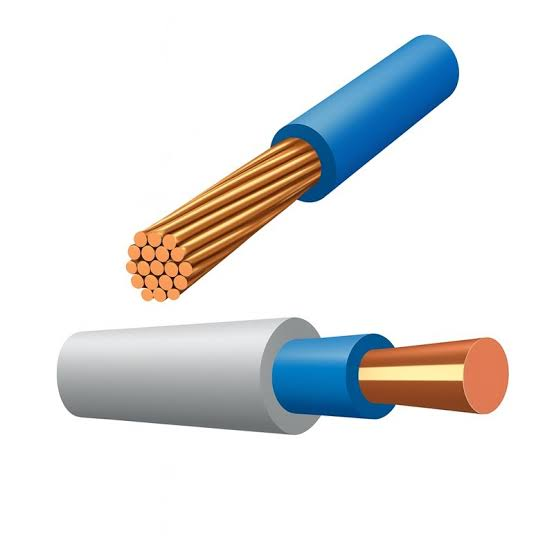
2.2 Solid vs. Stranded 10 AWG Cable
10 AWG conductors are available in solid and stranded constructions. The appropriate choice depends on the installation environment and flexibility requirements.
Solid 10 AWG Wire
Solid wire uses a single conductor with a continuous metallic cross-section.
Its characteristics include:
Simple conductor construction.
Good dimensional stability.
Suitable for certain permanent wiring installations.
Generally less flexible than stranded wire.
Solid conductors are commonly found in some fixed building wiring applications.
Stranded 10 AWG Wire
Stranded wire consists of multiple smaller wires twisted or assembled together to form one conductor.
Its characteristics include:
Greater flexibility.
Easier routing through certain installations.
Better suitability for applications involving movement or vibration.
Different strand constructions available for different flexibility requirements.
Stranded copper conductors are common in solar cables, equipment wiring, and industrial electrical applications.
For photovoltaic installations, the strand configuration should be compatible with the selected connector and termination system. A higher strand count does not automatically guarantee compatibility with every terminal.
3. 10 AWG Cable Specifications: Copper, Aluminum, and Insulation Types
Before purchasing 10 AWG cable, buyers should understand its main construction and electrical specifications.
The conductor material and insulation system are particularly important because they influence current-carrying performance, durability, and application suitability.

3.1 Copper vs. Aluminum 10 AWG Cable
Copper and aluminum are two commonly used conductor materials in electrical cable manufacturing.
Although both materials can be manufactured to the same nominal AWG size, their electrical conductivity, weight, and ampacity characteristics are different.
Copper 10 AWG Cable
Copper has higher electrical conductivity than aluminum and is widely used in building wiring, industrial equipment, and photovoltaic cable applications.
Its main advantages include:
Higher conductivity for a given conductor cross-section.
Lower electrical resistance than aluminum of the same nominal size.
Good mechanical properties.
Broad compatibility with appropriately rated electrical terminals and connectors.
Availability in bare and tinned conductor constructions.
Tinned copper conductors may be selected for applications where a protective tin coating is desirable, including certain outdoor and demanding electrical environments.
Aluminum 10 AWG Cable
Aluminum is lighter than copper and can provide a cost-effective conductor material in suitable applications.
Its characteristics include:
Lower material weight.
Lower electrical conductivity than copper.
Different termination and connection requirements.
The need for appropriately rated aluminum-compatible connectors and terminals.
Because aluminum has higher electrical resistance than copper at the same nominal cross-sectional area, an aluminum conductor may require a larger size to achieve comparable electrical performance.
It is therefore important not to assume that copper and aluminum cables of the same AWG size are directly interchangeable.
Comparison | Copper 10 AWG | Aluminum 10 AWG |
Electrical conductivity | Higher | Lower |
Weight | Higher | Lower |
Resistance at the same nominal size | Lower | Higher |
Typical selection advantage | Electrical performance | Reduced conductor weight |
Termination requirements | Copper-compatible terminals | Aluminum-compatible terminals |
General ampacity | Higher | Lower |
When purchasing aluminum cable, verify that all terminals and connection accessories are listed or approved for the conductor material. Oxide-inhibiting compounds should only be used where specified by the equipment or connector manufacturer.
3.2 Common Insulation Types for 10 AWG Cable
The insulation material determines where a cable can be installed and how well it withstands heat, moisture, sunlight, chemicals, and mechanical exposure.
Several commonly encountered cable types are available in 10 AWG.
THHN Cable
THHN stands for Thermoplastic High Heat-resistant Nylon-coated.
It typically uses a PVC insulation layer with an outer nylon jacket.
Common characteristics include:
Commonly rated 600V.
90°C temperature rating for dry locations.
Nylon outer jacket.
Common use in commercial and industrial conduit wiring.
THHN is frequently used for branch circuits, feeders, and equipment connections where the applicable electrical code permits it.
THWN-2 Cable
THWN-2 is designed for wet and dry locations.
Its common characteristics include:
90°C temperature rating in wet and dry locations.
Moisture-resistant insulation construction.
Suitable for many conduit and raceway installations.
Common availability in copper conductor configurations.
Many commercial building-wire products carry dual THHN/THWN-2 markings, allowing different applications according to the relevant rating.
XHHW-2 Cable
XHHW-2 uses cross-linked polyethylene (XLPE) insulation rather than the conventional PVC and nylon construction associated with THHN/THWN-2.
Its characteristics include:
90°C rating in wet and dry locations.
Heat-resistant XLPE insulation.
Good moisture resistance.
Availability in different voltage ratings depending on the product.
Applications in commercial and industrial electrical installations.
XHHW-2 is commonly used in recognized raceways, feeders, and branch circuit wiring.
PV Wire
PV Wire is specifically designed for photovoltaic electrical installations.
It is used to connect solar modules and other components in photovoltaic DC systems.
Depending on the product design and applicable certification, PV Wire may offer:
Sunlight-resistant insulation.
Resistance to moisture and outdoor exposure.
High-temperature performance.
Different voltage ratings.
Suitability for designated PV wiring methods.
For North American projects, UL 4703 is an important standard for photovoltaic wire. Its scope covers sunlight-resistant PV wire with specified temperature and voltage ratings, including 600V, 1000V, and 2000V product classifications.
The actual temperature and voltage ratings must be checked on the individual cable marking and technical datasheet.
USE-2 Cable
USE-2 stands for Underground Service Entrance Cable.
It is designed for specified underground service entrance applications and is commonly available with insulation suitable for wet and dry locations.
Some products are also approved for certain photovoltaic applications. However, buyers must confirm the actual product marking, certification, and permitted installation method instead of assuming every USE-2 cable is suitable for exposed PV wiring.
3.3 Cable Insulation Material: PVC vs. XLPE
Insulation material is another important specification when comparing 10 AWG cables.
Property | PVC | XLPE |
Material | Polyvinyl chloride | Cross-linked polyethylene |
Thermal performance | Depends on formulation and rating | Commonly used for higher-temperature cable ratings |
Moisture resistance | Depends on construction | Good moisture resistance |
Flexibility | Formulation-dependent | Formulation-dependent |
Typical cable applications | Building wire and general electrical wiring | PV cable, industrial cable, and power distribution |
PVC is commonly used in building wire and certain cable constructions because of its versatility and processing characteristics.
XLPE is widely used in applications requiring heat-resistant insulation and good environmental performance.
For solar cable applications, XLPE-based insulation systems are commonly specified according to the relevant PV cable standard and product design.

4. 10 AWG Cable Ampacity: How Many Amps Can It Handle?
Ampacity refers to the maximum current a conductor can carry continuously under specified conditions without exceeding its allowable temperature limit.
The ampacity of 10 AWG cable is influenced by several factors, including conductor material, insulation temperature rating, ambient temperature, installation method, and the number of current-carrying conductors installed together.
There is no single ampacity value that applies to every 10 AWG cable.
4.1 10 AWG Copper Wire Ampacity
For installations designed under the US National Electrical Code (NEC), Table 310.16 provides reference ampacity values for conductors installed under specified conditions.
The commonly referenced values for 10 AWG copper conductors are:
Insulation Temperature Rating | 10 AWG Copper Ampacity |
60°C | 30A |
75°C | 35A |
90°C | 40A |
These values are based on the table's reference conditions, including a 30°C ambient temperature and no more than three current-carrying conductors in the raceway, cable, or earth as specified by the table.
A higher insulation temperature rating does not automatically mean the entire circuit can operate at the higher listed ampacity.
The temperature limitations of connected equipment, terminals, and other components must also be considered.
For example, if the equipment terminals are limited to a 75°C rating, the 90°C column cannot simply be used as the final allowable circuit ampacity. The 90°C rating may still be relevant for applying correction and adjustment factors, subject to the applicable code requirements.
4.2 10 AWG Aluminum Wire Ampacity
Aluminum conductors have different ampacity ratings from copper conductors of the same nominal AWG size.
Common NEC Table 310.16 reference values for 10 AWG aluminum are:
Insulation Temperature Rating | 10 AWG Aluminum Ampacity |
60°C | 25A |
75°C | 30A |
90°C | 35A |
These values are also subject to installation conditions, equipment terminal ratings, and applicable adjustment and correction factors.
Because aluminum has lower electrical conductivity than copper, it is important to evaluate conductor material when comparing cable specifications.
4.3 Why Does 10 AWG Cable Ampacity Change?
Several factors can reduce the usable ampacity of a 10 AWG conductor.
Ambient Temperature
The reference ampacity table assumes a specified ambient temperature.
When cables operate in environments with higher ambient temperatures, the allowable current may need to be reduced.
This is particularly important for rooftop solar installations, where solar radiation and the temperature of surrounding surfaces can increase the conductor's operating temperature.
Number of Current-Carrying Conductors
When multiple current-carrying conductors are installed together in a raceway or cable, their combined heat generation can reduce the allowable current for each conductor.
Applicable conductor-count adjustment factors must be considered.
Insulation Temperature Rating
Different insulation systems have different maximum conductor temperature ratings.
For example, THHN, THWN-2, and XHHW-2 have different markings and application requirements that must be verified against the product datasheet.
Equipment Terminal Temperature Rating
Electrical terminals may have lower temperature limitations than the conductor insulation.
The usable ampacity must comply with the applicable equipment and termination requirements.
Installation Environment
Direct sunlight, enclosed spaces, rooftop exposure, underground installation, and other environmental factors can affect conductor temperature and performance.
For this reason, cable size should always be selected using the complete installation conditions rather than the AWG size alone.
4.4 Understanding the NEC 10 AWG Overcurrent Protection Limit
An important distinction must be made between conductor ampacity and overcurrent protection.
Under the general small-conductor requirements of NEC 240.4(D), 10 AWG copper conductors are typically limited to 30A overcurrent protection, while 10 AWG aluminum conductors are typically limited to 25A, unless a specific exception or other permitted rule applies.
This means a 10 AWG copper conductor with a 90°C table ampacity of 40A cannot automatically be protected by a 40A circuit breaker.
The final overcurrent protection rating depends on the applicable code provisions, installation conditions, conductor correction and adjustment factors, and permitted exceptions.
Continuous loads may also require additional sizing calculations.
For photovoltaic installations, the applicable PV circuit-sizing and overcurrent protection requirements must be evaluated separately under NEC Article 690. A general building-wire ampacity table should not be used as the only basis for sizing a PV string conductor.
5. Common Applications of 10 AWG Cable
10 AWG cable is used across various electrical applications because it offers a useful combination of conductor size, flexibility, and electrical performance.
However, the appropriate cable type depends on the electrical load, installation environment, and required certification.
5.1 Solar PV Cable Connections
10 AWG is commonly encountered in photovoltaic cable applications, particularly in North American solar installations.
A PV cable connects solar modules to other components of the DC electrical system, including string connections, combiner equipment, and inverters.
Depending on the system architecture, 10 AWG PV Wire may be used for:
Solar module interconnections.
PV source circuit wiring.
DC string cable connections.
Compatible solar extension cable assemblies.
Certain distributed photovoltaic wiring arrangements.
For these applications, the conductor size must be determined using the expected current, circuit length, voltage drop, installation environment, and applicable PV electrical requirements.
The cable should have the appropriate photovoltaic rating and environmental properties for its intended installation.
Ordinary THHN wire should not be treated as automatically suitable for exposed solar module wiring merely because it has the same conductor size.
5.2 Residential Electrical Wiring
10 AWG copper wire is commonly used in selected residential branch circuits and equipment connections.
Examples may include:
Certain electric water heater circuits.
Electric dryer circuits using appropriate multiconductor cable assemblies.
Air-conditioning and HVAC equipment connections.
Other electrical loads requiring a compatible 10 AWG conductor.
The actual cable configuration and conductor size must be selected according to equipment nameplate requirements, circuit design, installation conditions, and applicable electrical codes.
For example, HVAC equipment specifications may include Minimum Circuit Ampacity (MCA) and Maximum Overcurrent Protection (MOCP). These values should be used when determining the required conductor and protection devices rather than assuming every unit uses the same 10 AWG configuration.
5.3 Commercial and Industrial Electrical Installations
In commercial and industrial environments, 10 AWG conductors may be used for equipment connections, branch circuits, and selected power distribution applications.
Depending on the installation, common cable types include THHN/THWN-2 and XHHW-2.
These conductors are frequently installed in recognized raceways or conduit systems to provide suitable mechanical protection and organized cable routing.
Industrial buyers should also consider:
Operating temperature.
Exposure to oils and chemicals.
Vibration and mechanical stress.
Conduit and cable tray requirements.
Equipment connection methods.
Applicable industrial wiring standards.
5.4 Outdoor and Wet-Location Applications
Outdoor electrical installations require cables specifically approved for the intended environment.
Moisture exposure, ultraviolet radiation, temperature changes, and mechanical damage can affect cable insulation over time.
Depending on the application, suitable products may include PV Wire, properly rated USE-2, or other cables approved for the relevant installation method.
Buyers should verify that the cable is marked for sunlight resistance, wet-location use, or direct burial where these characteristics are required.
A cable's voltage rating or insulation material alone does not establish its suitability for every outdoor application.
6. How to Calculate Voltage Drop in 10 AWG Cable
As electric current flows through a conductor, its electrical resistance causes a reduction in voltage between the power source and the connected equipment.
Longer cable runs, higher current, and higher conductor temperature can increase voltage drop.
For DC circuits and simple single-phase two-wire circuits, a basic voltage drop calculation can be written as:
Voltage Drop = 2 × L × I × R
Where:
L = One-way cable length.
I = Circuit current in amperes.
R = Conductor resistance per unit length.
The factor of 2 accounts for the outgoing and return conductors in a two-wire circuit.
For a practical example, assume:
Cable size: 10 AWG copper.
One-way cable length: 100 feet.
Circuit current: 10A.
Approximate copper conductor resistance: 1.0 ohm per 1,000 feet at 20°C.
The total conductor length is 200 feet.
Voltage drop:
2 × 100 × 10 × 0.001 = 2V
The estimated voltage drop is approximately 2 volts under these simplified reference conditions.
The percentage voltage drop depends on the operating voltage:
System Voltage | Estimated Voltage Drop | Voltage Drop Percentage |
24V | 2V | 8.33% |
48V | 2V | 4.17% |
120V | 2V | 1.67% |
This example shows why cable length is particularly important in low-voltage DC systems.
A 10 AWG cable may be suitable for a short run but may require a larger conductor for a longer installation to maintain acceptable voltage drop.
Actual resistance increases as conductor temperature rises, and the final calculation should account for operating temperature, conductor material, circuit configuration, and the applicable design criteria.
7. How to Choose the Right 10 AWG Cable
Selecting the right 10 AWG cable requires evaluating the complete electrical and environmental requirements of the project.
The following factors can help buyers make a more informed purchasing decision.
7.1 Identify the Required Conductor Material
First, determine whether the project requires copper or aluminum conductors.
Copper is often selected where higher conductivity, compact conductor sizing, and broad termination compatibility are important.
Aluminum may be considered where reduced conductor weight or material cost is a priority, provided the electrical design and connection components are suitable.
Do not compare copper and aluminum cables on price alone. Evaluate their electrical performance and required installation accessories.
7.2 Select the Appropriate Cable Type
The cable type should match the installation method.
Examples include:
THHN/THWN-2 for compatible building wiring in conduit.
XHHW-2 for designated wet and dry location applications.
PV Wire for suitable photovoltaic DC installations.
USE-2 for applicable underground service entrance and approved PV wiring applications.
Always confirm the actual cable markings and product approvals.
7.3 Verify Voltage and Temperature Ratings
Check the cable's rated voltage and maximum conductor temperature.
A product intended for a 600V application should not automatically be used in a higher-voltage system.
Similarly, the cable's temperature rating must be appropriate for the environmental conditions and equipment requirements.
For solar applications, verify the PV cable's applicable voltage classification and photovoltaic certification.
7.4 Check Ampacity and Installation Conditions
Calculate the required conductor ampacity based on the expected electrical load.
Consider:
Continuous and noncontinuous loads.
Ambient temperature.
Number of current-carrying conductors.
Installation method.
Equipment termination ratings.
Applicable overcurrent protection requirements.
For longer cable routes, perform a separate voltage drop calculation.
7.5 Evaluate Insulation and Environmental Resistance
The insulation should be selected according to the operating environment.
For outdoor solar installations, sunlight resistance, moisture resistance, thermal performance, and long-term weather exposure are important considerations.
For industrial installations, oil resistance, chemical exposure, mechanical protection, and temperature performance may also be relevant.
7.6 Confirm Certifications and Applicable Standards
Certification is an important purchasing consideration, particularly for electrical cables supplied to overseas markets.
Depending on the intended application, relevant standards may include:
UL 44: Thermoset-Insulated Wires and Cables.
UL 83: Thermoplastic-Insulated Wires and Cables.
UL 4703: Photovoltaic Wire.
IEC 62930: Electric Cables for Photovoltaic Systems.
EN 50618: Electric Cables for Photovoltaic Systems.
The appropriate standard depends on the cable construction, voltage rating, intended application, and target market.
Buyers should request the relevant product datasheet and certification documentation, then verify that the certificate applies to the exact cable type and size being purchased.
7.7 Compare Cable Dimensions and Construction
The nominal AWG size does not provide all the information required to evaluate a cable.
A purchasing specification should also include:
Number of conductor strands.
Individual strand diameter.
Conductor material.
Nominal insulation thickness.
Overall cable diameter.
Minimum bending radius.
Maximum conductor resistance.
Temperature range.
These details are especially important when the cable must fit existing connectors, terminals, glands, and installation equipment.
8. What to Consider When Purchasing 10 AWG Cable in Bulk
For wholesalers, importers, electrical contractors, and distributors, buying 10 AWG cable involves more than selecting an acceptable price per meter or foot.
Consistent product quality and accurate technical documentation are equally important.
Before placing a bulk order, consider the following purchasing factors.
8.1 Confirm Complete Product Specifications
Request a detailed technical datasheet showing conductor size, material, insulation construction, rated voltage, temperature rating, and electrical resistance.
The document should clearly identify whether the product is solid or stranded and specify its relevant cable standard.
8.2 Verify Product Certifications
Check that the manufacturer can provide appropriate certification documents for the target market.
For example, a buyer sourcing photovoltaic cables for North America should verify the applicable UL 4703 product certification and exact product listing rather than relying on a generic statement that the cable is suitable for solar applications.
8.3 Evaluate Conductor and Insulation Quality
Conductor quality influences electrical resistance and mechanical performance.
Insulation quality influences heat resistance, moisture protection, and environmental durability.
Important quality-control considerations include conductor resistance testing, dimensional inspection, insulation thickness verification, voltage testing, and applicable environmental performance testing.
8.4 Check Manufacturing Consistency
For recurring orders, buyers should evaluate whether the supplier maintains consistent product specifications between production batches.
Useful documentation may include:
Raw material specifications.
In-process inspection records.
Finished cable test reports.
Product traceability information.
Batch identification.
Quality management certifications, where applicable.
8.5 Evaluate OEM and Customization Capabilities
Some projects require cables with specific colors, printing information, packaging, conductor constructions, or cable lengths.
Before placing an order, confirm whether the manufacturer can support the required specifications and whether any customization affects product certification or testing requirements.
For cable distributors and private-label buyers, consistent cable marking and packaging are also important for product identification and inventory management.
9. Conclusion: Choosing the Right 10 AWG Cable for Your Application
10 AWG cable is used in a wide range of residential, commercial, industrial, and solar photovoltaic applications. Its nominal conductor cross-section of approximately 5.26 mm² makes it a practical option for many electrical installations, provided the conductor is correctly sized for the actual load and installation conditions.
However, the right 10 AWG cable is determined by more than its gauge.
Copper and aluminum conductors have different electrical characteristics, while THHN, THWN-2, XHHW-2, USE-2, and PV Wire are designed for different installation requirements.
Before purchasing, evaluate the conductor material, ampacity, voltage rating, insulation type, temperature rating, environmental resistance, and applicable certifications.
For solar projects, particular attention should be given to photovoltaic cable standards, sunlight resistance, system voltage, connector compatibility, and voltage drop.
For bulk buyers, choosing a reliable cable manufacturer with consistent specifications, appropriate certifications, and comprehensive product documentation helps reduce procurement risks and support long-term project requirements.
FRCABLE provides photovoltaic cable solutions for different solar power applications. Buyers evaluating solar cable specifications can contact the FRCABLE team to discuss conductor sizes, insulation requirements, technical documentation, and project-specific cable needs.
10. Frequently Asked Questions About 10 AWG Cable
10.1 How Many Amps Can 10 AWG Wire Handle?
The ampacity depends on conductor material, insulation temperature rating, and installation conditions.
Under the reference conditions of NEC Table 310.16, 10 AWG copper has ampacity values of 30A at 60°C, 35A at 75°C, and 40A at 90°C.
For aluminum, the corresponding reference values are 25A, 30A, and 35A.
These are table ampacities rather than universal permitted circuit-breaker sizes. Applicable overcurrent protection limits and installation requirements must also be considered.
10.2 Is 10 AWG the Same as 6mm² Cable?
No. 10 AWG has a nominal conductor cross-sectional area of approximately 5.26 mm², while 6mm² cable has a nominal area of 6 mm².
Although the sizes are relatively close, they are not exact equivalents.
This difference matters when selecting terminals, connectors, crimping tools, and electrical accessories.
10.3 Is 10 AWG Copper Better Than 10 AWG Aluminum?
Copper generally offers higher electrical conductivity and lower resistance than aluminum at the same nominal conductor size.
Aluminum is lighter and may offer material cost advantages in suitable applications.
The right choice depends on electrical performance, installation requirements, terminal compatibility, and overall project cost.
10.4 Can 10 AWG Cable Be Used for Solar Panels?
Yes. Properly rated 10 AWG PV Wire can be used in photovoltaic cable systems when its electrical and environmental specifications meet the project requirements.
The cable must have the appropriate PV rating and be sized according to system current, circuit length, voltage drop, installation conditions, and applicable electrical codes.
Ordinary building wire should not automatically be substituted for photovoltaic wire in exposed solar installations.
10.5 What Is the Difference Between 10 AWG THHN and THWN-2 Wire?
THHN is primarily rated for dry locations at a maximum conductor temperature of 90°C.
THWN-2 is rated for both wet and dry locations at a maximum conductor temperature of 90°C.
Many commercial building wires carry both THHN and THWN-2 markings, allowing their use according to the applicable conditions and installation requirements.
10.6 How Thick Is 10 AWG Cable?
The nominal bare conductor diameter of solid 10 AWG wire is approximately 0.1019 inches, or 2.588 mm.
The finished cable outside diameter is larger because of the insulation and any additional protective layers.
The exact cable diameter depends on the conductor construction, insulation material, insulation thickness, and product design.
10.7 How Long Can You Run 10 AWG Cable?
There is no single maximum cable length for every 10 AWG installation.
The permitted run length depends on circuit current, operating voltage, conductor material, and acceptable voltage drop.
Longer cable runs create greater resistance and voltage drop. Therefore, voltage drop should be calculated before choosing the cable size.
10.8 Is 10 AWG Wire Suitable for a 30-Amp Circuit?
10 AWG copper is commonly associated with 30A circuits under applicable North American electrical requirements.
However, the actual installation must comply with conductor ampacity, insulation rating, terminal temperature limitations, overcurrent protection requirements, load characteristics, and applicable electrical codes.
A 30A circuit designation does not automatically make every 10 AWG cable suitable for every 30A application.
10.9 Should I Choose Solid or Stranded 10 AWG Wire?
Solid wire is suitable for certain fixed wiring applications where flexibility is not a major requirement.
Stranded wire is generally easier to route and is commonly used in solar cables, electrical equipment, and installations requiring greater flexibility.
The choice should depend on the installation method and compatibility with the selected terminals and connectors.


This is a useful guide for anyone working with electrical wiring or choosing the right cable for a project. Understanding 10 AWG cable specifications, ampacity, and applications is important for making safe and reliable connections. I especially appreciate resources that explain technical details in a clear and practical way. Learning something new is always rewarding, just like mastering a challenging level in Geometry Dash