
8 Gauge Wire Explained: Ampacity, Diameter, Uses, and 12V vs 240V Applications

Updated: May 7
Introduction
If you are choosing cable for a solar battery bank, inverter connection, RV circuit, or 240V load, 8 gauge wire is often where the decision stops being obvious. It is clearly heavier than 10 AWG, but not yet as large, stiff, or costly as 6 AWG. That middle position is exactly why it shows up so often in practical electrical work.
8 gauge wire is a mid-size conductor used when you need moderate-to-high current capacity without stepping into much bulkier cable. In U.S. reference tables, 8 AWG copper is commonly associated with 40A at 60°C, 50A at 75°C, and 55A at 90°C, but the correct wire choice also depends on insulation rating, terminal temperature limits, installation conditions, run length, and voltage drop.
Key Takeaways
8 gauge wire sits in the practical middle of the AWG range. It is thick enough for higher-current circuits, but still manageable for installation in many residential, solar, battery, RV, and equipment applications.
There is no single universal amp rating for 8 AWG wire. Ampacity changes with conductor material, insulation temperature rating, ambient temperature, and how the cable is installed.
For U.S. NEC-style references, 8 AWG copper is often tied to 40A, 50A, or 55A depending on temperature column. That does not automatically mean every 8 AWG installation is safe at the top number. Termination limits still matter.
In 12V systems, voltage drop often matters as much as ampacity. A wire that is thermally adequate can still be a poor choice if the run is long and the system is low voltage.
In 240V systems, 8 AWG wire is often easier to justify because higher voltage reduces current for the same power. Even so, circuit design still has to match equipment load and code requirements.
Physical size matters in real installs. Bare 8 AWG conductor diameter is about 0.1285 inch, or about 3.26 mm, but finished cable will be larger once insulation is added.
For solar and battery work, 8 AWG can be a strong fit for medium-current links. It is often chosen when you need a balance of flexibility, manageable cost, and lower resistance than smaller gauges.
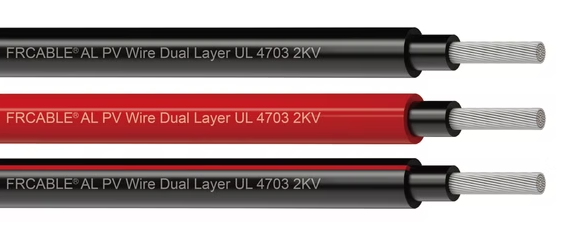
What 8 Gauge Wire Means in Real Electrical Terms
8 gauge wire, or 8 AWG wire, is a conductor size defined by the American Wire Gauge standard. In that system, a lower gauge number means a thicker conductor, so 8 AWG is thicker than 10 AWG and 12 AWG, but thinner than 6 AWG and 4 AWG.
That sounds simple, but the practical meaning is more useful: 8 AWG is where wire selection often moves from light branch-circuit thinking into serious current delivery. It is large enough to reduce resistance and heat more effectively than smaller building wire, yet still common enough to be available in residential, automotive, marine, and solar-related applications.
In the solar cable industry, this matters because wire sizing is not just about “will it carry current.” It is also about how much energy you lose across the run, how much heat builds up, and whether the wire can live comfortably in the environment you are installing it in. That is why the right 8 gauge wire choice depends on conductor metal, insulation type, and system voltage, not just the number printed on the spool.

8 Gauge Wire Amps: How Many Amps Can 8 AWG Wire Handle?
The most common question is also the one people oversimplify most: how many amps can 8 gauge wire handle? The safest answer is that 8 AWG wire does not have one universal amp rating. Ampacity changes with the temperature rating column, conductor material, ambient temperature, bundling, and terminal limits.
For 8 AWG copper, NEC-based reference values commonly used in industry are:
40 amps at 60°C
50 amps at 75°C
55 amps at 90°C
For planning purposes, many professionals treat those figures as a starting point, not a final design answer. If your terminations are only rated for 60°C or 75°C, you may not be allowed to use the highest conductor temperature column even when the insulation itself is rated higher. Southwire’s NEC-based specification notes this explicitly and points readers back to NEC sections on terminations and conductor conditions of use.
Why ampacity is not the same as breaker size
Ampacity tells you what the conductor can carry continuously under defined conditions. Breaker size tells you what level of overcurrent protection the circuit is designed around. Those are related, but they are not interchangeable.
That distinction matters because a buyer may search 8 gauge wire amps expecting one neat number, while the real design question is broader: What load, what insulation, what termination, what ambient temperature, and what run length? If those are not known, any single amp claim is incomplete.
A practical rule for readers
If you are sizing 8 AWG for a real installation, use this order:
Start with code or equipment requirements
Check conductor material and insulation rating
Check terminal temperature rating
Account for ambient temperature and conductor grouping
Then verify voltage drop
That sequence prevents a common mistake: choosing wire by amp chart alone and discovering later that the voltage drop or terminals make the choice inadequate.

How Thick Is an 8 Gauge Wire?
If you need to know 8 gauge wire diameter, the standard bare conductor diameter is about 0.1285 inch, which is about 3.26 mm.
That number is useful, but only partly useful. In the field, you usually handle insulated cable, not a bare conductor. The finished outside diameter can be much larger depending on insulation thickness, jacket design, strand construction, voltage rating, and whether the cable is intended for building wire, battery cable, solar use, or flexible equipment wiring.
Bare conductor diameter vs finished cable size
This is where many buying errors happen. A customer checks the AWG chart, sees 3.26 mm, and assumes that is the cable size they must fit into conduit, cable glands, lugs, or terminals. It is not.
Use this distinction:
AWG size = conductor size
Conductor diameter = bare metal diameter
Overall cable diameter = conductor plus insulation, and sometimes jacket
For product selection, overall diameter matters more than bare copper diameter when you are checking conduit fill, connector compatibility, or enclosure entry sizes. Bare diameter matters more when you are comparing electrical resistance across gauges.
What Is 8 Gauge Wire Used For?
The short answer to what is 8 gauge wire used for is this: 8 AWG is used where smaller branch-circuit wire is not enough, but very large feeder cable would be excessive. That makes it one of the most versatile sizes in the U.S. market.
Common uses of 8 gauge wire
Typical applications include:
Medium-current 12V battery and inverter circuits
Solar power system interconnections where current and run length exceed what 10 AWG handles comfortably
Certain 240V equipment circuits
RV and marine DC distribution
Equipment power leads and sub-feed applications
Situations where designers want less voltage drop than 10 AWG without stepping up to 6 AWG
In solar-related work, 8 gauge wire often appears when the design has moved past lightweight module-level wiring and into battery links, charge controller runs, combiner-to-controller sections, or inverter-side DC connections, depending on current and distance. The exact suitability still depends on system
design, insulation type, and local code.
Why 8 AWG still matters today
A fair question is whether number 8 wire still fits modern electrical systems. It does, because modern systems are increasingly split between two realities: compact electronics with modest current draw, and electrified equipment that can demand substantial current over practical distances.
That is exactly where 8 AWG remains relevant. It fills the gap between light-duty wire and truly heavy cable. In other words, it has not disappeared; it has simply become more application-specific and more design-sensitive. That makes it especially relevant in solar, storage, RV, marine, and off-grid installations.

8 Gauge Wire for 12V Systems
When readers ask whether 8 gauge wire for 12V is a good choice, the key issue is usually not raw ampacity. It is voltage drop.
Low-voltage systems are unforgiving. Blue Sea Systems’ wire-sizing guidance emphasizes sizing DC conductors around allowable voltage drop, often using 3% for critical circuits and 10% for less critical ones. In 12V systems, even a small voltage loss can materially affect equipment performance.
Why 12V changes the calculation
At 12V, the same power requires much more current than at 240V. A 240W load draws only about 1 amp at 240V, but about 20 amps at 12V. That means wire resistance matters far more, especially on longer runs.
So, is 8 gauge wire good for 12V systems? Yes, often. But the better answer is: it is good for some 12V systems when the current and total circuit length support it. For short or moderate runs, 8 AWG can be an excellent balance of flexibility and reduced voltage loss. For long runs or very high current, you may need 6 AWG or larger even if 8 AWG looks acceptable on an amp chart.
Good 12V use cases for 8 AWG
8 AWG is often a reasonable candidate for:
Battery-to-load connections at moderate current
Charge controller output runs
Small inverter feeds where current and distance are controlled
RV and marine accessory distribution with tighter voltage-drop targets
The lesson is simple: in 12V design, choose by current plus length, not current alone. That is one of the biggest differences between consumer intuition and professional wire selection.
8 Gauge Wire for 240V Systems
In 240V systems, 8 gauge wire becomes easier to justify because the same power can be delivered at much lower current. That reduces I²R losses and often widens the range of acceptable conductor sizes compared with 12V circuits.
This is why 8 AWG often appears in discussions about dedicated equipment circuits, heaters, compressors, workshop loads, and some feeder or sub-feed scenarios. Cerrowire’s application guidance and ampacity references place 8 AWG in the range commonly associated with much heavier-duty circuits than 12 AWG or 10 AWG.
What to watch in 240V installations
Even though 240V reduces current demand for a given wattage, 8 AWG is not automatically correct. You still need to check:
Continuous vs non-continuous load
Equipment nameplate requirements
Terminal temperature limits
Conduit fill and installation conditions
Local code adoption and inspection requirements
That is especially important if you are using product literature from multiple cable categories. A building wire, a flexible battery cable, and a PV cable may all be “8 gauge,” but they are not interchangeable in every application.
8 Gauge Wire vs 10 Gauge vs 6 Gauge
If your real decision is 8 gauge wire vs 10 gauge vs 6 gauge, the most useful framework is not “which one is best,” but what trade-off are you trying to optimize.
Wire Size | Typical Design Position | Main Advantage | Main Limitation |
10 AWG | Lower-medium current circuits | Easier to route, terminate, and lower cost | More voltage drop, less headroom |
8 AWG | Medium-high current circuits | Strong balance of ampacity and manageable size | Still may be undersized for long 12V runs |
6 AWG | Higher-current or lower-loss circuits | Better headroom and lower resistance | Bulkier, stiffer, more expensive |
This is why 8 AWG is often the decision-point gauge. It is the size many buyers land on when 10 AWG feels marginal but 6 AWG feels excessive. That is not just a matter of current. It is also about bend radius, lug size, labor time, and cost discipline.
When 8 AWG is usually the smarter middle choice
Choose 8 AWG when:
You need more margin than 10 AWG can comfortably provide
Voltage drop is becoming a concern
You want a practical compromise between electrical performance and installation difficulty
The system is medium-current rather than truly heavy-current
In solar and battery-related work, that middle-ground role is exactly why 8 AWG remains common. It is often not the smallest wire that works. It is the smallest wire that still gives you decent design breathing room.
How to Choose the Right 8 Gauge Wire for Your Application
If you are buying cable rather than just learning the spec, the best choice is not “8 AWG” in the abstract. It is the right 8 AWG construction for your environment.
Step 1: Match the wire type to the job
Start by deciding whether you need:
Building wire
Flexible battery cable
PV/solar cable
Marine cable
Direct-burial or outdoor-rated cable
That matters because conductor stranding, jacket chemistry, UV resistance, wet-location performance, and flexibility can vary significantly even when the conductor size is identical.
Step 2: Check current, run length, and voltage
For 12V systems, calculate voltage drop first. For 240V systems, load and equipment requirements often dominate. In both cases, verify the conductor will meet ampacity and termination requirements.
Step 3: Verify temperature and environment
Sun exposure, roof heat, conduit fill, engine spaces, and bundled conductors all change the picture. Blue Sea Systems and NEC-based references both emphasize that conductor performance is conditional, not absolute.
Step 4: Do not buy by AWG alone
For solar buyers especially, this is the professional takeaway: wire size is only one layer of selection. The right product also needs the right insulation, flexibility, certification path, and installation compatibility.
Conclusion
8 gauge wire remains one of the most useful conductor sizes because it solves a real engineering problem: delivering meaningful current without jumping straight to large, difficult cable. Its value is not that it fits every circuit. Its value is that it often fits the circuits where electrical performance, physical manageability, and cost have to stay in balance.
If you are choosing cable for solar, battery, RV, or equipment power, the next step is simple: treat 8 AWG as a design candidate, then verify ampacity, voltage drop, insulation type, and environment before you buy. That is how you turn a wire size into a sound system decision.
FAQ
1. How many amps can 8 gauge wire handle?
8 gauge wire can commonly be associated with 40A, 50A, or 55A for copper under NEC-based reference columns, depending on temperature rating. The correct usable value still depends on insulation, terminations, installation method, and ambient conditions.
2. How thick is 8 gauge wire?
The bare conductor diameter of 8 AWG is about 0.1285 inch or 3.26 mm. Finished cable will be thicker because insulation and jacketing increase the overall outside diameter.
3. What is 8 gauge wire used for?
8 gauge wire is commonly used for medium-to-higher current applications such as battery links, solar system connections, RV and marine circuits, and some 240V equipment loads. It is popular when 10 AWG feels too small and 6 AWG feels larger than necessary.
4. Is 8 gauge wire good for 12V systems?
Yes, 8 gauge wire can be a strong choice for 12V systems, especially at moderate current and controlled run lengths. The limiting factor in 12V design is often voltage drop, so you should size by current and distance together.
5. Is 8 gauge wire good for 240V systems?
Yes, 8 gauge wire can work well in some 240V systems because higher voltage lowers current for the same power. You still need to confirm the actual equipment load, termination rating, and installation conditions before final selection.
6. Is 8 AWG bigger than 10 AWG?
Yes, 8 AWG is bigger than 10 AWG. In the American Wire Gauge system, lower gauge numbers indicate thicker conductors with lower resistance and generally higher current-carrying capability.
7. Should you choose 8 gauge wire instead of 6 gauge?
Choose 8 gauge wire when you want a middle ground between capacity and installation ease. Choose 6 gauge when current, run length, or voltage-drop limits demand more headroom than 8 AWG can provide comfortably.


Nhà Cái MM88 là từ khóa mình theo dõi khi muốn quan sát hành vi người dùng trong một hệ thống có nhiều khu vực. Mình chú ý từ hành trình truy cập ban đầu đến cách chuyển đổi giữa những chức năng thường xuyên sử dụng. Bố cục được duy trì tương đối nhất quán nên việc khám phá không tạo cảm giác phải thích nghi lại quá nhiều. Khi quay lại các khu vực quen thuộc, mình vẫn dễ xác định vị trí và tiếp tục thao tác. Điều này giúp quá trình khảo sát phản ánh rõ hơn hành vi sử dụng thực tế. Nhìn chung, trải nghiệm giữ được sự tự nhiên, dễ theo dõi và không…
Khi dùng hitclub trên cả web và app trong cùng ngày, mình nhận thấy trải nghiệm giữa hai hình thức có độ đồng nhất khá tốt. Game bài, tài xỉu, casino live và xổ số được đặt theo từng nhóm, giúp việc tìm lại sảnh quen thuộc không mất nhiều thao tác. Mình thấy giao diện giữ cách trình bày rõ, các nút chức năng dễ nhận biết và chuyển nội dung mượt. Khi sử dụng, hệ thống phản hồi nhanh, dữ liệu cập nhật đều và tốc độ tải ổn định. Bắn cá, thể thao, slot cùng nổ hũ bổ sung lựa chọn cho những lần muốn đổi trải nghiệm
Từ cách trình bày thông tin, suncity cho thấy sự phân tầng khá rõ giữa danh mục lớn và nội dung bên trong. Casino có thể mở ra baccarat hoặc Sic Bo, slot tiếp tục chia theo chủ đề quay thưởng, còn bắn cá được giữ thành một khu riêng. Thể thao lại được phân theo bộ môn và sự kiện, trong khi xổ số có không gian riêng để tránh lẫn với những nhóm khác. Những chức năng như đăng nhập, quản lý tài khoản, nạp tiền và rút tiền cũng được bố trí theo từng mục. Tôi thấy cách làm này giúp giảm việc phải cuộn qua quá nhiều nội dung, dễ xác định chức năng cần dùng và…
Trong quá trình mình trải nghiệm https://lv88.market/ trên nhiều phiên sử dụng, mình chú ý nhiều hơn đến khả năng duy trì bố cục quen thuộc. Các nhóm thể thao, casino, game bài, nổ hũ và xổ số vẫn được phân chia rõ ràng, giúp mình không mất thời gian tìm lại những khu vực thường truy cập. Theo mình, sự ổn định trong cách trình bày có giá trị khi người dùng quay lại nền tảng nhiều lần trong ngày. Việc nhận diện từng chuyên mục cũng trở nên nhanh hơn nhờ vị trí được tổ chức tương đối hợp lý. Khi chuyển đổi giữa các khu vực, hệ thống phản hồi khá ổn định và giao diện không tạo…
Trong quá trình tìm hiểu một nền tảng có nhiều khu vực nội dung, tôi nhận thấy QS88 được giới thiệu theo hướng phân tách khá rõ giữa giải trí, tài khoản và giao dịch. Thay vì để mọi thông tin xuất hiện cùng lúc, từng nhóm được bố trí thành khu vực riêng, giúp tôi dễ xác định nơi cần tìm. Phần thể thao có cách trình bày theo sự kiện, trong khi casino trực tuyến được tách thành nhóm bàn chơi riêng. Bên cạnh đó, nổ hũ, bắn cá và game bài cũng được giới thiệu ở những khu vực độc lập. Cách chia này làm giảm lượng thông tin xuất hiện đồng thời, hỗ trợ ghi nhớ vị…