
4 AWG Copper vs Aluminum: Ampacity, Voltage Drop, and Cost Tradeoffs

Updated: Sep 2
Quick Answer
Yes, you can sometimes use 4 AWG aluminum instead of 4 AWG copper—but only after checking NEC ampacity for the exact insulation type, installation conditions, and termination hardware.
In most real-world designs, 4 AWG aluminum has lower ampacity than 4 AWG copper, so it may not be safe for the same breaker/load unless you apply the correct ratings (and often size up). Also, voltage drop is typically higher with aluminum for the same gauge and length because aluminum has higher resistivity. Finally, aluminum requires proper Al/Cu-rated connectors and anti-oxidant joint compound practices to prevent connection problems.

Key Takeaways
Ampacity: NEC ratings for 4 AWG Al vs 4 AWG Cu differ based on insulation (THHN/XHHW), temperature column, and derating factors (more conductors, ambient conditions).
Voltage drop: For the same size and current, aluminum usually produces ~1.6× the voltage drop of copper (rule-of-thumb ratio).
Distance: Ampacity isn’t distance-dependent, but voltage drop is—a long run can make aluminum impractical even if heating limits are acceptable.
Cost: Aluminum can be cheaper per foot, but lugs/compound + labor + conduit fill often narrow (or reverse) the savings.
Connections matter: Use Al/Cu rated lugs and follow proper termination and torque procedures—oxidation and thermal cycling are real risks with improper hardware.
Key Differences That Drive Ampacity and Voltage Drop (Cu vs Al)
Electrical conductivity and why aluminum drops more voltage
Copper is more electrically conductive than aluminum by cross-sectional area. Practically, that means for the same AWG size, aluminum conductors generally have higher resistance, so they produce more voltage drop and can run a bit warmer at the same current.
A useful quick ratio: because aluminum’s resistivity is about 1.6× copper’s, voltage drop for the same conductor size and length is often ~1.6× with aluminum. (Exact values still depend on temperature and the specific conductor construction.)
Oxidation and termination: why “Al-rated” hardware matters
Aluminum forms an oxide layer. That layer can be more resistive than clean metal contact surfaces. Proper installation addresses this with:
cleaning and preparation,
anti-oxidant joint compound (where required/appropriate),
and—most importantly—connectors/lugs marked for aluminum conductors.
If you use copper-only hardware or mismatched lugs, the connection can heat up over time. That’s a primary reason “aluminum wire problems” often trace back to termination.
Thermal expansion and connection reliability
Aluminum expands and contracts more than copper when it heats and cools (for example, under load cycles). That thermal cycling increases the need for:
correct lug design for aluminum,
correct torque,
and quality strain relief/conduit support so the conductor isn’t stressed repeatedly.
These connection realities are just as important as conductor ampacity.

Ampacity: What NEC Really Means for 4 AWG Copper vs Aluminum
Insulation rating first (THHN vs XHHW) and the temperature column
When you see “4 AWG aluminum current rating,” it’s not a single universal number. In NEC practice, ampacity depends on:
conductor insulation type (e.g., THHN copper in many cases, XHHW aluminum),
the temperature rating column used in NEC Table 310.16 (the effective allowable ampacity depends on the insulation temperature rating used for the calculation),
and installation conditions (raceway/ambient/number of conductors).
So a correct answer isn’t “4 AWG Al = X amps always.” It’s “4 AWG Al = X amps under these NEC conditions.”
Derating factors you can’t ignore
Ampacity may be reduced by factors such as:
More than three current-carrying conductors in a raceway (adjustment factors),
high ambient temperature where conductors are installed,
sometimes specific installation methods.
That’s why two “4 AWG” installs with different raceway fill or conductor counts can yield different allowable currents.
The common “size-up” reality: Cu vs Al ampacity matching
Because aluminum has lower conductivity and different ampacity allowances in NEC tables, designers often match load capacity by using:
one larger aluminum gauge compared with copper for the same design current,
plus appropriate aluminum-rated terminations.
This is why you’ll frequently see “Cu and Al are not interchangeable at the same AWG size” in professional specs—even when the conductor looks “equivalent” by diameter.

Voltage Drop 4 AWG Copper vs Aluminum—What Changes With Distance
Voltage drop depends on length (ampacity doesn’t)
A key point people miss:
Ampacity is primarily about heat rise from current under specific installation conditions.
Voltage drop is about electrical resistance and distance (run length).
So a 4 AWG aluminum conductor is not automatically “less safe” at 100 feet; it may still be thermally within rating. But if the voltage drop gets high, equipment performance (and in some cases code compliance/design limits) can be affected.
A practical voltage-drop ratio you can use fast
For rough estimation using the same AWG and similar conductor types:
VD (Al) ≈ 1.6 × VD (Cu)
This is a fast way to anticipate whether aluminum will break your voltage-drop target. You’ll still want exact calculations using:
conductor resistance values from NEC Chapter 9 (commonly used),
conductor temperature assumptions,
and the relevant circuit type (single-phase vs three-phase).
Worked example for a 100 ft run (illustrative)
Below is an illustrative calculation to show the relationship; it is not a substitute for NEC Chapter 9 resistance values for your exact conductor.
Assume:
120 V single-phase circuit (line-to-neutral),
current I = 40 A,
run length L = 100 ft,
and approximate resistance per conductor based on conductor characteristics.
If the copper conductor’s resistance over 100 ft is roughly R_Cu, then:
VD_Cu = I × R_Cu
VD_Al ≈ I × (1.6 × R_Cu) ≈ 1.6 × VD_Cu
So if copper produced (example) about 1.0 V of drop, aluminum might produce about 1.6 V on the same run at the same current.
Even if the exact volts differ from NEC tables, the ~1.6× relationship is what matters for decision-making: for long runs, aluminum more easily exceeds practical voltage-drop targets.
When you should increase conductor size or use parallel runs
If voltage drop is too high, the common fixes are:
Increase conductor size (e.g., go from 4 AWG Al to a larger aluminum size)
Shorten the run (reroute)
Increase system voltage where feasible (design-dependent)
Use parallel conductors (only where permitted and properly installed per code requirements—this is a design choice, not a casual swap)
A “swap-only” approach (“same AWG, switch Cu→Al”) works less often once distance becomes a factor.
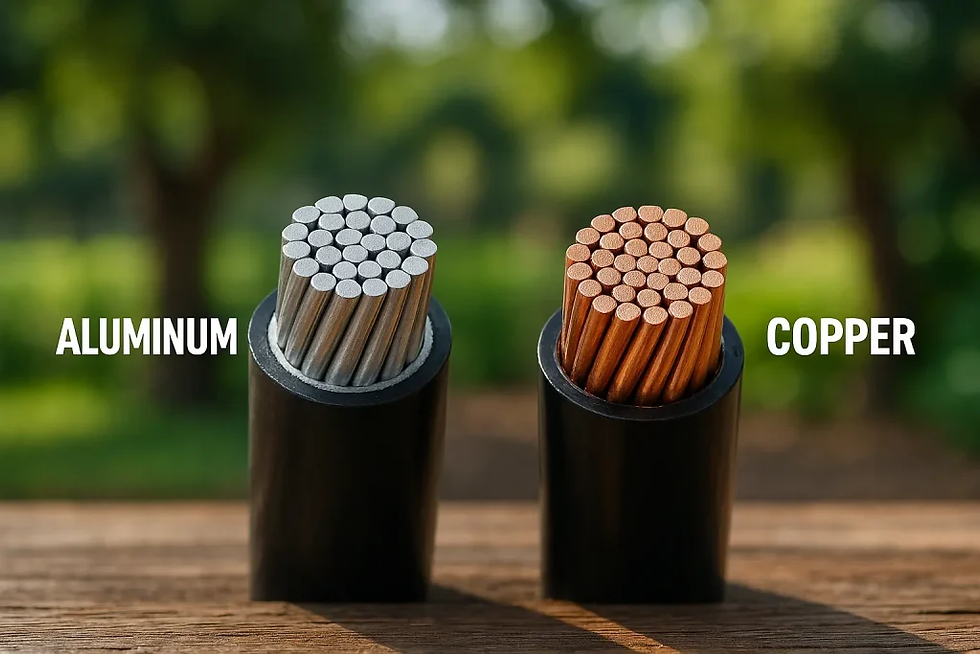
Cost Tradeoffs: Aluminum Wire vs Copper Cost Difference
Conductor price vs installed cost
Aluminum is often cheaper per unit length than copper. But installed cost depends on more than the conductor itself:
terminations (labor and parts),
connector pricing (especially Al/Cu rated lugs),
conduit fill and possible upsizing of conduit/raceway,
and time spent on correct prep and torque.
So even if aluminum wins on wire cost, the job may break even—or copper can still win—on the full installation.
The “hidden” line items: Al/Cu rated lugs, anti-oxidant compound, labor
Aluminum requires correct termination components and practices:
Connectors marked for aluminum
often anti-oxidant joint compound use (per manufacturer instructions and code approach)
proper torque to prevent loosening under thermal cycling
In practice, failure to account for connector cost is where “cheap aluminum” estimates go wrong.
Conduit fill and how larger conductors affect the job
If you size up aluminum to match copper ampacity, you might also:
increase conductor diameter,
reduce raceway fill capacity,
potentially require a larger conduit or a different routing strategy.
That can add material cost and labor.
Special Comparison: 4 AWG Copper vs 2 AWG Aluminum Ampacity
Why 2 AWG Al often shows up in designs to match Cu ampacity
Because aluminum generally needs “more metal” (larger cross-sectional area) to carry the same current with comparable constraints, 2 AWG aluminum is often used as the “match” for 4 AWG copper in typical NEC-based designs (depending on insulation rating and conditions).
But the exact pairing depends on:
insulation type (THHN vs XHHW vs others),
temperature rating column,
conductor quantity adjustment,
and installation conditions.
How to verify using NEC Table 310.16(B)(16)
To verify “4 AWG copper vs 2 AWG aluminum ampacity,” the reliable process is:
Identify exact conductor insulation type and rating (from jacket markings).
Choose the correct NEC table and temperature column for that insulation rating.
Apply adjustment factors for number of conductors and ambient temperature.
Confirm the termination and connection components are acceptable for aluminum.
If you want a reliable, citation-friendly answer, you must tie to the correct NEC table/column rather than relying on general rules.
4 AWG THHN Copper vs XHHW Aluminum: What to Check Before You Specify
Insulation and temperature rating implications
THHN (copper) and XHHW (often aluminum) are both common building-wire insulation types, but they have different construction and temperature ratings.
Why it matters:
NEC ampacity is tied to the insulation rating/temperature column selected.
Installation temperature/conditions affect allowable current.
So the same “4 AWG” label can still produce different ampacity outcomes if you choose different insulation systems.
Lugs, splices, and marking requirements
Even if the conductor ampacity works out, your termination must be correct:
Use Al/Cu rated lugs suitable for the conductor material.
Follow manufacturer torque instructions.
Use anti-oxidant compound where specified for aluminum terminations.
If you mix copper-only lugs with aluminum wire, the connection risk rises—even if calculations look correct.
Residential Safety: Is 4 AWG Aluminum Wire Safe for Residential Use?
Conditions for safe use (correct terminations and protection)
Aluminum branch-circuit wiring can be safe when:
it’s installed to code (including correct breaker/overcurrent protection sizing),
correct conductor insulation and ampacity are used,
and the termination method is aluminum-appropriate (hardware + compound + torque + prep).
In other words: aluminum is not automatically “unsafe”—bad terminations are the frequent problem.
Common failure modes to avoid
Avoid:
using mismatched connectors not listed for aluminum,
skipping required preparation/compound steps,
under-torquing (or not re-torquing where the installation practice requires it),
poor mechanical support that stresses the conductor and connection.
Featured-Snippet Block: Decision Checklist (Cu or Al?)
Use this checklist when comparing 4 AWG Copper vs Aluminum for a specific project:
Confirm insulation type and rating
e.g., THHN copper vs XHHW aluminum
Compute/confirm NEC ampacity
use the correct NEC Table 310.16 (temperature column)
apply derating factors (ambient temp, number of conductors)
Validate voltage drop for your length
use conductor resistance values (NEC Chapter 9) or a voltage drop calculator
expect aluminum voltage drop to be ~1.6× copper for the same AWG/conditions
Verify termination compatibility
use Al/Cu rated lugs (CO/ALR or similar markings as applicable)
use anti-oxidant joint compound per instructions where required
Check conduit fill and installation practicality
upsizing aluminum may require larger raceways
Document your sizing logic
helpful for inspections and future troubleshooting
Summary: Which One Should You Choose?
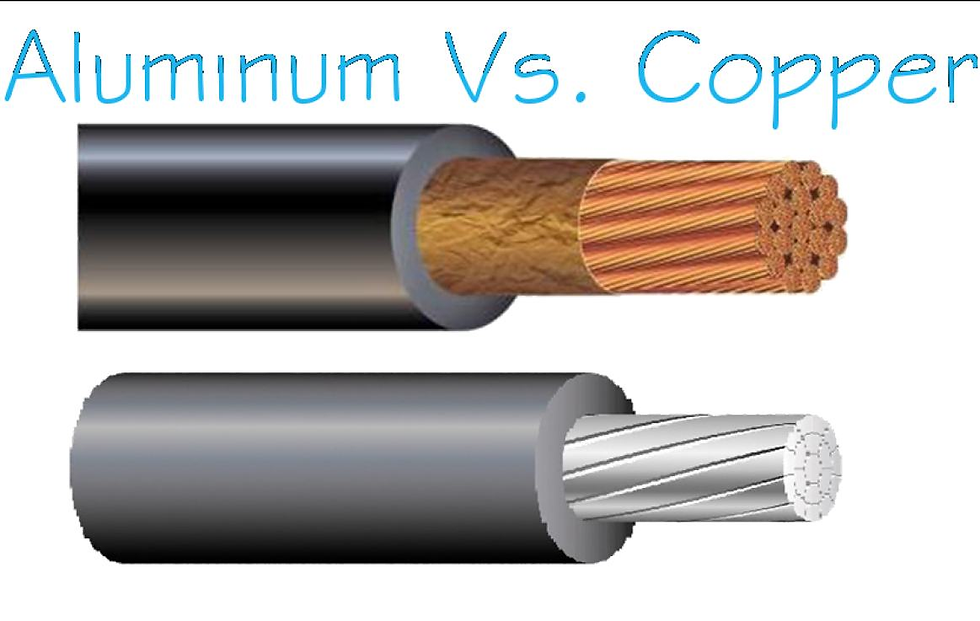
Choose 4 AWG copper when you want a more straightforward match to existing copper-based designs, smaller conduit fill impacts, and generally lower voltage drop for the same run length.
Choose 4 AWG aluminum when it’s permitted and economical for the project—but only after verifying NEC ampacity for the exact insulation/installation conditions and designing for higher voltage drop over distance.
Plan on correct termination hardware and practices. Aluminum’s benefits and safety depend heavily on connection quality, not just the conductor size.
If your project is distance-sensitive (long feeder runs, high current), consider designing around voltage drop early rather than treating it as an afterthought—this is where many copper-vs-aluminum substitutions break.
FAQ
1) Can I use 4 AWG aluminum instead of 4 AWG copper?
Sometimes—but not as a direct “swap by gauge.” You must verify NEC ampacity for the insulation type (and temperature column), apply any derating factors, and confirm the termination hardware is aluminum-rated.
2) How many amps can 4 AWG aluminum carry at 100 feet?
Ampacity does not change just because the conductor run is 100 feet. What changes with distance is voltage drop and potentially the practical ability to operate at the same current without exceeding your design limits. Verify NEC ampacity first, then check voltage drop for the 100 ft run.
3) Is 4 AWG aluminum wire safe for residential use?
It can be safe when installed correctly: correct breaker sizing, NEC-approved ampacity, and proper aluminum termination (Al-rated lugs, proper prep, and anti-oxidant compound where used in your installation practice).
4) What’s the main difference in voltage drop between 4 AWG copper and aluminum?
For the same current and run length, aluminum typically has ~1.6× the voltage drop of copper because aluminum has higher resistivity. Exact values depend on temperature and conductor resistance from code/manufacturer data.
5) How does 4 AWG copper vs 2 AWG aluminum ampacity usually compare?
In many code-based design scenarios, 2 AWG aluminum is used to match or approximate the ampacity of 4 AWG copper, but you must confirm for your exact insulation type and NEC temperature column and include any adjustment factors.
6) What should I check when comparing 4 AWG THHN copper vs 4 AWG XHHW aluminum?
Confirm both the insulation temperature rating and the NEC ampacity table/column you’re using. Then verify that your lugs/splices are rated for the conductor materials and the application.


Comments