
XLPE Cables & Specifications: A Practical Guide for Buyers and Engineers


If you are searching for XLPE cables and specifications, the main thing to know is this: XLPE is the insulation material, not the whole cable specification. XLPE stands for cross-linked polyethylene. The cross-linking process changes polyethylene from a thermoplastic material into a thermoset material, which improves heat resistance and helps the insulation keep its shape under higher temperatures. In practical terms, that usually means better thermal performance, strong electrical insulation properties, and wider use across low- and medium-voltage power applications.
The mistake many buyers make is assuming “XLPE cable” is enough information to specify a product. It is not. A usable specification still needs the voltage rating, conductor type, conductor size, insulation system, sheath, armour or screen if required, temperature rating, installation conditions, and compliance standard.
What Is an XLPE Cable?
An XLPE cable is an electrical cable that uses cross-linked polyethylene insulation around the conductor. Cross-linking changes the molecular structure of polyethylene so the material behaves more like a thermoset than a standard thermoplastic. That is why XLPE is widely used where higher temperature capability, strong dielectric performance, and better resistance to deformation matter.
In many power-cable applications, XLPE is chosen over standard PVC because it can support higher operating temperatures and better electrical performance. That does not mean XLPE is automatically the best choice in every case. It means XLPE is often the better choice where heat, electrical stress, or installation conditions make standard PVC less attractive.
What “XLPE Cable Specifications” Actually Means
When someone asks for XLPE cable specifications, they are usually asking one of two things:
What performance does XLPE insulation typically offer?
How do I read an XLPE cable datasheet correctly?
The second question is the more useful one, because there is no single universal XLPE specification. A low-voltage 0.6/1 kV CU/XLPE/PVC power cable and a medium-voltage screened and armoured XLPE cable are both “XLPE cables,” but they are built for very different duties and standards.
That is why the right way to read XLPE cable specifications is to treat the datasheet as a selection tool, not just a product description.
The Key XLPE Cable Specifications to Check
Below are the fields that matter most when reviewing an XLPE cable.
Specification field | What it tells you | Why it matters |
Voltage rating | The electrical stress the cable is designed to withstand | Prevents under-specifying insulation |
Conductor material and class | Copper or aluminium, solid or stranded class | Affects conductivity, flexibility, termination, and cost |
Insulation type | XLPE and its thickness | Drives thermal and dielectric performance |
Sheath / jacket | PVC, PE, LSZH, etc. | Affects environmental and fire behavior |
Screen / shield | Metallic screen, conductor screen, insulation screen | Important in many MV designs |
Armour | SWA, AWA, tape armour, or none | Matters for mechanical protection and installation |
Temperature rating | Normal, overload, short-circuit values | Affects safe operation and sizing assumptions |
Current rating | Ampacity under stated conditions | Must match the actual installation environment |
Standards and tests | IEC, UL, CSA, fire and smoke tests | Confirms compliance and suitability |
Voltage Rating
This is the first filter. If the voltage rating is wrong, everything else is secondary.
Do not ask for “XLPE cable” when you really need “0.6/1 kV CU/XLPE/PVC” or “12/20 kV screened XLPE cable.” The voltage class changes the entire construction.
Conductor Material and Class

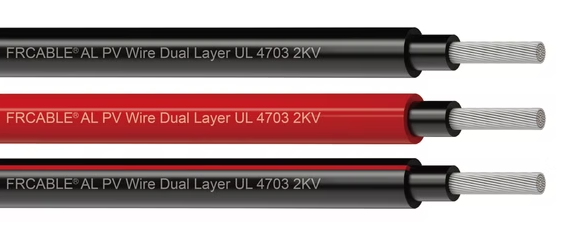
Most specification sheets tell you whether the conductor is copper or aluminium, and whether it is solid or stranded.
Why this matters:
Copper usually gives better conductivity and smaller size for the same current, but at higher material cost.
Aluminium is lighter and often lower cost, but terminations and conductor sizing need careful attention.
Stranding class affects flexibility, handling, and bending behavior.
Insulation, Sheath, and Overall Construction
This is where people often stop too early. XLPE may be the insulation, but the outer sheath still matters. A cable might be CU/XLPE/PVC, CU/XLPE/LSZH, or a screened and armoured MV construction with additional layers.
The practical point is simple: XLPE tells you the insulation material, not the whole environmental profile of the cable. Sheath choice still influences chemical resistance, UV behavior, flame behavior, and installation suitability.
Screen and Armour
In many low-voltage power cables, you may not need a metallic screen. In medium-voltage cables, screened constructions are common because the electrical field has to be controlled.
Armour matters where the installation needs more mechanical protection:
SWA or steel tape armour is common in multi-core applications
AWA may be used in some single-core constructions
unarmoured designs are used where mechanical protection is provided by the installation method instead
Do not treat armour as a default. It should be driven by installation risk.
Temperature Rating
This is one of the biggest reasons XLPE is specified. Many XLPE power-cable designs are commonly rated around 90°C for normal operation, with higher short-term emergency and short-circuit limits depending on the product and standard.
The critical nuance: treat these as product-specific values, not as a blanket rule for every cable sold with XLPE insulation.
Current Rating and Installation Conditions
Ampacity is where many non-specialist buyers get misled. The current rating printed in a table is only valid under stated conditions. It changes with:
ambient temperature,
ground temperature,
laying method,
cable grouping,
conduit or tray installation,
and cable formation.
When you read current rating, always ask:
In air or in ground?
At what ambient or soil temperature?
Single cable or grouped?
Flat formation or trefoil?
In conduit, tray, trunking, or direct burial?
That is how you avoid underperforming installations and overconfident procurement decisions.
Fire, Smoke, and Environmental Performance
This is where oversimplified XLPE content often fails readers. XLPE has strong electrical properties, but XLPE alone does not automatically mean low-smoke, halogen-free, or fire-resistant. Those claims depend on the complete cable design and the applicable test standards.
In practical terms, check the actual fire or smoke standards listed on the datasheet instead of assuming the insulation material tells the whole story.
Typical XLPE Cable Constructions
Low-Voltage XLPE Cable Example
A common LV construction is something like:
XLPE insulation
PVC or LSZH sheath
optional steel wire armour
rated 0.6/1 kV
operating temperature around 90°C for the listed product
This kind of construction is common in general power distribution and building or industrial installations.
Medium-Voltage XLPE Cable Example

A typical MV XLPE construction is more layered:
copper or aluminium conductor
semi-conducting conductor screen
XLPE insulation
semi-conducting insulation screen
copper tape or copper wire metallic screen
separation sheath
optional armour
oversheath
This distinction matters because some buyers search “XLPE cable” while comparing products that are not even in the same construction family.
XLPE vs PVC: When XLPE Is Worth Choosing
XLPE is often the better choice when you need:
higher operating temperature capability,
better dielectric performance,
better resistance to deformation under heat,
improved performance in more demanding power applications.
PVC still has a place. It is widely used, cost-effective, and often easier to justify in standard low-voltage building applications where the higher performance of XLPE is not necessary.
The right question is not “Is XLPE better than PVC?” It is “Does this application justify XLPE’s performance profile and cost?”
Common Mistakes When Reading XLPE Cable Specs
1. Treating XLPE as the Full Specification
It is only the insulation system. You still need the complete construction.
2. Using Current Rating Without Checking Installation Conditions
Ampacity tables are conditional, not universal.
3. Assuming All XLPE Cables Have the Same Temperature Rating
Many power cables cluster around 90°C normal operation, but exact values depend on the product and standard.
4. Confusing Fire Performance With Insulation Material
XLPE alone does not make a cable fire-resistant or low-smoke. Overall construction and test compliance matter.
5. Ignoring Voltage Class
LV and MV XLPE cables can look similar in name but differ greatly in construction and intended use.
How to Choose the Right XLPE Cable
Use this quick decision sequence:
Define the voltage class first.Start with the system voltage and applicable standard.
Confirm the installation environment.Tray, conduit, trunking, direct burial, wet area, chemical exposure, UV exposure, or confined routing all change the right construction.
Check conductor and flexibility needs.Copper vs aluminium and conductor class affect installability and termination.
Choose sheath and armour based on risk.Mechanical damage, environmental exposure, and fire performance should drive this choice.
Verify temperature and ampacity against actual site conditions.Do not rely on catalog values without correction factors.
Check the standard and certification.IEC, UL, CSA, BASEC, and project-specific requirements matter.
The smart buyer’s mindset is this: buy the specification, not the acronym.
FAQ
What does XLPE stand for in cables?
XLPE stands for cross-linked polyethylene. It is an insulation material used in many power cables for stronger heat resistance and electrical performance.
What are the main XLPE cable specifications to check?
Check voltage rating, conductor material and class, insulation, sheath, armour or screen, temperature rating, current rating basis, and applicable standards.
What is the typical operating temperature of XLPE cable?
Many XLPE power-cable products are rated for about 90°C under normal operation, but the exact value depends on the product and the applicable standard.
Is XLPE better than PVC?
Not in every application. XLPE is often better for higher-temperature or more demanding power applications, while PVC remains common for lower-cost standard low-voltage use.
Which standards are most relevant to XLPE power cables?
Common standards include IEC, UL, CSA, and project-specific regional requirements. The exact one depends on cable type, voltage class, and market.
Conclusion
XLPE cable is best understood as a performance-oriented insulation system inside a broader cable design. That is why the best way to evaluate XLPE cables is not to ask whether the cable is “XLPE,” but to ask whether the full specification matches the voltage, installation, thermal demands, mechanical risk, and compliance requirements of the project.
Practical next step: before you compare suppliers, build a short specification checklist covering voltage class, conductor, insulation, sheath, armour, temperature rating, installation method, current rating basis, and compliance standard. That will eliminate most poor-fit options before price discussions even start.


Comments