
What Is 8 Gauge Wire Used For? Common Applications, Ampacity, and Wire Selection

8 gauge wire, also known as 8 AWG wire, is commonly used in automotive electrical systems, marine equipment, battery connections, selected solar power applications, and industrial machinery. Its relatively large conductor cross-section makes it suitable for certain electrical circuits that require more current capacity and lower resistance than smaller wires can provide.
However, 8 gauge wire is not suitable for every high-current application. Its performance depends on the conductor material, insulation rating, circuit length, operating temperature, installation method, and applicable electrical standards. Choosing the correct wire requires evaluating both its current-carrying capacity and its voltage-drop performance.
This guide explains what 8 AWG wire is used for, how much current it can carry under specified conditions, how it compares with other wire sizes, and how to determine whether it is appropriate for your electrical application.

1. What Is 8 Gauge Wire?
8 gauge wire is an electrical conductor sized according to the American Wire Gauge (AWG) system. The AWG system uses a reverse numerical scale: the smaller the gauge number, the larger the conductor. Therefore, 8 AWG wire is thicker than 10 AWG wire but thinner than 6 AWG wire.
The nominal dimensions of a solid 8 AWG conductor are approximately 3.26 mm in diameter and 8.37 mm² in cross-sectional area. These dimensions describe the conductor itself, not the diameter of the complete insulated cable.
Key Specifications of 8 AWG Wire
Specification | Typical value or characteristic |
Wire size | 8 AWG |
Nominal solid conductor diameter | 3.26 mm (0.1285 in) |
Nominal conductor cross-sectional area | 8.37 mm² |
Available conductor materials | Copper, tinned copper, aluminum, depending on product |
Common insulation materials | PVC, XLPE, and other application-specific compounds |
Voltage rating | Depends on the cable construction and certification |
Temperature rating | Depends on the insulation and product specification |
Typical application categories | Automotive, marine, battery systems, selected power circuits, and industrial equipment |
These specifications are general reference points. Actual wire diameter, resistance, flexibility, outside diameter, and ratings depend on conductor construction and insulation design.
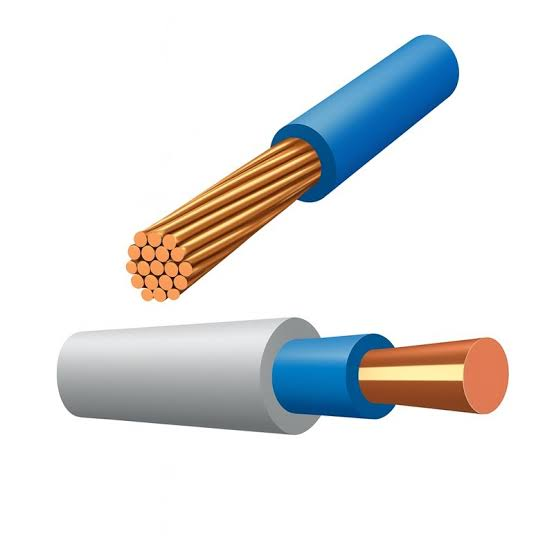
For example, stranded 8 AWG wire uses multiple smaller strands instead of one solid conductor. Stranded wire can offer better flexibility for equipment subjected to vibration or movement, while the overall cable diameter depends on the insulation thickness and construction.
It is also important to distinguish wire gauge from insulation type. Two cables can both use 8 AWG conductors yet have very different voltage ratings, temperature limits, and environmental suitability.
2. What Is 8 Gauge Wire Commonly Used For?
8 AWG wire is selected for applications where the required current, circuit length, and installation conditions make its conductor size appropriate. Common uses include automotive power circuits, marine electrical systems, battery connections, selected solar equipment connections, and industrial machinery.
2.1 Automotive Electrical Systems
Typical uses: selected power circuits, audio equipment, auxiliary batteries, and electrical accessories.
In vehicles, 8 gauge wire is often used for aftermarket electrical equipment and selected battery-related circuits. Examples include:
Power supply wiring for some car audio amplifiers and subwoofer systems.
Auxiliary batteries and selected battery interconnections.
Additional electrical accessories and power distribution circuits.
Selected low-voltage equipment connections where the conductor is appropriately sized.
Car audio installations are a common example because amplifiers can draw substantial current, particularly during high-output operation. However, an amplifier's power rating alone does not determine the correct wire size. Supply voltage, expected current, cable length, installation environment, and manufacturer recommendations must also be considered.
For automotive battery connections, the cable must withstand the expected current and environmental conditions. The appropriate fuse or other overcurrent protection should protect the conductor against fault currents.
Standard 8 AWG wire is not automatically suitable for every vehicle installation. Engine-compartment temperatures, abrasion, vibration, oil exposure, and routing near moving components can require specific automotive cable constructions.
2.2 Marine and Boat Wiring
Typical uses: selected onboard DC power circuits and auxiliary equipment.
Marine electrical systems commonly operate on low-voltage DC power, making conductor resistance and voltage drop important design considerations.
Depending on the application, 8 AWG marine cable may be used for:
Selected battery connections and DC distribution circuits.
Auxiliary onboard equipment.
Certain marine electronics and electrical accessories.
Selected pumps or other powered devices when the calculated current and cable length permit.
A boat's operating environment presents additional challenges. Moisture, salt, vibration, and movement can accelerate corrosion or damage unsuitable wiring.
Tinned copper stranded conductors are used in many marine cables because the tin coating can improve corrosion resistance. The cable must still have an appropriate insulation system, conductor construction, and product rating for its intended location.
Cable length is particularly important on boats. A circuit may need a larger conductor even when its current is relatively modest if the equipment is located far from the battery or distribution panel.
2.3 Residential Electrical Applications
Typical uses: selected branch circuits and equipment connections when permitted by electrical codes.
In residential installations, 8 AWG conductors may be appropriate for certain dedicated loads or equipment connections, depending on the wiring method and applicable electrical code.
Potential applications include selected heating equipment, electrical appliances, and other circuits whose conductor requirements call for this wire size.
However, 8 AWG wire should not be selected for a residential circuit based on gauge alone. The allowable ampacity depends on the conductor material, insulation type, termination temperature ratings, ambient temperature, number of current-carrying conductors, and installation method.
Circuit breakers, fuses, receptacles, switches, and equipment terminals must also be compatible with the circuit design.
For example, an 8 AWG copper conductor with 90°C-rated insulation does not automatically permit the circuit to operate at the conductor's full 90°C ampacity. The temperature rating of the equipment terminals and other applicable code requirements can impose a lower limit.
2.4 Solar Power and Battery Systems
Typical uses: selected battery-side connections, charge-controller connections, and auxiliary DC equipment.
In solar power systems, 8 AWG wire may be suitable for selected DC connections where the calculated current, cable length, voltage rating, insulation, and environmental requirements are compatible with the cable specifications.
Potential applications include:
Selected battery interconnections in off-grid or energy-storage systems.
Certain charge-controller or inverter connections.
Auxiliary DC power circuits.
Selected equipment connections in solar installations.
The required conductor size is not determined by the system voltage alone. A 12 V battery circuit, for example, may experience significant voltage drop if its cable is too long or its current is too high. A higher-voltage circuit carrying the same power may require less current, but all applicable equipment and protection requirements still need to be checked.
It is also important to distinguish between battery-side wiring and photovoltaic (PV) string wiring.
Battery connections carry current associated with charging, discharging, and equipment operation. PV string conductors connect photovoltaic modules and other parts of the array circuit. These circuits can have different design requirements, voltage ratings, cable listings, and environmental exposure.
For PV string wiring, the cable must be suitable for the system's maximum voltage and current, outdoor exposure, and applicable installation standards. In the United States, listed PV Wire compliant with UL 4703 is one recognized option for qualifying photovoltaic applications; other wiring methods may be permitted when the applicable code allows them.
Consequently, ordinary 8 AWG automotive or battery cable should not be substituted for an appropriately rated solar PV cable merely because its conductor size appears sufficient.
2.5 Industrial Equipment and Machinery
Typical uses: selected equipment power circuits and electrical connections.
Industrial facilities use different wire and cable constructions according to the voltage, current, equipment, and installation environment. 8 AWG wire may be suitable for selected machinery power circuits, auxiliary systems, and equipment connections.
Relevant considerations include:
Continuous and peak current requirements.
Exposure to heat, oils, chemicals, or moisture.
Mechanical protection and vibration.
Cable flexibility and movement.
Terminal and connector compatibility.
Required approvals and electrical standards.
For equipment with moving parts, the conductor's flexibility and fatigue resistance may be as important as its nominal cross-sectional area. A cable intended for fixed installation should not automatically be used in a continuously moving cable carrier or flexing assembly.
The correct choice depends on the machine's electrical specifications and the cable's construction.
3. How Many Amps Can 8 Gauge Wire Handle?
The current-carrying capacity of a conductor is called its ampacity. It describes the maximum current a conductor can carry under specified conditions without exceeding its applicable temperature limits.
There is no single ampacity value that applies to every type of 8 AWG wire.
For example, under the conditions specified in NEC ampacity Table 310.16, 8 AWG copper conductors have the following reference ampacities:
Copper conductor temperature column | Reference ampacity |
60°C | 40 A |
75°C | 50 A |
90°C | 55 A |
These are reference table values for the relevant installation conditions, not universal ratings for all 8 AWG cable. The table is based on an ambient temperature of 30°C (86°F) and no more than three current-carrying conductors in the specified wiring arrangement. Actual allowable current can be lower after applying relevant code rules and corrections.
3.1 Conductor Material
Copper and aluminum have different electrical resistances. For comparable dimensions, copper generally has lower resistance than aluminum.
As a result, copper and aluminum conductors of the same nominal gauge do not necessarily have the same allowable ampacity. Aluminum wiring also requires suitable connectors and terminations designed for the conductor material.
3.2 Insulation Temperature Rating
The insulation system determines the conductor's permitted operating temperature under its product rating and applicable standards.
However, a higher insulation temperature rating does not automatically mean the complete circuit can use the corresponding ampacity. Equipment terminal ratings and other code requirements must also be satisfied.
3.3 Ambient Temperature and Installation Conditions
High ambient temperatures reduce the available margin for heat dissipation. Similarly, several loaded conductors grouped together can produce more heat than a conductor installed alone under otherwise similar conditions.
Installation in conduit, cable assemblies, exposed locations, or other wiring arrangements can change the applicable requirements.
3.4 Continuous Loads and Overcurrent Protection
A circuit's design must account for how the load operates, including whether it runs continuously, as well as the applicable requirements for conductor sizing and overcurrent protection.
A fuse or circuit breaker must not be selected simply by matching a commonly quoted ampacity figure for 8 AWG wire. The protective device, conductor, load, terminals, and installation must form a compliant system.
Practical takeaway: Use ampacity tables for the applicable wiring method and then verify all required corrections, limitations, and equipment specifications. Do not treat 40 A, 50 A, or 55 A as an unconditional rating for every 8 AWG cable.
4. How Far Can You Run 8 Gauge Wire?
Wire length affects voltage drop. As current travels through a conductor, electrical resistance causes some voltage to be lost along the circuit. The longer the conductor, the greater the resistance, assuming the same conductor material and size.
This effect is particularly important in low-voltage systems such as 12 V automotive equipment, 24 V machinery, and battery-based energy storage.
4.1 Why Voltage Drop Matters
Excessive voltage drop can cause equipment to receive less voltage than it requires. Depending on the application, this may reduce performance, interfere with reliable operation, or increase electrical losses.
A cable that meets an ampacity requirement may still be too small for a long run because it produces excessive voltage drop.
For example, consider a hypothetical 12 V DC circuit using 8 AWG copper wire:
One-way cable distance: 100 ft.
Total outgoing and return conductor length: approximately 200 ft.
Current: 20 A.
Approximate 8 AWG copper resistance at 20°C: 0.628 Ω per 1,000 ft.
Under these assumptions, the conductor resistance is approximately 0.126 Ω for the complete loop, producing about 2.5 V of voltage drop at 20 A. That represents roughly 21% of the nominal 12 V supply.
This is an illustrative calculation, not a recommended design value. Actual resistance increases as conductor temperature rises, and connector resistance can add further losses.
The example shows why a wire that is physically substantial may still be unsuitable for a long, low-voltage circuit.
4.2 How Voltage Affects Cable Selection
For the same electrical power, a higher supply voltage generally permits a lower current. Lower current reduces resistive losses when the conductor resistance remains unchanged.
Therefore, the same 8 AWG cable may perform differently in 12 V, 24 V, and 48 V systems.
However, higher voltage does not remove the need to check insulation ratings, ampacity, protection, and equipment requirements.
4.3 How to Determine the Required Wire Size
To evaluate an 8 AWG cable run, identify:
The supply voltage and expected load current.
The one-way cable length and the complete current-return path.
The conductor material and resistance.
The maximum acceptable voltage drop for the equipment.
The installation conditions and applicable ampacity requirements.
For battery circuits, the return conductor must be included unless the circuit design uses a verified alternative return path. A calculation based only on the positive cable length can significantly underestimate total circuit resistance.
If 8 AWG wire produces excessive voltage drop, a larger conductor may be required even if its ampacity appears adequate.
5. Is 8 Gauge Wire Suitable for 12V, 24V, and 48V Systems?
8 AWG wire can be used in different DC voltage systems, but the suitability of the cable depends on more than the supply voltage. Current demand, cable length, acceptable voltage drop, insulation rating, and the requirements of the connected equipment must all be considered.
5.1 8 AWG Wire in 12V Systems
In a 12 V system, relatively high current may be required to deliver a given amount of electrical power. Consequently, voltage drop can become a major concern.
Potential applications include selected automotive accessories, battery connections, car audio equipment, and auxiliary power circuits.
For these applications, check the expected operating current, cable length, and the equipment manufacturer's wire-sizing recommendations. A short connection and a long cable run can require different conductor sizes even when they supply the same equipment.
5.2 8 AWG Wire in 24V Systems
A 24 V system can deliver the same power as a 12 V system with lower current, assuming comparable operating conditions. This can reduce resistive voltage drop for a given cable size and length.
8 AWG wire may be appropriate for certain battery circuits, industrial equipment, and DC power distribution applications when its ratings satisfy the system requirements.
Nevertheless, a higher supply voltage does not automatically make 8 AWG wire suitable for every load. Ampacity, insulation voltage rating, fault protection, and installation conditions must still be checked.
5.3 8 AWG Wire in 48V Systems
In 48 V battery and power systems, 8 AWG wire may be suitable for selected equipment connections and auxiliary circuits.
Its suitability depends on the current flowing through the cable, the length of the circuit, and the electrical requirements of the equipment. Battery-side conductors connected to an inverter, for example, must be sized according to the inverter's expected input current and operating conditions.
The final conductor size should be confirmed using the equipment manufacturer's documentation and applicable electrical standards.
6. 8 AWG Copper Wire vs. 8 AWG Aluminum Wire
Copper and aluminum are both used as electrical conductor materials, but they have different electrical and mechanical properties. Choosing between them requires considering conductivity, weight, cost, connection requirements, and the intended application.
Comparison factor | 8 AWG copper wire | 8 AWG aluminum wire |
Electrical conductivity | Higher | Lower |
Resistance at comparable dimensions | Generally lower | Generally higher |
Weight | Heavier | Lighter |
Material cost | Generally higher | Generally lower |
Connection requirements | Suitable copper-rated terminals and connectors | Connectors and terminations rated for aluminum conductors |
Corrosion considerations | Depends on the environment and conductor construction | Requires appropriate connections and corrosion management |
Application suitability | Common in automotive, battery, marine, and many equipment circuits | Used where aluminum conductors are permitted and appropriately engineered |
6.1 Why Copper Is Commonly Used
Copper's relatively high electrical conductivity makes it useful for applications requiring good electrical performance within a limited conductor size.
Copper conductors are common in automotive wiring, marine cables, equipment connections, and battery circuits. Stranded copper is particularly useful in applications where flexibility is needed.
Tinned copper is also used when improved resistance to surface corrosion is desirable, including certain marine environments.
6.2 When Aluminum May Be Appropriate
Aluminum is lighter than copper and can offer cost advantages in suitable electrical installations.
However, aluminum generally needs a larger cross-sectional area than copper to achieve comparable electrical performance under similar conditions. Its connection requirements also differ, so terminals and connectors must be specifically approved for the conductor material.
Do not assume that 8 AWG copper and 8 AWG aluminum are interchangeable. Verify the applicable ampacity, voltage drop, connector compatibility, and installation requirements before choosing either material.
7. 8 AWG vs. 10 AWG vs. 6 AWG Wire: Which Should You Choose?
Wire gauge selection involves balancing electrical requirements, conductor size, cost, routing space, and installation conditions.
The table below compares the nominal dimensions of three commonly used AWG sizes.
Specification | 10 AWG | 8 AWG | 6 AWG |
Nominal solid conductor diameter | 2.59 mm | 3.26 mm | 4.12 mm |
Nominal conductor area | 5.26 mm² | 8.37 mm² | 13.30 mm² |
Relative conductor size | Smallest | Intermediate | Largest |
Resistance at the same material and length | Highest | Lower than 10 AWG | Lowest of the three |
General voltage-drop performance | Most limited | Better than 10 AWG | Better than 8 AWG |
7.1 When Should You Choose 10 AWG Wire?
10 AWG wire may be appropriate for circuits with lower current requirements or shorter distances where the conductor meets the applicable ampacity and voltage-drop requirements.
It may also be useful where a smaller cable is beneficial for routing or termination. However, a smaller conductor should not be selected simply to reduce material cost if it cannot meet the circuit requirements.
7.2 When Should You Choose 8 AWG Wire?
8 AWG wire can be a practical choice when 10 AWG does not provide sufficient electrical performance, but 6 AWG is not necessary for the intended circuit.
Potential applications include selected automotive power circuits, battery connections, marine equipment, and appropriately rated electrical connections.
The correct decision should be based on calculated current and voltage drop, not on a general list of applications.
7.3 When Should You Choose 6 AWG Wire?
6 AWG wire has a larger conductor cross-section and generally lower resistance than 8 AWG wire of the same material and length.
It may be required for higher-current circuits, longer cable runs, or installations where voltage-drop limitations demand a larger conductor.
However, choosing 6 AWG does not eliminate the need to verify ampacity, terminals, overcurrent protection, insulation ratings, and installation conditions.
How Do You Make the Final Choice?
Choose the smallest conductor size that safely meets all applicable requirements for the intended circuit, including voltage drop, ampacity, environmental exposure, and equipment compatibility.
In some cases, the required conductor size will be larger than initially expected because of the length of the circuit or the operating environment.
8. How to Choose the Right 8 Gauge Wire for Your Application
Selecting 8 AWG wire involves matching the cable's electrical and physical characteristics to the actual operating conditions.
8.1 Determine the Required Current
Identify the expected operating current of the connected equipment, including relevant continuous and peak operating conditions.
Equipment nameplate information, technical documentation, and manufacturer recommendations are useful starting points.
Do not select a wire based solely on the equipment's advertised power rating or on a generic ampacity chart.
8.2 Check Cable Length and Voltage Drop
Determine the distance between the power source and the load, and account for the complete current path.
Long cable runs can produce excessive voltage drop, particularly in low-voltage DC systems. If the calculated drop exceeds the equipment's permitted limits, a larger conductor may be necessary.
8.3 Select the Appropriate Conductor Material
Choose copper or aluminum according to the application, electrical requirements, weight considerations, and installation constraints.
Also verify that the cable terminals and connectors are suitable for the chosen conductor material.
For mobile, marine, or vibration-prone equipment, conductor stranding and flexibility may be important selection factors.
8.4 Verify the Insulation and Temperature Rating
The insulation must be suitable for the circuit voltage, expected temperature, and environmental exposure.
Depending on the application, requirements may include resistance to moisture, sunlight, abrasion, oil, chemicals, or mechanical stress.
PVC, XLPE, and other insulation materials have different properties. The correct option depends on the complete cable specification rather than the material name alone.
8.5 Check Electrical Standards and Certifications
Different applications can require different cable standards, listings, and approvals.
For example, photovoltaic wiring in the United States must comply with the applicable requirements of the National Electrical Code and the relevant cable listing or wiring method. UL 4703 is a standard associated with photovoltaic wire.
NEMA
Automotive, marine, residential, and industrial installations may have different requirements. Always confirm that the selected cable is approved for its intended use.
8.6 Confirm Connector and Protection Compatibility
The selected cable must work correctly with its terminals, connectors, fuses, circuit breakers, and connected equipment.
Connections should be suitable for the conductor size and material, and the overcurrent protection must comply with the applicable circuit requirements.
A correctly sized conductor can still become unsafe if it is connected improperly or protected by an unsuitable device.
9. Common Mistakes When Using 8 Gauge Wire
Even when the conductor size appears correct, mistakes in cable selection or installation can lead to poor electrical performance and overheating.
Selecting Wire Based Only on Gauge
AWG identifies conductor size, not the cable's complete electrical and environmental ratings. Two 8 AWG cables may have different insulation systems, voltage ratings, and intended applications.
Ignoring Voltage Drop
A conductor may satisfy the applicable ampacity requirement but still be unsuitable for a long circuit. Voltage drop should be evaluated separately, especially in low-voltage DC systems.
Applying Copper Ampacity to Aluminum
Copper and aluminum have different electrical properties. Their allowable currents and connection requirements should not be assumed to be identical.
Overlooking Temperature and Installation Conditions
High ambient temperatures, bundled conductors, and other installation factors can reduce allowable ampacity. The highest temperature rating printed on the insulation does not automatically determine the permitted circuit current.
Choosing an Oversized Fuse or Circuit Breaker
Overcurrent protection must be selected according to the conductor, load, equipment, and applicable electrical code. A fuse should not be upsized merely because the equipment trips it during operation.
Using Unsuitable Cable in Harsh Environments
A general-purpose wire may not withstand sunlight, moisture, salt, abrasion, oil, or repeated movement. Choose a cable construction rated for the actual environment.
Confusing Conductor Diameter With Overall Cable Diameter
An 8 AWG conductor has a nominal solid-wire diameter of approximately 3.26 mm, but the insulated cable will be larger. This distinction matters when evaluating cable routing, conduit fill, connector openings, and installation space.
10. Frequently Asked Questions About 8 Gauge Wire
Is 8 gauge wire thick enough for high-current applications?
It can be suitable for certain high-current applications, but the answer depends on the current, cable length, conductor material, insulation rating, installation conditions, and applicable electrical standards.
A short circuit and a long circuit carrying the same current may require different conductor sizes because of voltage-drop considerations.
Can 8 gauge wire handle 40 amps?
An 8 AWG copper conductor has a reference ampacity of 40 A in the 60°C column of the applicable NEC ampacity table under its specified conditions. Higher temperature columns show different reference values, but other requirements can limit the permitted current.
Is 8 AWG wire suitable for a 12V battery?
It may be suitable for a 12 V battery circuit, depending on the expected current, total circuit length, acceptable voltage drop, cable construction, and protection requirements.
Because low-voltage circuits can experience substantial voltage drop, cable length is particularly important. Battery connections also require suitable terminals and appropriate overcurrent protection.
Can I use 8 gauge wire for a solar panel system?
Potentially, but the exact application matters.
Selected battery-side and auxiliary DC connections may use 8 AWG cable when the electrical requirements are satisfied. PV string wiring, however, must meet the system's voltage, current, environmental, and applicable cable-listing requirements.
Do not substitute ordinary automotive or battery wire for a properly rated PV cable based on conductor size alone.
Is 8 AWG the same as 8 mm² wire?
No. 8 AWG and 8 mm² refer to different wire-sizing conventions.
A nominal 8 AWG solid conductor has a cross-sectional area of approximately 8.37 mm². An 8 mm² conductor has a slightly smaller nominal cross-sectional area. They are close in size but should not automatically be treated as identical when selecting or specifying a cable.
Which is better: 8 AWG copper or aluminum?
Neither material is universally better for every application. Copper offers higher conductivity at comparable dimensions, while aluminum is lighter and can offer cost advantages in appropriate installations.
The choice depends on current requirements, conductor size, connection compatibility, environmental conditions, and the equipment specifications.
Does thicker wire always carry more current?
A larger conductor generally has lower electrical resistance than a smaller conductor made from the same material. However, allowable ampacity also depends on insulation, ambient temperature, installation method, conductor grouping, terminal ratings, and applicable electrical requirements.
A thicker wire is not automatically approved for every application, and a larger conductor does not compensate for unsuitable insulation or improper installation.
Can I use 8 AWG wire for an inverter?
8 AWG wire may be suitable for certain inverter connections, but the correct size must be determined from the inverter manufacturer's requirements, expected DC input current, circuit length, voltage drop, and protection specifications.
Inverters can draw substantial current from low-voltage battery systems. Never select the cable solely from the inverter's AC output rating.
11. Conclusion: Choosing the Right 8 Gauge Wire
8 gauge wire is used in a range of electrical applications, including selected automotive power circuits, marine systems, battery connections, solar equipment connections, and industrial machinery.
Its nominal conductor area of approximately 8.37 mm² makes it larger than 10 AWG wire but smaller than 6 AWG wire. Nevertheless, gauge alone cannot determine whether it is appropriate for a specific circuit.
Before selecting 8 AWG wire, evaluate the required current, complete circuit length, voltage drop, conductor material, insulation rating, operating environment, and applicable electrical standards. Confirm that the connectors, terminals, and overcurrent protection are also suitable for the installation.
The right wire is not simply the one with the correct gauge. It is the cable that meets the electrical, mechanical, environmental, and compliance requirements of the complete application.


Comments