
Solid vs. Stranded 8 AWG Wire: Which Is Better?

When choosing 8 AWG wire for an electrical project, one important decision is whether to use solid or stranded wire. Both conductor types are available in different wire and cable products, but their physical construction affects flexibility, installation, mechanical durability, and connection requirements.
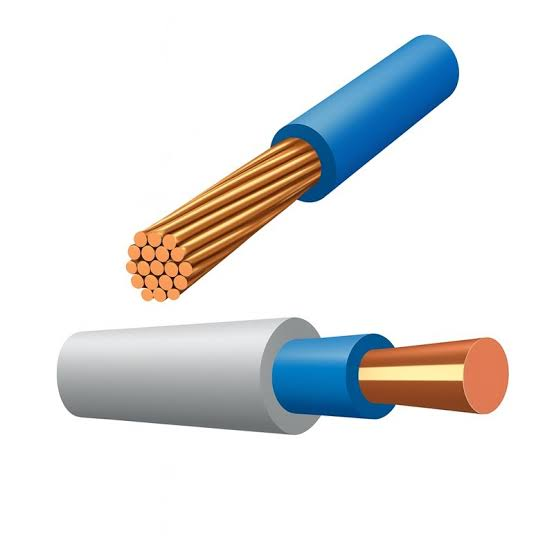
Solid 8 AWG wire consists of one continuous metal conductor, while stranded 8 AWG wire contains multiple smaller wires grouped together to form a conductor. Although both are identified by the same nominal American Wire Gauge (AWG) size, they are not necessarily interchangeable in every application.

For example, stranded copper wire is often the practical choice for automotive power circuits, battery connections, marine equipment, and wiring that must be routed through confined spaces. Solid conductors may be suitable for certain fixed installations when the wiring method and equipment specifications permit their use.
This guide compares solid and stranded 8 AWG wire, explains their electrical and mechanical differences, and shows how to select the right conductor construction for your application.
What Is Solid 8 AWG Wire?
Solid 8 AWG wire contains a single continuous metal conductor. It has a relatively rigid structure, holds its shape during installation, and does not have the individual strands found in stranded wire.
A nominal solid 8 AWG conductor has a diameter of approximately 3.26 mm (0.1285 inches) and a cross-sectional area of approximately 8.37 mm². These dimensions describe the conductor rather than the overall diameter of an insulated cable.
The physical properties of solid wire make it suitable for certain installations where the conductor can remain stationary and does not need to accommodate repeated movement.
Its main characteristics include:
Rigid construction: The conductor holds its shape and generally resists deformation during ordinary handling.
Limited flexibility: It can be more difficult to route through tight bends or confined spaces.
Simple conductor structure: It consists of one continuous metal conductor rather than multiple smaller strands.
Application-specific suitability: Its use depends on the cable specification, installation method, and terminal compatibility.
Solid conductors are available in certain bare-wire and electrical conductor products. However, solid 8 AWG wire is not automatically the standard choice for all large-conductor applications. Many power cables use stranded conductors because flexibility becomes increasingly useful during installation and equipment connection.
Before choosing solid 8 AWG wire, confirm that the specific product is intended for the application and permitted by the applicable electrical requirements.
What Is Stranded 8 AWG Wire?
Stranded 8 AWG wire consists of multiple smaller metal wires arranged together to form a single conductor. The strands may be arranged in a regular geometric pattern, with the number and diameter of the individual strands determined by the conductor design.
For example, a stranded conductor may use seven larger strands or a much finer arrangement containing many smaller strands. Both may be identified as 8 AWG if their construction meets the applicable conductor-size requirements.
Stranded wire is generally more flexible than solid wire of comparable nominal size. This makes it easier to route around corners, connect to equipment, and install in applications where vibration or movement is expected.
Common characteristics include:
Greater flexibility: Multiple strands allow the conductor to bend more easily.
Improved routing: Flexible cable can be easier to install through equipment compartments and around obstacles.
Suitability for many power applications: Stranded conductors are widely used in battery cables, automotive wiring, marine cables, and equipment connections.
Construction-dependent performance: Flexibility, resistance, and mechanical durability vary according to strand size, strand count, conductor material, and cable design.
It is important to distinguish ordinary stranded wire from high-flexibility cable. A conductor made from seven relatively large strands is not necessarily suitable for continuous movement or repeated flexing. Applications involving moving machinery or cable carriers may require a cable specifically designed and rated for repeated flexing.
Solid vs. Stranded 8 AWG Wire: Key Differences
The main difference between solid and stranded 8 AWG wire is conductor construction. This difference affects how the wire behaves during installation and how it performs under mechanical stress.
The following table summarizes the main considerations.
Comparison factor | Solid 8 AWG wire | Stranded 8 AWG wire |
Conductor structure | One continuous metal conductor | Multiple smaller conductors grouped together |
Flexibility | Relatively rigid | Generally more flexible |
Routing through tight spaces | Can be more difficult | Usually easier |
Repeated bending | Generally less suitable | Better suited when the cable is designed for the movement |
Vibration-prone applications | Requires careful evaluation | Often a practical choice |
Conductor resistance | Depends on material and actual dimensions | Depends on material, strand construction, and total metal area |
Installation requirements | Must match the approved wiring method | Must match the approved wiring method and termination requirements |
Typical considerations | Fixed installations where permitted | Power cables, equipment connections, and flexible wiring |
Neither construction is universally better. The correct choice depends on the electrical requirements, installation environment, cable specification, and connection method.
Is Solid or Stranded 8 AWG Wire More Flexible?
Stranded 8 AWG wire is generally more flexible because its conductor consists of multiple smaller wires instead of one continuous metal rod.
When a stranded conductor bends, the individual strands can move slightly relative to one another. This construction allows the overall cable to bend more easily than a comparable solid conductor.
This flexibility is useful when the cable must pass through narrow spaces, bend around equipment, or accommodate vibration.
Solid wire behaves differently. Its single conductor resists bending and tends to retain its shape. Although this can be useful in some fixed installations, repeatedly bending a solid conductor can cause mechanical fatigue and eventually lead to breakage.
However, flexibility depends on more than whether a wire is stranded.
A finely stranded flexible cable can bend much more easily than a conductor with only a few large strands. Insulation thickness, shielding, and the overall cable construction also influence flexibility.
For applications involving repeated movement, check the manufacturer's specified minimum bend radius and flexing suitability rather than relying solely on the term "stranded wire."
Does Solid or Stranded 8 AWG Wire Carry More Current?
Neither solid nor stranded 8 AWG wire should automatically be assumed to carry more current simply because of its construction.
The allowable current, known as ampacity, depends on several factors:
Conductor material and actual cross-sectional area.
Insulation material and temperature rating.
Ambient temperature.
Installation method and heat dissipation.
Number of current-carrying conductors installed together.
Equipment terminal ratings and applicable electrical requirements.
Solid and stranded conductors of the same nominal AWG size may have different resistance values depending on their construction. A stranded conductor's total metal area and strand arrangement determine its electrical properties.
For that reason, use the product's specified electrical resistance and applicable ampacity information when comparing two 8 AWG products.
Understanding Ampacity
Ampacity is the allowable current under specified conditions. It is not a universal rating assigned to every wire of a particular gauge.
For example, the 2023 National Electrical Code Table 310.16 lists reference ampacities of 40 A, 50 A, and 55 A for 8 AWG copper conductors in the 60°C, 75°C, and 90°C temperature columns, respectively, under the table's specified conditions.
These figures are reference values for a particular wiring context, not general ratings for every 8 AWG automotive cable, battery cable, or other stranded or solid wire product.
The actual allowable current may be lower because of terminal temperature limits, ambient temperature, conductor grouping, insulation restrictions, or other applicable requirements.
When selecting solid or stranded 8 AWG wire, verify the finished product's ratings and the conditions under which those ratings apply. Do not choose a conductor based solely on a generic ampacity chart.
Does Solid or Stranded 8 AWG Wire Have Lower Resistance?
Electrical resistance depends primarily on conductor material, conductor length, cross-sectional area, and temperature.
For conductors made from the same material and with comparable metal cross-sectional areas, solid wire can have slightly lower DC resistance than stranded wire because the individual strands in a stranded conductor follow a longer path.
However, the difference is product-dependent. Two cables labeled 8 AWG may have different strand arrangements, conductor dimensions, or manufacturing specifications.
The AWG designation identifies a nominal conductor size. It does not guarantee that every product has exactly the same measured resistance.
For an accurate comparison, examine the manufacturer's resistance specification and check the temperature at which the measurement is stated. Resistance increases as the conductor becomes hotter, so values measured at different temperatures should not be compared directly without accounting for that difference.
Why Resistance Matters in 8 AWG Applications
Conductor resistance affects voltage drop and electrical losses.
In a long DC circuit, resistance can reduce the voltage delivered to the connected equipment. This is particularly important in 12 V and 24 V battery systems, where even a modest voltage drop can represent a meaningful percentage of the supply voltage.
If two 8 AWG products are otherwise suitable for the installation, comparing their specified resistance may help determine which provides better electrical performance.
Nevertheless, a small resistance difference between two conductor constructions should not replace the more important checks of ampacity, cable length, insulation ratings, and application suitability.

When Should You Use Solid 8 AWG Wire?
Solid 8 AWG wire may be suitable for certain fixed electrical installations when the conductor, wiring method, and equipment terminals are specifically permitted for that application.
Its rigid construction can be useful where the wire remains stationary and does not need to pass through complex bends or accommodate repeated movement.
Potential considerations include:
Stationary installations using an approved solid conductor.
Certain grounding or electrical conductor products specifically manufactured for the intended service.
Applications where the cable specification and terminal design permit solid conductors.
However, solid 8 AWG wire should not be assumed to be suitable for every fixed electrical installation. Some wiring methods require particular conductor constructions, and equipment terminals may accept only specified wire types.
Its rigidity can also make it difficult to route and terminate in confined enclosures. Even in a stationary installation, the conductor must be installed without excessive bending or mechanical stress.
Before selecting solid wire, review the product markings, installation requirements, and equipment documentation.
When Should You Use Stranded 8 AWG Wire?
Stranded 8 AWG wire is often the more practical choice when flexibility, routing, or resistance to vibration is important.
Its multiple-strand construction makes it easier to connect equipment and route cables through confined spaces than a similarly sized solid conductor.
Automotive Electrical Systems
Stranded copper wire is widely used in automotive power circuits because vehicle wiring often passes around components and experiences vibration.
Potential applications include selected car audio power connections, auxiliary battery wiring, and electrical accessories.
The correct cable size still depends on current, circuit length, voltage drop, temperature, and the specific automotive cable rating.
Battery and Inverter Connections
Stranded battery cable can be useful for selected connections between batteries and electrical equipment.
Battery circuits may carry high current, especially in low-voltage systems. Consequently, conductor size, cable length, connection quality, and overcurrent protection must all be evaluated.
The use of stranded wire does not automatically make an 8 AWG cable suitable for every battery or inverter connection.
Marine Electrical Systems
Stranded wire is a practical option for many onboard electrical connections because boats experience vibration and continuous movement.
Depending on the environment and application, tinned copper conductors and appropriately rated marine insulation may be beneficial.
The finished cable must meet the applicable requirements for moisture exposure, temperature, corrosion protection, voltage, and installation location.
Solar and Energy Storage Systems
Stranded 8 AWG cable may be suitable for selected battery-side and auxiliary DC connections in solar energy storage systems.
However, battery cables and photovoltaic string cables have different requirements. PV string wiring must be suitable for the system's maximum voltage, current, environmental exposure, and applicable cable standards.
Do not substitute general-purpose stranded wire for a properly rated photovoltaic cable based on gauge alone.
Industrial Equipment and Machinery
Stranded conductors are commonly used for equipment power connections where routing flexibility and vibration resistance are valuable.
For machinery involving repeated movement, select a cable specifically rated for the flexing conditions. Ordinary stranded construction does not necessarily provide the fatigue resistance needed for continuous motion.
Solid vs. Stranded 8 AWG Wire for Battery Connections
For many battery applications, stranded 8 AWG cable is the practical choice because it is easier to route between batteries, equipment, and distribution points.
However, the conductor construction is only one part of battery cable selection.
Before using 8 AWG wire for a battery connection, consider the following factors.
Current demand: Determine the expected operating current and any relevant peak or continuous load requirements.
Cable length: Measure the complete current path, including both outgoing and return conductors in a two-wire DC circuit.
Voltage drop: Check whether the selected cable keeps voltage drop within the limits required by the connected equipment.
Conductor material: Confirm whether copper or another permitted conductor material is suitable for the application.
Cable insulation: Verify the voltage rating, temperature rating, and environmental suitability.
Terminations: Select terminals and connectors compatible with the conductor size, material, and construction.
Overcurrent protection: Ensure the fuse or circuit breaker is suitable for the circuit and the applicable electrical requirements.
For long or high-current battery circuits, a larger conductor may be required even when 8 AWG would otherwise appear adequate based on its nominal size.
Solid vs. Stranded 8 AWG Wire for Solar Applications
In solar power systems, the appropriate wire depends on where the cable is installed and what it connects.
Stranded conductors are often useful for battery-side connections, selected inverter wiring, and auxiliary equipment where cable routing flexibility is beneficial.
PV string wiring has additional requirements because the cable may be exposed to sunlight, moisture, temperature extremes, and the maximum DC voltage of the array.
When selecting an 8 AWG conductor for a solar installation, distinguish between the following applications.
Battery-side wiring: Evaluate current, voltage drop, cable length, insulation, terminals, and battery equipment requirements.
PV string wiring: Confirm that the cable is suitable for the system voltage, current, environmental conditions, and applicable PV wiring standards. In the United States, UL 4703 is a relevant photovoltaic wire standard.
Equipment connections: Follow the manufacturer's cable-size, termination, and protection requirements.
Neither solid nor stranded construction alone determines whether a cable is approved for a solar application. The finished product's rating and the applicable installation rules must be verified.
How to Choose Between Solid and Stranded 8 AWG Wire
Selecting the right conductor construction requires evaluating the installation as a complete electrical system.
1. Identify the Application
Determine whether the wire will be used in fixed wiring, automotive equipment, a battery system, marine equipment, solar power equipment, or industrial machinery.
Different applications may require different conductor constructions and cable approvals.
2. Evaluate Mechanical Requirements
Consider whether the cable will remain stationary, need to pass through tight spaces, or experience vibration and movement.
Solid wire may suit certain approved fixed applications. Stranded wire is generally easier to route and often more practical for equipment connections.
For continuous movement, specify a cable rated for the relevant flexing conditions rather than relying on ordinary stranded construction.
3. Check Current and Voltage Drop
Calculate the expected current and evaluate voltage drop over the complete circuit length.
A conductor that is mechanically suitable may still be electrically undersized. Conversely, a larger conductor does not automatically make a cable suitable for an unsuitable environment.
4. Confirm Conductor Material and Resistance
Check whether the product uses copper, tinned copper, or another permitted conductor material.
Where electrical performance is important, compare specified resistance values under equivalent temperature conditions.
5. Verify Insulation and Environmental Ratings
Confirm that the cable can withstand the expected operating temperature, voltage, moisture, sunlight, chemicals, and mechanical exposure.
The insulation material should be selected according to the application and the product's certified ratings.
6. Check Terminal Compatibility
Terminations must be compatible with the conductor's size, material, and construction.
For stranded wire, use the specified terminal and crimping method. Ferrules may be appropriate for certain terminal designs, but their use must follow the equipment manufacturer's instructions. Do not assume every terminal accepts a ferrule or every stranded conductor.
7. Review Applicable Standards
Check the cable's datasheet, markings, and required certifications.
An appropriate AWG size does not guarantee that a product complies with the electrical standards for automotive, marine, residential, industrial, or photovoltaic applications.
Common Mistakes When Choosing Solid or Stranded 8 AWG Wire
Assuming Stranded Wire Always Carries More Current
Stranded construction improves flexibility, but it does not automatically increase ampacity. Allowable current depends on the conductor, insulation, installation conditions, and applicable standards.
Assuming Solid Wire Always Has Better Electrical Performance
Solid conductors may have lower DC resistance than comparable stranded conductors, but actual performance depends on conductor dimensions, material, temperature, and the product specification.
Ignoring the Cable's Intended Application
An 8 AWG conductor designed for one environment may not be appropriate for another. Automotive, battery, marine, building, and photovoltaic cables can have different insulation and approval requirements.
Using Ordinary Stranded Wire for Continuous Flexing
Not every stranded conductor is designed for repeated bending or moving machinery. Verify the cable's flex-life and movement ratings when these conditions apply.
Selecting Wire Without Checking Voltage Drop
A conductor may meet the applicable ampacity requirement but still produce excessive voltage drop over a long DC circuit.
Using Incompatible Terminals
Poorly matched or improperly installed terminals can produce unreliable connections and excessive heating. Follow the connector manufacturer's specifications for conductor size, material, and termination method.
Frequently Asked Questions
Is stranded 8 AWG wire better than solid 8 AWG wire?
Stranded 8 AWG wire is generally more flexible and often more practical for automotive, battery, marine, and equipment connections involving vibration or movement. Solid wire may be suitable for certain approved fixed installations. The best option depends on the application and product specifications.
Is solid 8 AWG wire available?
Yes. Solid 8 AWG copper conductors are available in certain conductor products. However, not every insulated wire or cable type is manufactured in solid construction. Check the specific product's construction and intended application before purchasing.
Does stranded 8 AWG wire have higher resistance?
A stranded conductor may have slightly higher DC resistance than a comparable solid conductor because the strands follow a longer path. The actual difference depends on the conductor construction, metal area, and temperature. Compare manufacturer resistance data for the products being evaluated.
Can solid and stranded 8 AWG wire be used interchangeably?
Not automatically. Although the nominal AWG size may be the same, the conductors can differ in flexibility, resistance, terminations, product ratings, and permitted applications. Confirm that the selected wire construction is allowed by the wiring method and compatible with the equipment.
Can I use stranded 8 AWG wire for a 12V battery?
Stranded 8 AWG cable may be suitable for selected 12 V battery circuits. The final size depends on current demand, cable length, allowable voltage drop, cable ratings, and overcurrent protection.
Is 8 AWG stranded wire suitable for solar panels?
It may be suitable for certain solar equipment connections, but the cable must match the circuit. Battery-side connections and PV string wiring have different requirements, including potentially different voltage ratings and cable standards. Verify the finished cable's specifications before installation.
Is solid wire more durable than stranded wire?
Durability depends on the type of mechanical stress. Solid wire can work well in approved stationary installations, while stranded wire is generally better suited to movement and vibration. For repeated flexing, the cable must be specifically designed for that service.
How do I identify solid versus stranded 8 AWG wire?
Inspect the exposed conductor end. Solid wire has one continuous metal conductor, while stranded wire shows multiple smaller conductors grouped together. If the cable is already installed or its construction is unclear, consult the product markings and manufacturer documentation rather than damaging the insulation unnecessarily.
Conclusion: Which Is Better, Solid or Stranded 8 AWG Wire?
Solid and stranded 8 AWG wire serve different installation needs. Solid wire offers a rigid, single-conductor construction that may be suitable for specific fixed installations. Stranded wire provides greater flexibility and is often the more practical choice for automotive power circuits, battery connections, marine equipment, and other applications involving vibration or complex cable routing.
Neither construction is automatically superior in every electrical application. Current capacity, resistance, voltage drop, insulation ratings, and compliance depend on the finished product and its installation conditions.
Before choosing 8 AWG wire, verify the required current, complete circuit length, conductor material, insulation system, terminal compatibility, and applicable electrical standards. For applications involving repeated movement, also confirm that the cable is specifically designed for the mechanical demands.
The best 8 AWG wire is the one that meets the electrical, mechanical, environmental, and installation requirements of the intended application.


When comparing solid and stranded 8 AWG wire, it is important to consider flexibility, durability, and the requirements of the intended application. Solid wire is often suitable for fixed electrical installations, while stranded wire offers greater flexibility for routing through tight spaces and connecting equipment. Modern electrical tools and testing devices also help professionals inspect wiring systems and verify connections more efficiently. For technicians who need convenient diagnostic equipment, the rgb10x handheld can be considered when exploring suitable handheld tools for technical work, depending on its specifications and compatibility with the task. Selecting the right wire construction and appropriate testing equipment helps support reliable installations, efficient maintenance, and safe electrical performance.