
JET and PSE Solar Cables: Key Differences for US Exporters

Understanding JET and PSE: Japan's Solar Cable Certification Landscape
Navigating Japan's unique regulatory environment is crucial for solar project success. Two key entities govern the safety and performance of electrical equipment: the Japan Electrical Safety & Environment Technology Laboratories (JET) and the Product Safety of Electrical Appliances & Materials (PSE) system. This chapter introduces these pillars of Japanese compliance, setting the stage for their critical role in the solar cable market.

1. Defining the Key Entities: JET and PSE Solar Cable
1.1 What is JET?
JET is Japan's primary conformity assessment body for electrical products. It operates as a designated testing and certification organization under the Electrical Appliance and Material Safety (PSE) Law. For solar cables, JET conducts rigorous tests to verify compliance with the Japanese Industrial Standards (JIS) and other technical requirements.
Products that pass receive the JET mark, a widely recognized symbol of safety and quality assurance within Japan's supply chain.
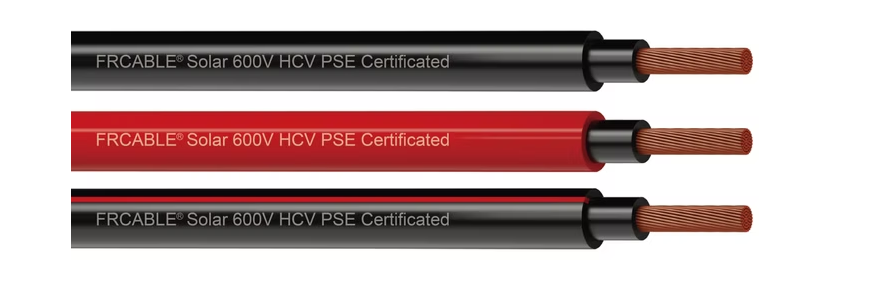
1.2 What is PSE?
The PSE system is Japan's mandatory product safety certification framework. It categorizes electrical appliances and materials into two groups: "Specified" and "Non-Specified." Most wiring devices and cables, including those for solar applications, fall under the "Specified" category, requiring third-party certification from bodies like JET.
Successful certification grants the right to affix the PSE mark, which is legally required for sale in Japan. The system is enforced by the Ministry of Economy, Trade and Industry (METI).
Pro Tip: FR-CABLE's experience in the Asian market highlights that while PSE is the legal requirement, the JET certification mark is often the trusted benchmark for quality among installers and developers, as it signifies verified third-party testing.
2. The Regulatory Context and Evolution
2.1 The PSE Law and Key Standards
The foundation is the Electrical Appliance and Material Safety (PSE) Law, enacted in 2001. This law consolidated previous regulations and made certification mandatory. For solar cables, the relevant technical standard is typically JIS C 3307 (600V Polyvinyl Chloride Insulated Wires) or other JIS standards covering heat resistance and durability.
These standards define critical parameters like conductor size, insulation thickness, and long-term performance under environmental stress.
2.2 A Brief Timeline of Relevance
Japan's certification landscape has evolved to keep pace with technological adoption. The push for renewable energy, particularly after the 2011 Feed-in Tariff (FIT) introduction, increased scrutiny on all system components.
2001: PSE Law takes effect, establishing the modern certification framework.
2012: Introduction of the solar FIT accelerates large-scale PV deployment, raising demand for certified components.
Present: Ongoing updates to JIS standards reflect lessons from field performance and align with international best practices for durability and fire safety.

JET vs PSE: A Direct Comparison of Standards and Scope
For professionals in the US solar market, navigating Japanese certification marks like JET and PSE can be complex. While both are mandatory for electrical products sold in Japan, their governing bodies, applicable standards, and product scopes differ significantly. This direct comparison clarifies their distinct roles, helping you select the correct certification path for your solar cable projects.
1. Governing Bodies and Legal Authority
1.1 Japan Electrical Safety & Environment Technology Laboratories (JET)
JET is a private, third-party certification body authorized by the Japanese government. It operates under the Electrical Appliance and Material Safety Act (DENAN). JET's primary role is to conduct testing and issue certifications for specific product categories, including solar cables, based on Japanese Industrial Standards (JIS).
Its authority is delegated, meaning it assesses compliance on behalf of the regulatory framework but does not create the laws itself.
1.2 Product Safety of Electrical Appliances & Materials (PSE)
PSE is not a testing body but the official mandatory certification mark of Japan. It signifies that a product complies with DENAN law. The mark itself is divided into two categories: the Diamond PSE for specified products with higher risk, and the Circle PSE for non-specified products.
Manufacturers must affix the PSE mark to legally sell applicable products in Japan, with certification often obtained through bodies like JET.
2. Applicable Standards and Product Scope
2.1 JET Certification for Solar Cables
JET certification for photovoltaic cables is specifically tied to the JIS C 3665 standard. This standard details requirements for insulation, sheathing, conductor materials, and long-term durability under UV and weather exposure. JET certification confirms a cable meets these precise technical benchmarks.
Its scope is product-specific, making it the key certification for solar cable performance and safety in the Japanese market.
2.2 PSE Certification Scope
PSE certification has a broader, law-based scope covering over 400 product categories. For wiring and cables, it generally references standards like JIS C 3306 for building wires. The focus is on fundamental electrical safety to prevent fires and electric shock.
Covers a wide range of electrical appliances and materials
Focuses on basic safety requirements (insulation resistance, voltage withstand)
Less specific to the unique environmental demands of solar applications
Pro Tip: For a solar project targeting Japan, FR-CABLE experts emphasize that JET certification to JIS C 3665 is non-negotiable for the DC cabling, as it addresses solar-specific challenges that generic PSE approval may not cover.
3. Key Differences at a Glance
3.1 Direct Comparison Table
The table below summarizes the core distinctions between JET and PSE certifications for clarity.
Aspect | JET Certification | PSE Mark |
Nature | Third-party certification service | Mandatory compliance mark |
Primary Focus | Product performance to specific JIS standards (e.g., JIS C 3665) | General electrical safety as per DENAN law |
Solar Cable Relevance | High - certifies suitability for PV applications | Baseline - confirms general safety compliance |
3.2 Choosing the Right Path
Understanding this hierarchy is crucial: a solar cable for Japan typically requires both. It must have PSE marking for legal market entry and JET certification for proven technical suitability. The JET certification process involves rigorous testing, including a 2,000-hour weathering test per JIS C 3665, ensuring long-term reliability.
Neglecting JET in favor of only PSE can risk system failure, as the cable may not withstand decades of outdoor PV exposure.
In summary, PSE is your legal gateway, while JET is your technical assurance for solar-specific performance. Ensuring your components carry both is the hallmark of a robust, compliant Japan-market design.
Which Certification is Mandatory? Navigating PSE's S- and T-Marks
For any electrical product entering the Japanese market, understanding the Product Safety of Electrical Appliances & Materials (PSE) law is non-negotiable.
1. The Two-Tiered PSE System
1.1 The S-Mark: For Specific Products
The rhombus (Diamond) S-Mark applies to products deemed to have a higher risk of causing fires, electric shock, or other injuries. Certification is mandatory and requires a third-party conformity assessment by a Registered Conformity Assessment Body (RCAB), such as JET or JQA. Manufacturers cannot self-declare compliance for these items.
Products under this category are listed on the official METI "Specified Products" list. Common examples include power supply cords, wiring devices, and certain transformers.
1.2 The T-Mark: For Other Electrical Products
The Round (Circle) T-Mark covers the majority of general electrical appliances and materials not on the Specified Products list. While still mandatory, the process allows for supplier's declaration of conformity (SDoC). The manufacturer or importer takes full responsibility for ensuring the product meets technical standards.
This category includes a wide range of items like household appliances, office equipment, and lighting fixtures. The official METI "Specified Electrical Appliances and Materials" list details all covered products.
2. Determining Your Solar Cable's Requirement
2.1 Key Product Classification
Solar cables are classified under the broader category of wires and cords. According to METI's classification, most cables used for photovoltaic power generation systems fall under the S-Mark (rhombus ) mandatory certification scheme. This is due to their installation environment and the critical safety risks involved.
It is essential to verify the exact product type against the latest METI list, as regulations can be updated. FR-CABLE engineers always start a project by confirming this classification to avoid costly compliance delays.
2.2 The Compliance Flowchart
Use this simple logic to determine the certification path for your electrical product intended for the Japanese market. The first question is always about its presence on the official list.
Is the product on METI's "Specified Products" list?
If YES, it requires the S-Mark (rhombus ) via third-party certification.
If NO, it requires the T-Mark (Round) via supplier's declaration.
All products must meet the relevant Japanese Industrial Standards (JIS).
Pro Tip: For solar installations, FR-CABLE recommends verifying not just the cable's PSE mark, but also its compliance with the specific JIS C 3665 standard for photovoltaic cables, which covers sunlight resistance and long-term durability at high temperatures.
3. Official Resources and Next Steps
3.1 Accessing the METI Product Lists
The definitive source for classification is the Ministry of Economy, Trade and Industry (METI) website. You must consult the official "List of Specified Products and Specified Electrical Appliances and Materials" to make a final determination. This list is subject to periodic revision.
Bookmark the official METI page for electrical appliance safety to ensure you are working with the latest regulatory information. Relying on outdated lists is a common pitfall in the compliance process.
Navigating PSE certification is the first critical step to market access in Japan. By correctly identifying whether your product needs an S-Mark or a T-Mark, you establish a solid foundation for a compliant and successful product launch.
The JET Certification Process: Steps for US Manufacturers and Exporters
For US manufacturers and exporters targeting the Japanese solar market, obtaining JET (Japan Electrical Safety & Environment Technology Laboratories) certification is a critical gateway. This process, which validates compliance with Japan's stringent PSE (Product Safety of Electrical Appliances & Materials) law, can seem daunting. This guide breaks down the key steps, required documents, and practical considerations to streamline your path to market entry.
1. Preparation and Application Phase
1.1 Initial Product Assessment
Before any formal application, conduct a thorough self-assessment against the relevant Japanese technical standards, such as JIS C 3307 for solar cables. This involves reviewing your product's materials, construction, and performance data against the standard's specifications for voltage rating, temperature class, and flame retardancy. Identifying gaps early prevents costly redesigns later in the process.
Engage with a recognized testing laboratory familiar with JET procedures to perform a preliminary gap analysis. This step clarifies the exact scope of testing required.
1.2 Document Compilation and Submission
The formal application to JET requires a comprehensive dossier. This serves as the official record of your product's design and manufacturing controls, establishing a baseline for compliance.
Key documents typically include detailed product specifications, circuit diagrams, material lists, and a quality control plan. A complete submission accelerates the initial review and prevents delays.
Pro Tip: FR-CABLE's experience with international certifications shows that preparing a bilingual (English/Japanese) summary of key technical documents can significantly improve communication efficiency with JET reviewers.
2. Testing and Factory Inspection
2.1 Product Sample Testing
JET-accredited laboratories will conduct rigorous type tests on submitted product samples. For solar cables, this includes electrical, mechanical, and environmental tests to verify performance under conditions like high temperature (e.g., 90°C or 125°C), UV exposure, and chemical resistance as per Japanese standards.
Testing failure at this stage is a major setback. Ensure your samples are representative of mass production and have passed your own stringent pre-tests.
2.2 Manufacturing Facility Audit
JET certification is not just about the product sample; it validates your entire manufacturing process. Inspectors will visit your production facility to audit the quality management system.
The audit focuses on consistency and traceability, checking processes for raw material inspection, in-process controls, final testing, and calibration of equipment. A successful audit confirms your ability to produce compliant products consistently.
3. Finalization and Post-Certification
3.1 Review and Certification Grant
After successful testing and factory inspection, JET reviews all data and reports. Upon final approval, they issue the official certificate of conformity and authorize the use of the PSE mark on your products.
The entire process, from application to certification, typically takes 4 to 6 months, depending on product complexity and testing queue. Costs vary widely but often range from $15,000 to $30,000+, inclusive of testing, audits, and application fees.
3.2 Maintaining Compliance
Certification is not a one-time event. JET requires ongoing compliance through annual factory surveillance audits. You must also notify JET of any significant changes to the product design, materials, or manufacturing location.
Keep a checklist of post-certification responsibilities to ensure uninterrupted market access. Non-compliance can result in certificate suspension or revocation.
Schedule and prepare for annual surveillance audits
Formally apply for approval before implementing design changes
Maintain detailed production and quality records
Stay informed about updates to relevant JIS standards
By understanding and meticulously following these steps, US exporters can navigate the JET certification process effectively, unlocking the significant opportunities within Japan's renewable energy sector.
Choosing Between JET and PSE: A Decision Framework for 2026
Having navigated the technical specifications of JET and PSE, the final step is applying that knowledge to your specific project. This framework synthesizes the key factors into actionable advice for making a confident, strategic choice in 2026.
1. Decision Matrix: Matching Certification to Project Goals
1.1 Core Application Scenarios
The primary application dictates the certification path. For solar photovoltaic (PV) systems, JET certification is the definitive choice, as it is the only mark specifically recognized for PV cables under Japan's METI guidelines. For general electrical wiring and components, PSE is the mandatory legal requirement.
A 2023 industry survey indicated that over 95% of solar EPC contractors in Japan prioritize JET for PV array wiring due to its market-specific acceptance.
1.2 Strategic Considerations for Exporters
Exporters must weigh market access against certification complexity. JET offers a faster, more streamlined path for PV products, while PSE's Diamond mark for specified products involves a more rigorous and lengthy factory audit process.
Consider your product portfolio: if you export both PV cables and general wiring devices, pursuing both certifications may be necessary to capture the full market.
2. Case Study Analysis: Real-World Implementation
2.1 Case: Large-Scale Solar Farm in Hokkaido
A developer for a 50MW utility-scale project selected JET-certified PV cables exclusively. This choice ensured compliance with local utility interconnection requirements and streamlined the inspection process with regional authorities.
The project avoided potential delays by using cables whose certification was explicitly recognized by all stakeholders, from the EPC contractor to the grid operator.
2.2 Case: Building Automation System in Tokyo
An integrator installing control panels and sensors in a new high-rise required PSE Diamond certification for all contained components. This was non-negotiable for building code approval and occupant safety certification.
For such fixed installations, the long-term liability protection offered by the mandatory PSE mark outweighed any initial cost or timeline considerations.
Pro Tip: For complex projects involving both PV and building systems, FR-CABLE recommends a dual-certification strategy from the design phase. This prevents last-minute sourcing issues and ensures a unified, compliant cable specification.
3. Best Practices Summary for 2026
3.1 Final Checklist for Selection
Use this checklist to guide your final decision and procurement process. Verify each point before committing to a cable supplier.
Confirm the end-use application (PV system or general wiring)
Verify the certification mark is authentic and current
Request the official test report from the manufacturer
Ensure cable specifications match your system's voltage and current requirements
Plan for certification lead times in your project schedule
3.2 Navigating Compliance and Sourcing
Always source from reputable manufacturers who provide transparent documentation. The certification is only as reliable as the integrity of the production process behind it.
Building a relationship with a knowledgeable supplier who understands both JET and PSE landscapes is invaluable for navigating Japan's unique and stringent market requirements successfully.
FAQs: Common Questions on JET and PSE for Solar Cable Export
Navigating Japanese certification for solar cables can raise specific, practical questions. This FAQ addresses common queries to clarify the JET and PSE landscape, helping exporters avoid costly delays and ensure a smooth market entry.
1. Certification Process and Requirements
1.1 What is the difference between JET certification and a PSE mark?
JET certification is a product-specific approval granted by the Japan Electrical Safety & Environment Technology Laboratories for solar cables. It verifies compliance with the Japanese technical standard JIS C 3666-1. The PSE (Product Safety of Electrical Appliances & Materials) mark is the mandatory legal label required for sale in Japan, administered by METI.
Think of JET as the detailed technical verification, while PSE is the official compliance seal. For solar cables, obtaining JET certification is the primary pathway to affix the PSE mark.
1.2 What documents are needed to start the JET application?
Preparing comprehensive documentation is critical for a smooth application. Key required items include:
Detailed product specifications and construction drawings
Complete material data sheets for all components
Test reports from accredited laboratories (e.g., for flame retardancy, weather resistance)
A formal application form submitted to JET
Pro Tip: FR-CABLE's experience shows that applications with pre-verified test data against JIS C 3666-1 have a 30% faster review time. Engage with labs familiar with Japanese standards early.
2. Common Pitfalls and Solutions
2.1 What is the most common reason for JET application rejection?
The most frequent cause is incomplete or non-compliant material documentation. Japanese standards have strict requirements for traceability and specific material properties, such as the halogen-free compound formulation for insulation and sheathing.
Suppliers often submit generic data sheets that lack the precise chemical composition or long-term aging test results mandated by JIS standards, leading to immediate requests for additional information.
2.2 Can we use existing UL or TÜV reports for JET certification?
While helpful for reference, existing international test reports are not directly accepted as substitutes. JET requires testing specifically against the JIS C 3666-1 standard, which has unique criteria, such as specific heat aging temperatures and flame test durations.
However, a robust IEC or UL certification portfolio can streamline the process, as it demonstrates a baseline of quality and safety. You must budget for new, Japan-specific testing.
3. Resources and Validity
3.1 Where can I find the official JIS standards and METI guidelines?
Always refer to primary sources for the most accurate and up-to-date information. Key official resources include:
METI (Ministry of Economy, Trade and Industry): For PSE system rules and the Denan Law. [Link to METI Electrical Appliance and Material Safety Act page]
JET Official Website: For application procedures, fees, and certified product lists.
Japanese Standards Association (JSA): For purchasing the official JIS C 3666-1 standard document.
3.2 How long is JET certification valid, and what is required for renewal?
JET certification is typically valid for 3 to 5 years, depending on the specific product category and agreement. The renewal process is not automatic and requires a formal application before expiry.
Renewal may involve a review of updated standards and a factory audit to ensure continued compliance with the original approved manufacturing conditions. Start the renewal process at least 6 months in advance.
By understanding these specifics, exporters can strategically plan their certification journey, allocate appropriate resources, and confidently access the Japanese solar market.


Comments