
Is 4/0 Aluminum Wire Good for 200 Amps? Ampacity and Service 2026 Guide

What 4/0 Aluminum Wire Is Actually Rated For
The phrase “good for 200 amps” sounds simple, but electrically it hides two different questions.
The first is: what is the general ampacity of 4/0 aluminum wire?
The second is: what wire size is permitted for a 200-amp dwelling service or feeder?
Those are not the same question, and treating them as if they are leads to bad content and bad decisions.
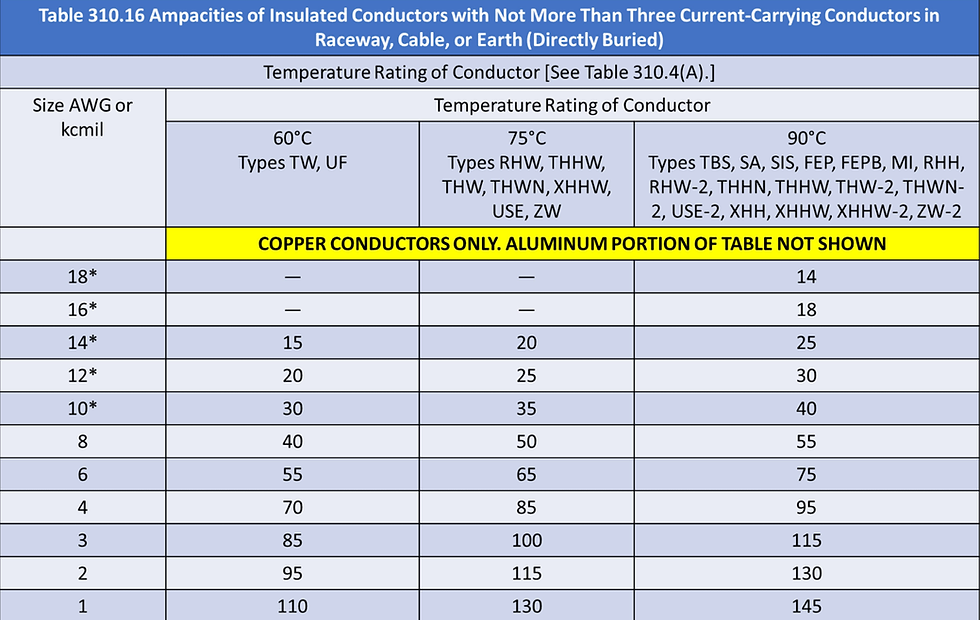
General ampacity under
Under standard NEC table conditions, 4/0 aluminum or copper-clad aluminum is listed at:
150 amps at 60°C
180 amps at 75°C
205 amps at 90°C
Those values assume not more than three current-carrying conductors and an ambient temperature of 30°C (86°F).
Why the 75°C value matters in practice
In many installations, conductors may have 90°C insulation, but the usable ampacity is still limited by the temperature rating of the equipment terminations. That is why the 75°C column often becomes the practical reference point in real-world work. For 4/0 aluminum, that number is 180 amps, which is exactly why readers get confused when they see 4/0 aluminum also recommended for certain 200-amp services.
Why 4/0 Aluminum Can Be Used for Some 200-Amp Services
This is the part that matters most.
The role of NEC 310.12
NEC 310.12 is a specific sizing rule for single-phase dwelling services and feeders. Current secondary sources summarizing that rule state that 4/0 aluminum or copper-clad aluminum is permitted for 200-amp dwelling service conductors.
That means a correct article should not say either of these oversimplified things:
“4/0 aluminum is always good for 200 amps.”
“4/0 aluminum is not good for 200 amps because the 75°C column is only 180A.”
Both statements miss the actual code context. The right answer is that 4/0 aluminum can be correct for 200A dwelling service under the applicable residential service-sizing rule, while general ampacity tables still matter in other applications.
Why “service” is not the same as “every 200A circuit”
A 200-amp service is not the same as every other 200-amp feeder, subpanel, or distribution run. Some online guidance explicitly notes that the dwelling-service rule does not apply to every subpanel or partial-load feeder scenario. In other words, 4/0 aluminum may be correct for a residential service entrance, yet not be the correct answer for a different 200A application where general ampacity rules govern more directly.
When 4/0 Aluminum Is a Good Choice for 200 Amps
4/0 aluminum is often a good fit when all of the following are true:
the application is a qualifying dwelling service or dwelling feeder
the conductor type is appropriate for the installation, such as XHHW-2 in a raceway-based system
terminals and connectors are listed and suitable for aluminum conductors
ambient temperature, conductor count, and run length do not force a different design outcome
Priority Wire states that aluminum XHHW-2/RW90 conductors are used in conduit or recognized raceways for services, feeders, and branch-circuit wiring and may be used in wet or dry locations up to 90°C.
That makes 4/0 aluminum a mainstream, not exotic, answer in the right service application.
When 4/0 Aluminum Is Not the Right Answer
This is where better editorial judgment matters.
4/0 aluminum may not be the right answer when:
the application is not a qualifying dwelling service or feeder
conductor bundling or ambient heat requires derating
voltage drop over a long run suggests upsizing
terminals, equipment, or design conditions point toward a different conductor size or material
A good article should resist the temptation to flatten this into a yes-or-no slogan. The technically honest answer is conditional.

4/0 Aluminum vs 2/0 Copper for 200-Amp Service
A common comparison in U.S. residential service work is 4/0 aluminum vs 2/0 copper. Secondary references summarizing dwelling-service sizing identify 2/0 copper and 4/0 aluminum as standard 200-amp residential service conductor choices under the dwelling-service rule.
That does not mean the two materials are identical in all respects. It means they are commonly treated as parallel options for this specific residential service context. The better choice depends on the installation, material preference, termination compatibility, and job constraints. [source needed]
A Simple Decision Framework
Step 1: Identify the application
Start by asking: Is this a qualifying single-phase dwelling service or feeder, or is it some other 200A circuit?
That one question changes the answer more than most blog posts admit.
Step 2: Check conductor type and terminals
Make sure the conductor construction fits the installation. Aluminum XHHW-2 is commonly specified for services, feeders, and branch circuits in conduit or recognized raceways, with wet/dry use up to 90°C. Also verify that lugs and terminations are suitable for aluminum conductors.
Step 3: Review ambient temperature and conductor count
General ampacity values assume 30°C ambient and not more than three current-carrying conductors. If those conditions are exceeded, correction or adjustment factors may apply.
Step 4: Verify voltage drop and run length
Even if the conductor is acceptable on paper, a long run may still justify upsizing. Voltage drop is a design consideration that should not be ignored simply because the conductor meets a nominal ampacity threshold.
Final Verdict
So, is 4/0 aluminum wire good for 200 amps?
Yes, for many qualifying 200-amp residential dwelling service and feeder applications, 4/0 aluminum is an accepted and common choice. But the reason is not that 4/0 aluminum is universally a 200A conductor in every context. Under general NEC ampacity-table conditions, its values are 150A at 60°C, 180A at 75°C, and 205A at 90°C. The reason it can still be used for 200-amp dwelling service is that the residential service-sizing rule is a different code pathway.
That is the distinction readers need. If you are evaluating 4/0 aluminum for a 200A job, do not stop at a chart value. Confirm the application type, conductor construction, terminal compatibility, installation conditions, and run length before deciding.
Soft CTA
If you are sourcing 4/0 aluminum wire for the U.S. market, evaluate it against the actual service configuration, not just the headline amp number. That is how better specs and better purchasing decisions get made. Contact Us.
FAQ Section
1. Can 4/0 aluminum wire be used for 200-amp residential service?
Yes, 4/0 aluminum or copper-clad aluminum is commonly cited as an allowed size for 200-amp single-phase dwelling services and feeders under NEC 310.12.
2. What is the general ampacity of 4/0 aluminum wire?
Under standard NEC ampacity-table conditions, 4/0 aluminum is rated 150A at 60°C, 180A at 75°C, and 205A at 90°C.
3. Why do some articles say 4/0 aluminum is only 180 amps?
Because the 75°C column for 4/0 aluminum is 180A, and many installations are effectively governed by 75°C termination ratings. That is a general ampacity issue, not the full story for qualifying dwelling-service sizing.
4. Is 4/0 aluminum good for a 200-amp subpanel?
Not automatically. Some guidance notes that the dwelling-service rule does not apply to every subpanel or feeder scenario, so the answer depends on the actual application and governing code path.
5. What type of aluminum conductor is commonly used for 200A service work?
XHHW-2 aluminum is a common building-wire type for services, feeders, and branch circuits in conduit or recognized raceways, and is rated for wet or dry locations up to 90°C depending on product specification.
6. Does voltage drop matter for 4/0 aluminum at 200 amps?
Yes. Even when a conductor is acceptable from an ampacity standpoint, long runs may still require further review because voltage drop can affect conductor sizing decisions.


Comments