
8 AWG Wire Ampacity Guide: 8 Gauge Wire Amp Rating at 240V, Applications & Selection

Introduction
Choosing the correct wire size is one of the most important decisions in any electrical installation. Whether you are wiring a 240V residential circuit, EV charger, solar power system, generator, industrial equipment, or high-current appliance, selecting a conductor that can safely handle the electrical load is essential for performance and safety.
The 8 AWG wire ampacity rating determines how much electrical current an 8 gauge wire can safely carry under specific installation conditions. For many 240V applications in the United States, 8 gauge wire is commonly used for circuits ranging from 40 to 50 amps, depending on conductor material, insulation temperature rating, installation method, and local electrical requirements.
However, choosing wire is not simply about matching “8 gauge wire amps” to a breaker size. Factors such as voltage drop, ambient temperature, conductor material, insulation type, and application environment can significantly affect the final selection.
This guide explains everything you need to know about 8 AWG wire amp rating at 240V, including ampacity charts, real-world applications, copper versus aluminum comparisons, installation considerations, and how to choose the right 8 gauge cable for your project.

What Is 8 AWG Wire and Why Does Ampacity Matter?
Understanding 8 Gauge Wire Size and AWG Measurement
8 AWG wire refers to a conductor manufactured according to the American Wire Gauge (AWG) standard, which defines wire diameter and electrical resistance.
In the AWG system, a smaller gauge number represents a larger conductor size. Therefore:
8 AWG wire is larger than 10 AWG wire
8 AWG wire is smaller than 6 AWG wire
The physical characteristics of 8 gauge wire make it suitable for medium-to-high current electrical applications where smaller conductors may overheat or create excessive voltage loss.
The approximate specifications of 8 AWG copper wire include:
Parameter | 8 AWG Copper Wire Specification |
Conductor diameter | Approximately 3.26 mm |
Cross-sectional area | Approximately 8.37 mm² |
Common material | Copper |
Typical voltage applications | 120V / 240V systems |
Common uses | EV chargers, solar systems, appliances, industrial equipment |
What Does Wire Ampacity Mean?
Ampacity refers to the maximum amount of electrical current a conductor can safely carry without exceeding its temperature rating.
Simply explained:
Ampacity tells you how many amps a wire can handle before excessive heat creates a safety risk.
A wire carrying too much current generates heat due to electrical resistance. If the conductor exceeds its temperature limit, it may cause:
Insulation damage
Reduced cable lifespan
Electrical failures
Potential fire hazards
This is why selecting the correct 8 AWG wire ampacity is more important than simply choosing a wire based on voltage alone.

How Many Amps Can 8 AWG Wire Handle at 240V?
8 AWG Wire Amp Rating at 240V Explained
The answer depends on several factors, including:
Copper or aluminum conductor
Insulation temperature rating
Installation environment
Number of current-carrying conductors
Electrical code requirements
For typical 8 AWG copper wire, commonly referenced ampacity values are:
Conductor Type | Temperature Rating | Approximate Ampacity |
8 AWG Copper | 60°C insulation | 40 amps |
8 AWG Copper | 75°C insulation | 50 amps |
8 AWG Copper | 90°C insulation | 55 amps (for adjustment calculations) |
8 AWG Aluminum | 75°C insulation | Around 40 amps |
In many residential and commercial applications, 8 AWG copper wire rated at 75°C is commonly used for 50 amp circuits, assuming installation conditions allow it.
Why Temperature Rating Changes 8 AWG Ampacity
Many users search:
The correct answer is not a single number because wire capacity changes with insulation temperature rating.
Common insulation ratings include:
60°C — older installations or limited applications
75°C — widely used for modern electrical systems
90°C — often used for equipment ratings and adjustment calculations
For example:
An 8 AWG copper conductor with THHN/THWN-2 insulation may have a higher allowable ampacity than an older 60°C-rated cable.

Is 8 Gauge Wire Good for a 50 Amp 240V Circuit?
Using 8 AWG Wire for 50 Amp Applications
One of the most common searches in the United States is:
“Can 8 gauge wire handle 50 amps at 240 volts?”
In many situations, the answer is yes.
A properly installed 8 AWG copper wire can commonly support a 50 amp, 240V circuit when:
The wire has an appropriate temperature rating
The installation follows applicable electrical requirements
Voltage drop is acceptable
The circuit breaker is correctly sized
Typical 50 amp applications include:
Electric vehicle charging stations
Hot tubs and spas
RV hookups
Large kitchen appliances
Welders
Workshop equipment
Common 240V Applications Using 8 AWG Wire
Electric Vehicle Chargers
Modern EV chargers often require dedicated 240V circuits.
Examples:
Level 2 EV charging equipment
Home charging stations
Commercial charging installations
For longer EV charging runs, installers often evaluate:
Charging current
Cable length
Voltage drop
Installation environment
A higher-current application or long-distance installation may require upgrading from 8 AWG to 6 AWG wire.
Solar Power Systems
8 AWG wire is also frequently considered for photovoltaic applications.
Common uses include:
Battery connections
Inverter connections
DC power distribution
Solar energy storage systems
For outdoor solar installations, cable selection should consider:
UV resistance
Temperature exposure
Moisture protection
Certification requirements
Solar-specific cables may use materials such as:
XLPE insulation
XLPO insulation
UV-resistant jackets
Tinned copper conductors
Hot Tub and Spa Wiring
Hot tubs commonly require dedicated high-current circuits.
Important considerations include:
Grounding requirements
Outdoor installation conditions
GFCI protection
Distance from electrical panel
The wire size should always match the equipment manufacturer’s specifications.
8 AWG Wire vs 6 AWG Wire: Which One Should You Choose?
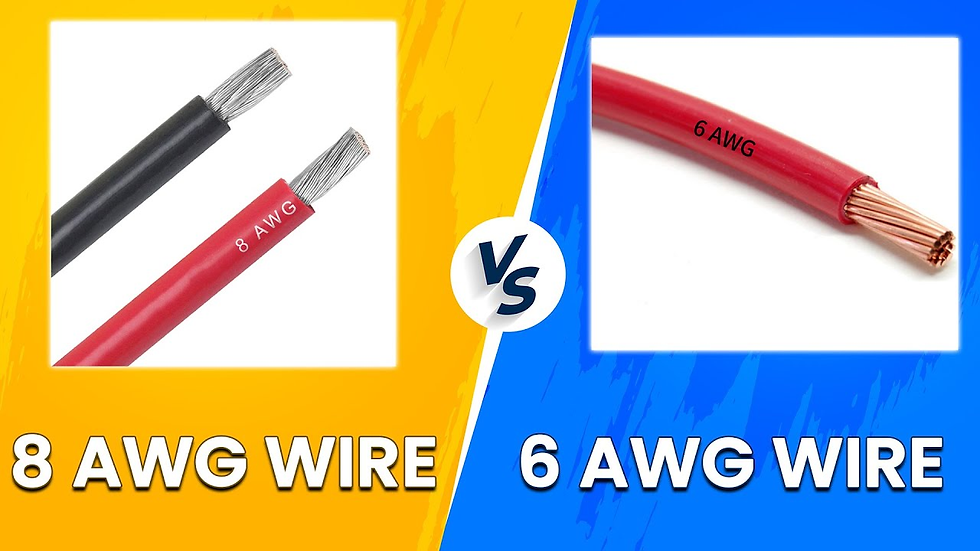
Comparing 8 Gauge and 6 Gauge Wire
Many buyers are unsure whether to choose 8 AWG or upgrade to 6 AWG.
The correct choice depends mainly on current demand and installation distance.
Feature | 8 AWG Wire | 6 AWG Wire |
Conductor size | Smaller | Larger |
Typical current capacity | Medium-high loads | Higher loads |
Cost | Lower | Higher |
Installation flexibility | Easier | More difficult |
Voltage drop performance | Good for shorter runs | Better for longer runs |
Common applications | 40–50 amp circuits | Higher ampacity systems |
When Should You Choose 6 AWG Instead of 8 AWG?
Consider upgrading to 6 AWG when:
The cable run is long and voltage drop becomes significant.
The equipment requires higher continuous current.
The installation environment creates additional heat.
Local electrical requirements require additional capacity.
Future expansion is expected.
How Voltage Drop Affects 8 AWG Wire Performance at 240V
Understanding 8 AWG Wire Voltage Drop Over Long Distances
Many people focus only on ampacity when selecting electrical wire, but voltage drop is equally important.
Voltage drop is the reduction in electrical voltage that occurs as current travels through the resistance of a conductor. Even if an 8 AWG wire can technically handle the current load, a long cable run may cause performance problems.
For example:
A short 240V circuit may work efficiently with 8 AWG wire.
A long-distance run to an EV charger, solar inverter, or detached building may require a larger conductor.
Common symptoms of excessive voltage drop include:
Reduced equipment performance
Longer charging times for EV chargers
Motor overheating
Lower efficiency in electrical systems
Factors That Influence Voltage Drop
The actual voltage loss depends on:
Wire length
Current load
Conductor material
Temperature
Installation method
A longer cable requires more attention to conductor size.
A simplified selection process:
Determine the equipment amperage requirement.
Measure the total wire distance.
Calculate acceptable voltage drop.
Select the appropriate AWG size.
Confirm compliance with electrical standards.
For many professional installations, keeping voltage drop below approximately 3% is a common design target.
8 AWG Copper Wire vs Aluminum Wire: Which Material Is Better?
Comparing Copper and Aluminum Conductors
The conductor material significantly affects electrical performance.
Although aluminum wire is lighter and more affordable, copper remains the preferred choice for many high-performance applications because of its higher conductivity.
Feature | 8 AWG Copper Wire | 8 AWG Aluminum Wire |
Electrical conductivity | Higher | Lower |
Required conductor size | Smaller | Larger for similar performance |
Weight | Heavier | Lighter |
Cost | Higher | Lower |
Corrosion resistance | Excellent | Requires proper connections |
Common applications | Residential, solar, industrial | Utility and large installations |
Advantages of 8 AWG Copper Wire
Copper conductors are widely used because they provide:
Excellent electrical conductivity
Lower resistance
Better performance in compact installations
Reliable connection quality
Longer service life
For applications such as:
EV chargers
Industrial control systems
High-performance electrical equipment
copper is often the preferred solution.
When Aluminum Wire May Be a Better Choice
Aluminum conductors can be suitable when:
Cost reduction is important
Long-distance distribution is required
Weight reduction matters
Installation space is available
However, aluminum systems require careful attention to:
Proper terminals
Anti-oxidation compounds
Compatible connectors
Installation standards
Choosing the Right 8 AWG Cable for Different Applications
How to Select 8 Gauge Wire for Electrical Projects
Choosing the correct 8 AWG cable involves more than selecting the wire size.
Professional installers evaluate:
Current requirement
Voltage rating
Insulation type
Environmental exposure
Certification requirements
Cable flexibility
Installation method
Key Selection Factors for 8 AWG Wire
When purchasing 8 gauge wire, consider:
1. Conductor Material
Choose between:
Bare copper
Stranded copper
Tinned copper
Aluminum
Stranded copper is commonly selected when flexibility and vibration resistance are important.
2. Insulation Material
The insulation protects the conductor from heat, moisture, chemicals, and mechanical damage.
Common insulation materials include:
PVC
XLPE
XLPO
THHN/THWN-2 insulation
For outdoor and solar environments, UV-resistant and weather-resistant insulation is especially important.
3. Voltage Rating
The cable voltage rating must match the system requirement.
Common electrical cable ratings include:
300V
600V
1000V
1500V DC for photovoltaic systems
4. Certifications and Standards
For the US market, professional buyers often look for:
NEC compliance
IEC standards for international applications
For solar applications, certifications related to photovoltaic cables are especially important.
Common Mistakes When Selecting 8 AWG Wire
Avoid These 8 Gauge Wire Installation Mistakes
Many electrical problems happen because users select wire based only on amp rating.
Common mistakes include:
Choosing wire only by voltage without checking current requirements
Ignoring voltage drop on long cable runs
Using aluminum and copper specifications interchangeably
Selecting incorrect breaker sizes
Installing indoor-rated cable outdoors
Ignoring temperature ratings
Using non-certified cables for critical applications
Important Checklist Before Buying 8 AWG Wire
Before purchasing, confirm:
Required amperage
Operating voltage
Cable length
Conductor material
Insulation temperature rating
Indoor or outdoor environment
Certification requirements
Connector compatibility
8 AWG Wire Buying Guide for Contractors and Distributors
What Professional Buyers Should Look For
For contractors, distributors, and OEM customers, cable quality directly affects installation reliability.
A professional-grade 8 AWG cable supplier should provide:
Consistent conductor quality
Accurate AWG sizing
Stable electrical performance
Reliable insulation materials
Complete technical documentation
Certification support
Why Cable Manufacturing Quality Matters
Two cables with the same AWG specification may perform differently depending on:
Copper purity
Stranding quality
Insulation thickness
Manufacturing precision
Quality control processes
For large-scale projects, choosing a reliable cable manufacturer reduces:
Installation failures
Replacement costs
Warranty issues
Project delay
Frequently Asked Questions About 8 AWG Wire Ampacity
How many amps can 8 AWG wire handle at 240V?
8 AWG copper wire can typically handle around 40 to 50 amps at 240V, depending on insulation temperature rating, installation conditions, and applicable electrical requirements.
Can 8 gauge wire handle a 50 amp breaker?
Yes, 8 AWG copper wire is commonly used for 50 amp circuits when installed under suitable conditions and with the correct temperature-rated insulation.
Is 8 AWG wire enough for a 240V EV charger?
In many cases, yes. Many 240V Level 2 EV chargers use circuits where 8 AWG copper wire is appropriate. However, cable length, charging current, and voltage drop should always be evaluated.
Should I use 8 AWG or 6 AWG wire for a long-distance 240V circuit?
For longer cable runs, 6 AWG wire may be preferred because the larger conductor reduces voltage drop and improves efficiency.
What is the difference between 8 AWG and 8 gauge wire?
They refer to the same sizing standard.
AWG (American Wire Gauge) is the technical measurement system used to define conductor size.
Can 8 AWG wire be used outdoors?
Yes, but the cable must have suitable outdoor ratings, such as UV resistance, moisture protection, and appropriate insulation certification.
What insulation is best for 8 AWG solar wire?
For photovoltaic systems, insulation materials such as XLPE or XLPO are commonly preferred because they provide strong resistance against heat, sunlight, and environmental exposure.
Conclusion
Understanding 8 AWG wire ampacity and 8 gauge wire amp rating at 240V is essential for selecting safe, efficient, and reliable electrical cable solutions.
While 8 AWG copper wire is commonly suitable for many 40–50 amp applications, the correct choice depends on more than current capacity. Factors such as voltage drop, conductor material, insulation type, installation environment, and certification requirements all influence the final cable selection.
For residential electrical systems, solar installations, EV chargers, and industrial applications, choosing a properly manufactured and certified cable helps ensure long-term performance and safety.
CTA Closing
Looking for reliable 8 AWG wire, solar cable, or custom electrical cable solutions?
FRCABLE provides professionally manufactured cables designed for demanding residential, commercial, renewable energy, and industrial applications. With advanced production capabilities, strict quality control, and international certification experience, we help distributors, installers, and OEM partners source dependable cable solutions.
Contact FRCABLE today to discuss your cable requirements, specifications, and custom manufacturing needs.


I find it interesting how the right wiring helps solar power systems run safely and efficiently. After reading informative articles like this, I enjoy bitlife which is a life simulation game full of choices and surprises.
This is the kind of basic electrical information that’s actually worth knowing. Using the wrong wire for a high-current appliance can cause some serious problems, so it’s better to get it right from the start. Slope Game sounds much less stressful.
I played Block Blast while waiting for the photo printer to finish producing a panoramic picture. The print came out before I expected it.