
8 AWG vs 10 AWG Wire: Physical Size, Cross-Sectional Area, and Conductivity Explained
- Vicky

- Jun 11
- 21 min read
Introduction
Selecting the correct wire gauge is one of the most critical decisions in electrical and photovoltaic system design. When comparing 8 AWG vs 10 AWG wire, you're not just choosing between two numbers—you're making a fundamental decision that affects system safety, efficiency, voltage performance, and long-term operational costs.
In this comprehensive guide, we'll examine the physical attributes, electrical performance characteristics, application scenarios, and selection criteria for both wire gauges. Whether you're designing a residential solar array, commercial energy storage system, or inverter connection, this analysis will provide the technical foundation you need to make informed decisions.

Understanding the American Wire Gauge (AWG) System
How AWG Numbering Works
The American Wire Gauge system is a standardized wire sizing method used primarily in North America for electrical conductors. The system follows an inverse relationship: as the AWG number decreases, the wire diameter and cross-sectional area increase.
This counterintuitive numbering originated from the wire drawing process used in early manufacturing, where each sequential draw through a die reduced the wire diameter. The number of draws determined the gauge number, creating the inverse relationship we use today.
Standard Measurement Units
Wire gauge measurements use multiple units across different standards:
Circular mils (CM): Traditional American measurement based on wire diameter
Square millimeters (mm²): International standard for cross-sectional area
Inches or millimeters: Direct diameter measurements
Understanding these conversions is essential when working with international equipment specifications or comparing UL-certified American products with TUV-certified European components. For photovoltaic systems in particular, you'll frequently encounter both measurement systems since solar equipment manufacturers operate globally.
Why Gauge Selection Matters in Electrical Systems
Wire gauge selection directly impacts:
Current-carrying capacity (ampacity): Undersized conductors overheat and create fire hazards
Voltage drop: Excessive resistance reduces system efficiency and can damage equipment
Mechanical durability: Thicker conductors withstand physical stress better
Installation flexibility: Smaller gauges are easier to route but may not meet electrical requirements
Cost optimization: Larger conductors cost more but may reduce long-term losses
The National Electrical Code (NEC) establishes minimum wire sizes based on circuit amperage, installation method, ambient temperature, and conductor bundling. These aren't suggestions—they're safety requirements backed by decades of engineering data and fire investigation findings.
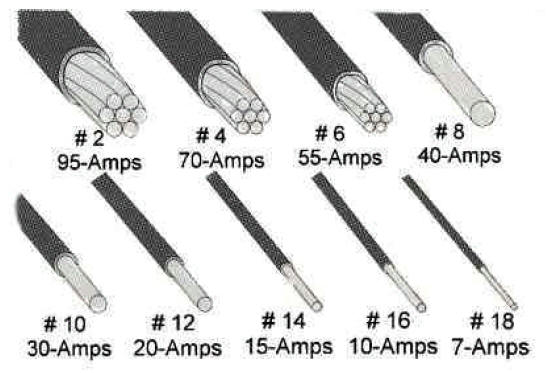
Physical Size and Dimensional Comparison
8 AWG Physical Specifications
The 8 AWG wire represents a substantial conductor size suitable for moderate to high current applications:
Conductor diameter: Approximately 3.26 mm (0.1285 inches)
Cross-sectional area: 8.36 mm² (8,366 circular mils)
Stranding configurations: Available as solid or stranded (typically 7-strand, 19-strand, or flexible construction)
Overall diameter with insulation: Typically 6.5–8.0 mm depending on insulation type
When you examine FRCABLE 8 AWG solar cable in person, you'll notice the conductor feels substantially robust. The increased copper volume provides mechanical strength that resists damage during installation, particularly important when routing cables through conduit or across rooftops where physical stress is unavoidable.
10 AWG Physical Specifications
The 10 AWG wire is a popular mid-range conductor for residential and light commercial applications:
Conductor diameter: Approximately 2.59 mm (0.1019 inches)
Cross-sectional area: 5.26 mm² (5,261 circular mils)
Stranding configurations: Commonly available in solid or stranded variations
Overall diameter with insulation: Typically 5.0–6.5 mm depending on insulation material
The smaller physical size makes 10 AWG wire more flexible and easier to terminate in tight spaces. For junction boxes with limited volume or equipment with smaller terminal blocks, the reduced conductor diameter can simplify installation.
Direct Dimensional Comparison Table
Specification | 8 AWG | 10 AWG | Difference |
Conductor Diameter | 3.26 mm | 2.59 mm | 0.67 mm (25.9% larger) |
Cross-Sectional Area (mm²) | 8.36 mm² | 5.26 mm² | 3.10 mm² (58.9% more area) |
Cross-Sectional Area (Circular Mils) | 8,366 CM | 5,261 CM | 3,105 CM (59.0% more area) |
Typical Weight (copper) | ~61.3 kg/km | ~38.6 kg/km | ~22.7 kg/km heavier |
Approximate Diameter with PVC Insulation | 7.0–8.0 mm | 5.5–6.5 mm | ~1.5 mm larger overall |
This table clearly illustrates why 8 AWG wire contains approximately 59% more conductive copper than 10 AWG. This isn't a marginal difference—it's a fundamental change in conductor capability that manifests in every electrical performance parameter.
Why Physical Size Matters Beyond the Numbers
The dimensional differences affect practical installation considerations:
Conduit fill calculations: Electrical codes limit how many conductors can occupy a conduit to prevent heat buildup. Eight AWG conductors consume more conduit volume, potentially requiring larger conduit sizes or reducing the number of circuits you can run together.
Termination requirements: Some equipment terminals specify maximum wire sizes. While most quality inverters and charge controllers accommodate 8 AWG, always verify specifications before purchasing cable.
Bend radius requirements: Thicker conductors require larger minimum bend radii to prevent insulation damage and conductor stress. This affects routing in tight spaces and the size of junction boxes needed.
Installation labor: The increased stiffness of 8 AWG requires more effort to manipulate, particularly in cold weather when insulation becomes less flexible. This can impact installation time and labor costs.
Cross-Sectional Area and Its Impact on Performance
Understanding Cross-Sectional Area in Wire Conductors
The cross-sectional area of a wire conductor is the total area of conductive material (typically pure copper) available for electron flow, measured perpendicular to the wire's length. This area directly determines the conductor's ability to carry electrical current.
Think of electrical current like water flowing through a pipe: a larger diameter pipe can carry more water at the same pressure. Similarly, a larger cross-sectional area allows more electrons to flow simultaneously with less resistance and heat generation.
8 AWG Cross-Sectional Area: 8.36 mm²
At 8.36 mm² of copper, the 8 AWG conductor provides substantial current-carrying capacity. This cross-sectional area represents the total conductive path available for electron movement.
For FRCABLE 8 AWG solar cable used in photovoltaic systems, this area remains constant along the cable length (manufacturing tolerances are typically ±2%), ensuring consistent electrical performance. The conductor may be solid (single piece of copper) or stranded (multiple smaller wires), but the total copper area remains 8.36 mm².
Stranded vs. solid configurations at 8 AWG:
Solid: Single copper conductor, less flexible but slightly better conductivity
Stranded (7-strand): Seven copper strands, improved flexibility for routing
Stranded (19-strand): Nineteen finer strands, maximum flexibility for complex installations
Flexible stranded: Ultra-fine stranding for applications requiring repeated flexing
10 AWG Cross-Sectional Area: 5.26 mm²
The 5.26 mm² cross-sectional area of 10 AWG wire makes it suitable for moderate current applications where the reduced conductor cost and improved installation flexibility outweigh the performance limitations.
This smaller area is perfectly adequate for many residential electrical circuits and smaller solar installations. The key is understanding where the performance threshold lies and not pushing 10 AWG beyond its safe operating parameters.
How Cross-Sectional Area Affects Electrical Performance
The relationship between cross-sectional area and electrical performance is governed by fundamental physics:
Current density: This measures amperes per square millimeter of conductor. Higher current density generates more heat. Safe current-carrying capacity (ampacity) is limited by the maximum temperature the insulation can withstand continuously.
For the same current load:
8 AWG (8.36 mm²): Lower current density = less heat = higher safe ampacity
10 AWG (5.26 mm²): Higher current density = more heat = lower safe ampacity
Electrical resistance: A conductor's resistance is inversely proportional to its cross-sectional area. More area means lower resistance, which translates to:
Less voltage drop over distance
Reduced power loss as heat
Improved system efficiency
Less stress on insulation materials
Heat dissipation: Larger conductors have more surface area for heat radiation and more copper mass to absorb and distribute heat. This thermal capacity provides a safety margin during overcurrent events and temporary overloads.
The 59% greater cross-sectional area of 8 AWG doesn't just mean 59% more capacity—the benefits compound through reduced resistance, better heat management, and improved safety margins.
Electrical Conductivity and Resistance Comparison
Defining Electrical Conductivity in Wire Applications
Electrical conductivity measures how easily electrons flow through a material. For copper conductors, conductivity is typically referenced as a percentage of the International Annealed Copper Standard (IACS), with pure annealed copper defined as 100% IACS.
Quality solar cables like those manufactured by FRCABLE use 99.9% pure copper conductors, achieving conductivity ratings of 100% IACS or better (some oxygen-free copper variants reach 101-103% IACS). This purity level is essential for minimizing resistive losses in photovoltaic systems where every watt counts.
Resistance Per Unit Length
While both 8 AWG and 10 AWG conductors use the same copper material (assuming equivalent purity), their different cross-sectional areas result in significantly different resistance characteristics.
8 AWG resistance values:
DC resistance at 20°C: Approximately 0.6282 ohms per 1,000 feet (2.06 ohms/km)
DC resistance at 75°C: Approximately 0.717 ohms per 1,000 feet (2.35 ohms/km)
10 AWG resistance values:
DC resistance at 20°C: Approximately 0.9989 ohms per 1,000 feet (3.28 ohms/km)
DC resistance at 75°C: Approximately 1.14 ohms per 1,000 feet (3.74 ohms/km)
The 8 AWG conductor exhibits approximately 37% lower resistance than 10 AWG—a substantial difference that directly impacts voltage drop and power loss calculations.
Temperature Effects on Conductivity
Copper's resistance increases with temperature according to the formula:
R₂ = R₁[1 + α(T₂ - T₁)]
Where:
R₁ = resistance at initial temperature
R₂ = resistance at final temperature
α = temperature coefficient of copper (≈0.00393/°C)
T₁, T₂ = temperatures in Celsius
This relationship is critical for solar cable applications. Rooftop installations can experience conductor temperatures exceeding 75°C (167°F) in direct summer sunlight. As temperature rises:
Conductor resistance increases
Voltage drop worsens
Power losses escalate
Heat generation compounds
The larger cross-sectional area of 8 AWG provides two advantages: lower baseline resistance AND better heat dissipation, creating a compounding benefit in high-temperature environments common to solar installations.

Practical Impact on System Efficiency
Consider a practical example: A 48-volt solar array delivering 30 amps to an inverter located 50 feet away (100 feet total conductor length for positive and negative runs).
Using 10 AWG wire:
Total resistance: 100 ft × 0.9989 Ω/1000 ft = 0.0999 Ω (at 20°C)
Voltage drop: 30A × 0.0999Ω = 3.0 volts
Voltage at inverter: 48V - 3.0V = 45V
Power loss: 30A × 3.0V = 90 watts
Percentage loss: 3.0V/48V = 6.25%
Using 8 AWG wire:
Total resistance: 100 ft × 0.6282 Ω/1000 ft = 0.0628 Ω (at 20°C)
Voltage drop: 30A × 0.0628Ω = 1.88 volts
Voltage at inverter: 48V - 1.88V = 46.12V
Power loss: 30A × 1.88V = 56.4 watts
Percentage loss: 1.88V/48V = 3.92%
The 8 AWG installation reduces voltage drop by 37% and power loss by 33.6 watts, recovering this energy for productive use rather than wasting it as heat. Over a system's 25-year lifespan, this efficiency improvement delivers substantial energy and cost savings.
Ampacity and Current-Carrying Capacity
NEC Ampacity Ratings for 8 AWG and 10 AWG
The National Electrical Code (NEC) Table 310.16 (now 310.15(B)(16) in recent code editions) establishes maximum current-carrying capacity based on conductor size, insulation type, and ambient temperature. FRCABLE AWG Ampere Calculator
8 AWG ampacity ratings (common insulation types):
60°C insulation (TW): 40 amperes
75°C insulation (THWN, PV Wire): 50 amperes
90°C insulation (THHN, XHHW, USE-2): 55 amperes
10 AWG ampacity ratings (common insulation types):
60°C insulation (TW): 30 amperes
75°C insulation (THWN, PV Wire): 35 amperes
90°C insulation (THHN, XHHW, USE-2): 40 amperes
For FRCABLE solar cables with cross-linked polyethylene (XLPE) or electron beam cross-linked (XLPO) insulation rated for 90°C operation, you can reference the 90°C column, but practical application often requires derating.
Derating Factors That Affect Real-World Ampacity
Published ampacity tables assume ideal conditions:
Ambient temperature of 30°C (86°F)
No more than three current-carrying conductors bundled together
Free air or properly sized conduit installation
Real-world solar installations rarely meet all these conditions, requiring derating:
Temperature correction factors for rooftop solar:
Ambient temperature 40°C (104°F): 0.91 multiplier
Ambient temperature 50°C (122°F): 0.82 multiplier
Ambient temperature 60°C (140°F): 0.71 multiplier
Conduit fill adjustment factors:
4-6 current-carrying conductors: 0.80 multiplier
7-9 conductors: 0.70 multiplier
10-20 conductors: 0.50 multiplier
Example derated ampacity calculation for FRCABLE 8 AWG solar cable in a rooftop application:
Base ampacity (90°C insulation): 55 amperes
Rooftop ambient temperature 50°C: 55A × 0.82 = 45.1 amperes
Four conductors in conduit: 45.1A × 0.80 = 36.1 amperes
After applying realistic derating, the effective safe ampacity is significantly lower than the table value. This is why proper engineering analysis is essential—blindly applying table values without considering installation conditions creates safety hazards.
Comparing Ampacity: When Each Gauge Is Appropriate
Choose 8 AWG wire when:
Circuit current exceeds 35 amperes continuously
Cable runs exceed 50 feet in 12/24V systems
Environmental temperature regularly exceeds 40°C
Multiple conductors are bundled in conduit
Voltage drop must be minimized for system efficiency
Future load expansion is anticipated
Installation is in a commercial or utility-scale facility requiring maximum reliability
Choose 10 AWG wire when:
Circuit current is consistently below 30 amperes
Cable runs are short (under 25 feet for 12V, under 50 feet for 24V systems)
Installation environment maintains moderate temperatures
Individual cable runs without bundling
Budget constraints require cost optimization
Installation flexibility and ease of handling are priorities
Application involves frequent disconnection/reconnection
The decision isn't just about whether the wire can handle the current—it's about providing appropriate safety margins, minimizing losses, and ensuring reliable long-term operation.
Voltage Drop Analysis: 8 AWG vs 10 AWG in Solar Applications
Why Voltage Drop Matters in Photovoltaic Systems
Voltage drop is the reduction in electrical potential that occurs as current flows through conductor resistance. In solar systems, excessive voltage drop causes multiple problems:
Reduced inverter efficiency: Inverters operate most efficiently within specific voltage windows
MPPT tracking issues: Maximum Power Point Tracking algorithms struggle with inconsistent voltage
System underperformance: Power output (watts) equals voltage × current; lower voltage means less power delivered
Equipment protection triggering: Under-voltage protection may disconnect the system unnecessarily
Energy waste: Voltage drop represents power converted to heat rather than productive use
Industry best practices recommend limiting voltage drop to:
3% maximum for critical solar array circuits
5% maximum for total system voltage drop (combined all circuits)
2% or less for optimal performance in competitive commercial installations
Voltage Drop Calculation Formula
The basic voltage drop formula for DC circuits:
VD = (2 × K × I × L) / CM
Where:
VD = Voltage drop in volts
2 = Factor for round-trip distance (positive and negative conductors)
K = Resistance constant (12.9 for copper in ohms-circular mil per foot)
I = Current in amperes
L = One-way circuit length in feet
CM = Circular mil area of conductor
Alternatively, using metric units:
VD = (2 × ρ × I × L) / A
Where:
ρ = Copper resistivity (0.0172 ohm-mm²/m at 20°C)
L = One-way length in meters
A = Cross-sectional area in mm²
Voltage Drop Comparison: Real Solar System Examples
Scenario 1: Residential solar array, 48V system, 25A continuous current, 75-foot cable run
Using 10 AWG FRCABLE PV wire:
Resistance: 0.9989 Ω/1000ft
Total conductor length: 150 feet (75 ft × 2)
Voltage drop: (150/1000) × 0.9989Ω × 25A = 3.75 volts
Percentage drop: 3.75V / 48V = 7.8% ❌ Exceeds recommended maximum
Using 8 AWG FRCABLE solar cable:
Resistance: 0.6282 Ω/1000ft
Total conductor length: 150 feet
Voltage drop: (150/1000) × 0.6282Ω × 25A = 2.36 volts
Percentage drop: 2.36V / 48V = 4.9% ✓ Acceptable but near limit
Scenario 2: Commercial solar installation, 600V DC, 15A, 200-foot cable run
Using 10 AWG:
Voltage drop: (400/1000) × 0.9989Ω × 15A = 5.99 volts
Percentage drop: 5.99V / 600V = 1.0% ✓ Excellent performance
Using 8 AWG:
Voltage drop: (400/1000) × 0.6282Ω × 15A = 3.77 volts
Percentage drop: 3.77V / 600V = 0.63% ✓ Superior performance
These examples demonstrate that wire gauge selection must consider both system voltage and cable length. Higher voltage systems tolerate the same absolute voltage drop better, while low-voltage systems (12V, 24V, 48V) are far more sensitive to conductor resistance.
Decision Matrix: When Voltage Drop Requires Upsizing
System Voltage | Current (A) | Distance (one-way) | Minimum Recommended Gauge |
12V | 20A | >10 feet | 8 AWG |
12V | 30A | >5 feet | 8 AWG |
24V | 20A | >25 feet | 8 AWG |
48V | 25A | >50 feet | 8 AWG |
48V | 30A | >40 feet | 8 AWG |
600V | 15A | <300 feet | 10 AWG acceptable |
600V | 20A | <200 feet | 10 AWG acceptable |
This table provides quick reference guidance, but always perform specific calculations for your application using actual cable length, current, and voltage parameters.
Heat Dissipation and Thermal Performance
How Wire Gauge Affects Heat Generation
When current flows through a conductor, electrical resistance converts some energy into heat according to the power loss formula:
P = I² × R
Where:
P = Power loss (heat) in watts
I = Current in amperes
R = Resistance in ohms
This I²R loss is why current has a squared relationship with heat generation—doubling the current quadruples the heat produced. This exponential relationship explains why seemingly small increases in current can create dramatic temperature rises.
Thermal Comparison: 8 AWG vs 10 AWG Under Load
Consider both wire gauges carrying 30 amperes over 100 feet (total conductor length):
10 AWG heat generation:
Resistance: 0.0999 ohms
Heat produced: (30A)² × 0.0999Ω = 89.9 watts
This heat must dissipate into the surrounding environment
8 AWG heat generation:
Resistance: 0.0628 ohms
Heat produced: (30A)² × 0.0628Ω = 56.5 watts
37% less heat generation
The 8 AWG conductor generates 33.4 watts less heat—a significant reduction that improves safety margins and reduces thermal stress on insulation materials.
Thermal Management in Solar Cable Installations
FRCABLE solar cables use advanced insulation materials designed for elevated temperature operation:
Cross-linked polyethylene (XLPE) insulation characteristics:
Continuous operation rating: 90°C (194°F)
Emergency overload rating: 130°C (266°F) short-term
Excellent resistance to UV degradation, moisture, and chemicals
Superior thermal aging performance over 25+ year lifespan
Electron beam cross-linked (XLPO) insulation advantages:
Enhanced cross-linking density for improved heat resistance
Better mechanical properties at elevated temperatures
Superior flexibility retention over temperature cycles
Optimal for rooftop installations with extreme temperature swings
Even with high-temperature insulation, minimizing heat generation extends cable lifespan and maintains optimal insulation properties. The lower I²R losses of 8 AWG conductors provide valuable thermal headroom in demanding applications.
Thermal Considerations for Conduit and Bundled Cable
Heat dissipation becomes more challenging when cables are:
Installed in conduit: Restricted air circulation limits convective cooling
Bundled together: Multiple heat sources compound temperature rise
Buried or embedded: Surrounding materials insulate rather than cool
Exposed to direct sunlight: Solar radiation adds external heat load
Installed on hot surfaces: Rooftop mounting can add 20-40°C ambient temperature
In these scenarios, the superior heat dissipation characteristics of 8 AWG wire provide essential safety margins. The larger conductor mass acts as a thermal reservoir, absorbing heat spikes during peak current events and dissipating it during lower load periods.
Professional installations should verify conductor temperature doesn't exceed insulation ratings even under worst-case conditions: maximum ambient temperature + solar heating + I²R losses + bundling effects.
Application Guide: When to Use 8 AWG vs 10 AWG
Residential Solar Installations
8 AWG FRCABLE solar cable is optimal for:
Main array DC circuits carrying 30-50 amperes from roof-mounted panels to inverter
Long runs exceeding 50 feet where voltage drop becomes significant
Combiner box to inverter connections in systems above 5kW capacity
Future-proof installations where system expansion is anticipated
Premium installations where maximum efficiency justifies higher initial cost
10 AWG FRCABLE PV wire works well for:
Individual string connections in lower-current configurations (15-25A)
Short interconnections between adjacent combiner boxes or equipment
Grounding and bonding applications requiring mechanical strength
Monitoring and control circuits with minimal current flow
Budget-conscious installations where cost optimization is critical
Commercial and Utility-Scale Solar Projects
Large-scale photovoltaic installations demand different considerations:
When 8 AWG is essential:
String currents exceed 30 amperes
Cable runs span long distances across commercial rooftops or ground arrays
Energy production optimization directly impacts project ROI
Project specifications require voltage drop below 3%
Installation complies with utility interconnection requirements
When 10 AWG may suffice:
High-voltage systems (600V+) with lower current per string
Very short equipment interconnections
Auxiliary circuits and monitoring systems
Temporary or test installations
For EPC firms managing large solar projects, standardizing on 8 AWG for main DC circuits often provides operational advantages: simplified inventory management, reduced field errors, consistent voltage drop characteristics, and enhanced safety margins.
Energy Storage and Battery Systems
Battery-based energy storage systems present unique wire selection challenges:
8 AWG advantages for battery applications:
High surge currents: Battery charging and inverter startup can exceed nameplate ratings
Low system voltages: 12V, 24V, and 48V battery banks are voltage-drop sensitive
Continuous cycling: Batteries charge and discharge repeatedly, generating consistent heat
Safety-critical: Battery short circuits can deliver enormous fault currents; robust conductors limit damage
Typical battery system applications:
48V lithium battery to inverter: 8 AWG minimum for 3kW+ systems
Battery bank interconnections: 8 AWG for cells/modules carrying 40A+
Charge controller to battery: Size based on maximum charging current + 25% safety margin
Inverter and Equipment Connections
DC input to inverters requires careful wire sizing:
Most residential inverters (3-10kW) specify minimum wire sizes in their installation manuals. Common requirements:
3-5kW inverters: 10 AWG minimum, 8 AWG recommended
5-8kW inverters: 8 AWG minimum
8-12kW inverters: 6 AWG or larger
Always verify torque specifications for terminal connections. Larger wire gauges require higher torque values to ensure proper contact pressure and prevent high-resistance connections that create heat and potential failures.
Step-by-Step Selection Process
Follow this systematic approach to select the appropriate wire gauge:
Calculate maximum continuous current: Use nameplate ratings or measured data
Apply NEC 125% continuous load rule: Multiply continuous current × 1.25
Determine cable length: Measure actual installation distance (one-way)
Check ampacity tables: Verify conductor can handle derated current
Calculate voltage drop: Ensure it stays within acceptable limits (3% recommended)
Evaluate environmental factors: Consider temperature, conduit, bundling
Check equipment specifications: Verify terminal sizes and manufacturer requirements
Consider future expansion: Allow headroom for potential system upgrades
Verify code compliance: Confirm selection meets NEC and local amendments
Document your decision: Maintain engineering calculations for inspection and future reference
Wire Selection Quick Reference Guide
Selection Flowchart Decision Points
Start with these key questions:
✓ What is the maximum continuous current?✓ What is the system voltage (DC or AC)?✓ How long is the cable run (one-way distance)?✓ What is the ambient temperature at installation location?✓ Are conductors bundled or in conduit?✓ What voltage drop percentage is acceptable?✓ Does local code require specific wire sizing?
Quick Comparison Table: 8 AWG vs 10 AWG
Characteristic | 8 AWG | 10 AWG | Advantage |
Cross-Sectional Area | 8.36 mm² | 5.26 mm² | 8 AWG (59% more) |
Ampacity (90°C) | 55A | 40A | 8 AWG (37% higher) |
Resistance (per 1000ft) | 0.628Ω | 0.999Ω | 8 AWG (37% lower) |
Voltage Drop (same current/distance) | Lower | Higher | 8 AWG |
Heat Generation | Lower | Higher | 8 AWG |
Installation Flexibility | Moderate | Better | 10 AWG |
Material Cost | Higher | Lower | 10 AWG |
Lifecycle Efficiency | Better | Good | 8 AWG |
Recommended Max Distance (48V, 30A, 3% VD) | ~65 feet | ~40 feet | 8 AWG |
Recommended Wire Gauge by Application
Use 8 AWG FRCABLE solar cable when:
✓ Solar array DC circuits above 30A
✓ Battery interconnections in 48V systems above 3kW
✓ Inverter DC input connections for systems 5kW+
✓ Any cable run exceeding 50 feet in low-voltage applications
✓ Commercial or utility-scale solar installations
✓ Conduit installations with multiple conductors
✓ High-temperature environments (rooftop, desert, tropical)
✓ Premium installations requiring maximum efficiency
Use 10 AWG FRCABLE PV wire when:
✓ Individual solar string connections below 25A
✓ Short equipment interconnections under 25 feet
✓ Higher voltage systems (600V+) with low current
✓ Grounding and bonding applications
✓ Control and monitoring circuits
✓ Budget-constrained residential installations
✓ Applications prioritizing installation flexibility
✓ Adequate performance confirmed through calculation
FRCABLE Solar Cable Solutions: Quality That Delivers Performance
Why Cable Quality Matters Beyond Wire Gauge
Selecting the correct wire gauge is essential, but conductor size is only one aspect of cable performance. The insulation material, manufacturing quality, certifications, and component selection all contribute to long-term reliability.
FRCABLE solar cables incorporate design features specifically engineered for photovoltaic applications:
Pure copper conductors: 99.9% pure oxygen-free copper ensuring maximum conductivity and minimal resistive losses. Inferior cables may use copper-clad aluminum (CCA) or lower-purity copper, increasing resistance and creating safety hazards.
Advanced insulation systems: Cross-linked polyethylene (XLPE) and electron beam cross-linked (XLPO) insulation materials provide:
90°C continuous operation rating (higher than standard PVC)
Exceptional UV resistance for decades of outdoor exposure
Superior moisture resistance preventing corrosion
Excellent flexibility even at temperature extremes
Resistance to chemicals, oils, and environmental contaminants
Comprehensive certifications: FRCABLE products carry UL and TUV certifications confirming compliance with:
UL 4703 (Photovoltaic Wire)
UL 44 (Thermoset-Insulated Wires and Cables)
TUV 2 PfG 1169/08.2007 (European PV cable standard)
RoHS compliance for environmental responsibility
These certifications aren't marketing—they represent rigorous third-party testing validating electrical performance, fire resistance, weather exposure tolerance, and manufacturing consistency.
FRCABLE 8 AWG Solar Cable Specifications
Technical specifications:
Conductor: Class 5 stranded bare copper, 8 AWG (8.36 mm²)
Insulation: Electron beam cross-linked polyolefin (XLPO)
Voltage rating: 600V DC / 1000V DC (depending on model)
Temperature rating: -40°C to +90°C
Flame rating: VW-1 (vertical flame test)
Sunlight resistance: Rated for direct outdoor exposure
Jacket color options: Red/Black for polarity identification
Available configurations:
Bulk cable (500 ft, 1000 ft, or custom lengths)
Pre-terminated with MC4 connectors (various lengths)
Custom assembly options for large projects
FRCABLE 10 AWG PV Wire Applications
Technical specifications:
Conductor: Class 5 stranded bare copper, 10 AWG (5.26 mm²)
Insulation: Cross-linked polyethylene (XLPE)
Voltage rating: 600V DC / 1000V DC
Temperature rating: -40°C to +90°C
UV resistance: 25+ year outdoor rating
Standards compliance: UL 4703, TUV certified
Ideal applications:
Individual solar panel string connections
Short DC interconnections
Grounding and equipment bonding
Monitoring system connections
Residential installations with appropriate load calculations
Quality Assurance and Testing
Every FRCABLE product undergoes comprehensive testing:
Conductor resistance measurement: Verified against AWG standards
High-voltage insulation testing: Confirms dielectric strength
Accelerated UV aging: Simulates decades of sunlight exposure
Thermal cycling: Validates performance across temperature extremes
Flame resistance testing: Ensures fire safety compliance
Mechanical stress testing: Confirms durability during installation and operation
This quality commitment ensures cables perform reliably throughout a solar system's 25-30 year operational lifespan.
Frequently Asked Questions (FAQ)
What is the actual physical size difference between 8 AWG and 10 AWG wire?
The 8 AWG wire has a conductor diameter of 3.26 mm compared to 10 AWG at 2.59 mm—making 8 AWG approximately 26% larger in diameter. More importantly, the cross-sectional area differs by 59%, with 8 AWG at 8.36 mm² versus 10 AWG at 5.26 mm². This substantial difference in copper volume directly affects current capacity, resistance, and voltage drop characteristics.
How many amps can 8 AWG wire safely carry compared to 10 AWG?
For 90°C-rated insulation in free air, 8 AWG wire can safely carry 55 amperes while 10 AWG is rated for 40 amperes. However, real-world installations require derating for temperature, conduit fill, and bundling. After typical solar rooftop derating factors, practical safe capacity is approximately 40-45A for 8 AWG and 30-35A for 10 AWG. Always consult NEC ampacity tables and apply appropriate correction factors for your specific installation conditions.
When should I use 8 AWG instead of 10 AWG for solar panel installations?
Choose 8 AWG for solar applications when: circuit current exceeds 30A continuously, cable runs exceed 50 feet in 48V systems, voltage drop calculations show 10 AWG exceeds 3% loss, rooftop temperatures regularly exceed 40°C, multiple conductors are bundled in conduit, or the installation is commercial/utility-scale. The larger conductor provides superior efficiency, lower operating temperature, and better long-term reliability despite higher initial cost.
How does cross-sectional area affect wire conductivity?
Cross-sectional area is directly proportional to conductivity—larger area provides more space for electron flow, reducing electrical resistance. The 8 AWG conductor's 8.36 mm² area offers 59% more conductive copper than 10 AWG's 5.26 mm², resulting in 37% lower resistance. This translates to reduced voltage drop, less heat generation, improved efficiency, and higher safe current-carrying capacity. Think of it like water flow: a larger pipe carries more volume with less pressure loss.
What is the voltage drop difference between 8 AWG and 10 AWG over 100 feet?
For a practical example carrying 30 amperes over 100 feet of cable (200 feet total for positive and negative conductors): 10 AWG experiences approximately 6.0 volts drop while 8 AWG drops only 3.8 volts. In a 48V system, this represents 12.5% loss for 10 AWG versus 7.9% for 8 AWG. The 8 AWG conductor reduces voltage drop by approximately 37% compared to 10 AWG under identical conditions, significantly improving system performance and energy delivery.
Can I use 10 AWG wire for a 40-amp solar circuit?
While 10 AWG is technically rated for 40 amperes with 90°C insulation, this is generally not recommended for solar applications. The NEC requires circuits to be sized at 125% of continuous current, meaning a 40A circuit requires wire rated for at least 50A—necessitating 8 AWG minimum. Additionally, solar rooftop installations require temperature derating that reduces 10 AWG capacity below 40A. Using 10 AWG at its maximum rating provides no safety margin and will likely cause overheating and premature failure.
How do I calculate the correct wire gauge for my solar system?
Follow this systematic process: (1) Calculate maximum continuous current from solar panels or equipment specifications; (2) Multiply by 1.25 per NEC continuous load requirements; (3) Measure actual cable run distance (one-way); (4) Select conductor gauge from NEC ampacity tables, applying temperature and bundling derating factors; (5) Calculate voltage drop using VD = (2 × K × I × L) / CM formula; (6) Verify voltage drop is under 3% (5% maximum); (7) If voltage drop exceeds limits, upsize conductor and recalculate. When calculations fall between standard sizes, always select the larger gauge for safety and efficiency.
Is 8 AWG wire worth the extra cost for residential solar installations?
In most cases, yes—the performance benefits justify the modest cost increase. The material cost difference between 10 AWG and 8 AWG for a typical 100-foot residential run is approximately $50-80, but the efficiency improvement recovers this investment through reduced energy losses within 2-3 years. More importantly, 8 AWG provides: lower operating temperatures extending system lifespan, reduced voltage drop improving inverter performance, better safety margins preventing overheating, and future-proofing for potential system expansion. For a 25-year solar installation, spending an extra $100-200 on properly sized conductors is sound engineering and economic sense.
What insulation type should I choose for solar cables?
For photovoltaic applications, choose cables specifically rated for solar use with XLPE (cross-linked polyethylene) or XLPO (cross-linked polyolefin) insulation. These materials provide: 90°C continuous temperature rating (essential for rooftop heat), superior UV resistance for decades of sunlight exposure, excellent moisture and chemical resistance, and flame retardancy. FRCABLE solar cables use electron beam cross-linking technology that creates more uniform insulation properties than chemical cross-linking. Avoid standard THHN or NM-B (Romex) cable for outdoor solar applications—these aren't designed for direct sunlight exposure and UV degradation will cause premature failure.
How does temperature affect wire gauge selection for rooftop solar?
Temperature dramatically impacts both ampacity and resistance. Rooftop solar installations often experience conductor temperatures of 60-75°C in direct summer sun, far exceeding the standard 30°C ambient temperature used in NEC ampacity tables. As temperature rises: (1) conductor resistance increases approximately 0.4% per degree Celsius; (2) allowable ampacity decreases according to NEC temperature correction factors; (3) insulation ages faster, reducing service life. For rooftop applications, apply temperature correction factors of 0.71-0.82 depending on ambient conditions, effectively reducing 10 AWG capacity to 28-33A and 8 AWG to 39-45A. The larger thermal mass of 8 AWG also better absorbs heat spikes during peak production.
What are the advantages of stranded versus solid conductors in 8 AWG and 10 AWG?
Stranded conductors (standard for FRCABLE solar cables) consist of multiple smaller wires twisted together, offering: superior flexibility for routing around obstacles, better vibration resistance preventing fatigue failures, easier termination in screw terminals, and improved bend radius for tight installations. Solid conductors use a single copper wire with marginally better conductivity (typically <2% difference) but much less flexibility. For solar installations requiring rooftop routing, conduit pulls, and equipment connections, stranded construction is strongly preferred. Class 5 stranding (FRCABLE standard) provides an optimal balance of flexibility and ampacity.
How do I verify my cable is genuine copper and not copper-clad aluminum (CCA)?
Copper-clad aluminum (CCA) is a dangerous fraud where aluminum wire is coated with thin copper plating, offering only 30-40% the conductivity of pure copper while looking identical. To verify genuine copper: (1) Check weight—copper is substantially heavier than CCA; (2) Scrape the conductor with a knife; CCA shows silver aluminum beneath; (3) Verify manufacturer certifications—FRCABLE products carry UL and TUV certifications that require pure copper; (4) Test with a magnet—pure copper is non-magnetic while some CCA alloys show slight magnetic properties; (5) Purchase only from reputable manufacturers and distributors. Using CCA in place of genuine copper causes overheating, excessive voltage drop, and potential fire hazards due to insufficient conductivity.
Conclusion: Making the Right Wire Gauge Decision
Selecting between 8 AWG vs 10 AWG wire isn't simply choosing a number—it's making a fundamental decision that affects system safety, performance, efficiency, and longevity. The substantial 59% difference in cross-sectional area between these conductor sizes creates meaningful performance distinctions that compound over decades of operation.
8 AWG wire, with its 8.36 mm² cross-sectional area, delivers superior current-carrying capacity, reduced electrical resistance, lower voltage drop, better heat dissipation, and enhanced safety margins. These characteristics make it the optimal choice for main solar array circuits, longer cable runs, higher current applications, and installations where efficiency and reliability justify the modest cost premium.
10 AWG wire, at 5.26 mm², provides adequate performance for lower-current applications, shorter cable runs, and budget-conscious installations where proper engineering calculations confirm acceptable voltage drop and thermal performance. Its smaller physical size and improved flexibility offer practical advantages in space-constrained installations.
The decision framework is straightforward:
Calculate actual current requirements with 125% continuous load factor
Measure cable run distances accurately
Perform voltage drop calculations for your specific voltage and current
Apply appropriate temperature and bundling derating factors
Select the wire gauge that provides adequate safety margins
When calculations fall between sizes, choose the larger conductor
For most solar photovoltaic applications, 8 AWG provides superior long-term value despite higher initial material costs. The efficiency improvements, reduced thermal stress, and installation flexibility for future system expansion recover the cost difference within the first few years of operation while providing enhanced reliability for the remaining 20+ years of system life.
Quality matters as much as size. FRCABLE solar cables combine properly sized pure copper conductors with advanced cross-linked insulation systems, comprehensive third-party certifications, and manufacturing quality control that ensures consistent performance. Whether you choose 8 AWG or 10 AWG, selecting cables specifically engineered for photovoltaic applications—with UV resistance, temperature tolerance, and electrical characteristics optimized for solar environments—is essential for safe, reliable, long-term operation.


Comments