
10 Gauge Vs 12 Gauge Wire: Which Wire Size Is Right for Your Project?

Wiring a new kitchen outlet, installing a water heater, or running power to a backyard shed? Choosing the right electrical wire is the most important decision you will make. In electrical work, guessing isn't just inefficient—it is a severe fire hazard. When it comes to standard residential wiring, the debate almost always comes down to 10 gauge vs 12 gauge wire.
The Short Answer: The primary difference between 10 gauge and 12 gauge wire is their thickness and amp capacity. 12 gauge wire is rated for 20 amps and is the standard choice for household receptacles, light fixtures, and small appliances. 10 gauge wire is thicker, rated for up to 30 amps, and is required for heavy-duty appliances like electric water heaters, large air conditioners, and clothes dryers. You must always match the wire gauge to the appropriate circuit breaker size to meet the National Electrical Code (NEC).
Key Takeaways
Gauge relates to thickness: In the American Wire Gauge (AWG) system, a lower number means a thicker wire. 10 AWG is thicker than 12 AWG.
Ampacity limits: 12-gauge wire safely handles up to 20 amps; 10-gauge wire safely handles up to 30 amps.
Breaker matching: Never use a 12-gauge wire on a 30-amp circuit breaker. The wire will overheat before the breaker trips.
Voltage drop: You may need to upgrade to 10-gauge wire for a 20-amp circuit if the wire run exceeds 100 feet to prevent voltage drop.
Understanding Wire Gauge (AWG) Basics
Before diving into the specifics of 10 vs 12 electrical wire, it helps to understand the terminology. In North America, electrical wire sizes are defined by the American Wire Gauge (AWG) system.
The most counterintuitive rule of the AWG system is that the lower the gauge number, the thicker the wire. Therefore, a 10 AWG wire has a larger diameter than a 12 AWG wire.
Why does thickness matter? A thicker wire has less electrical resistance. Less resistance means the wire can allow more electricity (current) to flow through it without generating dangerous levels of heat. The maximum amount of electrical current a wire can safely carry is known as its ampacity.

12 Gauge Wire: Specs, Best Uses, and Limits
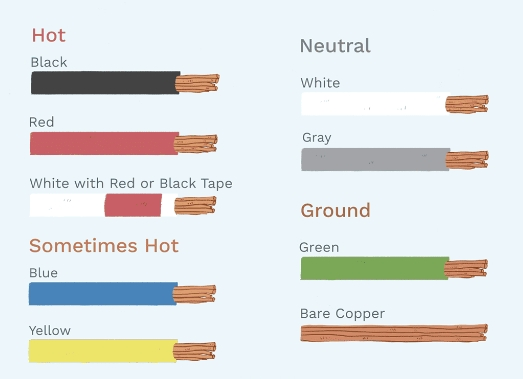
12-gauge copper wiring is the workhorse of modern residential wiring. If you open the walls of a home built in the last twenty years, the vast majority of the yellow-sheathed wire you see running to wall outlets is 12 AWG.
Maximum Ampacity: 20 Amps
Max Wattage Capacity (120V): 2,400 Watts
Corresponding Circuit Breaker: 20-Amp Breaker
Because 12-gauge wire is relatively flexible, it is easy to pull through conduit, route around studs, and bend into electrical boxes.
Typical Applications for 12 AWG
If you are wondering which wire gauge is best for household outlets, 12 AWG is usually your answer. It is predominantly used for:
Standard 120-volt wall receptacles (outlets) in living rooms and bedrooms.
Kitchen countertop outlets (which are required by the NEC to be 20-amp dedicated circuits for high-draw appliances like microwaves and blenders).
Bathroom outlets (for hair dryers and curling irons).
Outdoor weatherproof receptacles.
General lighting circuits in newer homes.
10 Gauge Wire: Specs, Best Uses, and Limits
10-gauge wire is significantly thicker, stiffer, and slightly more expensive than 12-gauge wire. Because of its increased diameter, it has a higher ampacity rating, making it the go-to choice for heavy-duty appliances that draw a massive amount of power.
Maximum Ampacity: 30 Amps
Max Wattage Capacity (240V): 7,200 Watts
Corresponding Circuit Breaker: 30-Amp Breaker
Working with 10 AWG requires a bit more effort. The wire gauge differences mean 10-gauge is harder to bend and takes up more physical space inside a junction box.
Typical Applications for 10 AWG
What is 10 gauge wire used for? It is almost exclusively reserved for dedicated 240-volt or high-amperage 120-volt circuits powering large motors or heating elements, such as:
Electric water heaters.
Electric clothes dryers.
Central air conditioning condensers.
Large shop tools (like heavy-duty table saws or air compressors).
RV hookup outlets.

Side-by-Side Comparison: 10 Gauge vs. 12 Gauge Wire Amp Rating
To make your electrical wire sizes explained simply, here is a direct comparison of the two wire types based on standard copper wiring:
Feature | 12 Gauge Wire (12 AWG) | 10 Gauge Wire (10 AWG) |
Wire Thickness | Thinner (0.0808 inches) | Thicker (0.1019 inches) |
Max Safe Ampacity | 20 Amps | 30 Amps |
Required Breaker Size | 20 Amps | 30 Amps |
Common Use | Household outlets, lights | Dryers, water heaters, AC units |
Flexibility | Highly flexible, easy to route | Stiff, harder to bend |
Jacket Color (NM-B) | Yellow | Orange |
Understanding the base limits of 10 and 12 AWG is essential, but real-world factors like temperature and insulation type can affect these numbers. If you need to determine the exact safety margin for your specific setup, you can use our Ampacity Calculator to get instant, precise results.
(Note: The jacket colors refer to standard non-metallic sheathed cable, commonly known as Romex, manufactured after 2001).

Key Factors When Choosing Your Wire Size
Choosing between a 10 gauge and 12 gauge wire comparison isn't a matter of preference; it is a matter of physics and code compliance. Here are the distinct factors that dictate which wire you must use.
1. Ampacity and Circuit Breakers (The Golden Rule)
The most critical rule in residential wiring is that your circuit breaker size must never exceed your wire's ampacity limit.
A circuit breaker is designed to trip and cut the power if the circuit draws more electricity than the wiring can handle.
Can I use 12 gauge wire on a 20 amp circuit? Yes, this is the exact intended use case for 12 AWG wire.
Can I use 12 gauge wire on a 30 amp circuit? Absolutely not. If an appliance pulls 28 amps on a 30-amp breaker, the breaker will not trip. However, the 12-gauge wire (rated for only 20 amps) will overheat, melt its insulation, and likely cause a fire.
Conversely, you can use thicker wire on a smaller breaker. Using 10-gauge wire on a 20-amp breaker is perfectly safe (the breaker will trip at 20 amps, well before the 30-amp limit of the 10-gauge wire). It is just more expensive and harder to install.
2. Voltage Drop Over Long Distances
Electricity loses a bit of its "push" (voltage) as it travels over long distances due to the natural resistance of copper wiring. This is known as voltage drop. The NEC recommends a maximum voltage drop of 3% for optimal efficiency.
If you are running a 20-amp circuit to a detached garage 150 feet away, standard 12-gauge wire will experience too much voltage drop, which can damage motors in power tools or appliances. In this scenario, you must "up-size" the wire. You would use 10-gauge wire for that 20-amp circuit simply to combat the voltage drop over the long distance.
3. Understanding Romex Cable Types: 10/2 vs. 12/2
When shopping for wire, you will usually buy non-metallic (NM-B) sheathed cable, commonly referred to by the brand name Romex. You will see labels like 10/2 or 12/2.
The difference between 10/2 and 12/2 Romex wire lies in the thickness of the conductors inside the sheathing:
The first number is the wire gauge (10 or 12).
The second number is the number of current-carrying conductors inside the jacket (usually a black "hot" wire and a white "neutral" wire).
(Note: The bare copper ground wire is included but not counted in that second number).
A 10/2 cable contains 10-gauge wires and is used for 30-amp, 240-volt circuits that don't require a neutral. A 12/2 cable contains 12-gauge wires and is the standard for 20-amp, 120-volt household circuits.
Is It Safe to Mix 10 and 12 Gauge Wire?
A common question during home renovations is: Is it safe to mix 10 and 12 gauge wire?
The technical answer is yes, but only under very strict conditions. You can splice a 12-gauge wire onto a 10-gauge wire only if the circuit breaker protecting that entire line is 20 amps. The lowest-rated wire in the circuit dictates the maximum breaker size.
If you have a circuit with both 10-gauge and 12-gauge wire, and you put it on a 30-amp breaker, you have created a severe fire hazard. The 12-gauge section of the wire could overheat and catch fire before the 30-amp breaker ever registers a problem. Because mixing gauges can cause dangerous confusion for future homeowners or electricians, it is highly discouraged as a general practice.
Conclusion: Making the Right Call for Your Electrical Project
When choosing between 10 gauge vs 12 gauge wire, let the appliance's power draw and the circuit breaker size make the decision for you.
For standard household power—like running vacuums, kitchen appliances, and living room lamps—12 gauge wire paired with a 20-amp breaker is your standard, code-compliant choice. When you move up to major appliances that generate heat or utilize heavy motors—like dryers and water heaters—you must step up to the thicker, 30-amp rated 10 gauge wire.
Always remember that electrical codes exist to prevent house fires. If you are ever unsure about ampacity, circuit loads, or voltage drops, consult the National Electrical Code or hire a licensed electrician to ensure your project is completed safely.
FAQ about 10 Gauge Vs 12 Gauge Wire
What is 10 gauge wire used for?
10-gauge wire is primarily used for heavy-duty, high-draw appliances that require up to 30 amps of power. Common residential uses include electric water heaters, clothes dryers, large central air conditioning units, and heavy shop machinery.
Can I use 12 gauge wire on a 20 amp circuit?
Yes. 12-gauge copper wire is rated for a maximum of 20 amps. Pairing 12 AWG wire with a 20-amp circuit breaker is the standard configuration for modern residential kitchen, bathroom, and general living space receptacles.
Which wire gauge is best for household outlets?
For standard 120-volt household outlets, 12-gauge wire is considered the best and most modern standard. While older homes may use 14-gauge wire (rated for 15 amps), 12-gauge provides a 20-amp capacity, which easily handles modern power demands like hair dryers, microwaves, and space heaters without tripping the breaker.
Is it safe to mix 10 and 12 gauge wire?
It is physically possible but generally discouraged. If you must mix them, the circuit breaker size must match the lowest-rated wire in the chain. Therefore, if you mix 10 and 12 gauge wire on the same circuit, the breaker cannot be larger than 20 amps. If you use a 30-amp breaker, the 12-gauge wire becomes a severe fire hazard.
Can I use 10-gauge wire on a 20-amp breaker?
Yes, it is perfectly safe to use thicker wire (10-gauge) on a smaller breaker (20-amp). This is often done purposely to prevent voltage drop over very long wiring runs (e.g., over 100 feet). However, the wire is stiffer and more difficult to fit into standard 20-amp receptacles.


Choosing the right wire gauge for a project always makes me double-check amperage and distance — I recently wired a shed and went with 12 gauge for the outlets, but for lighting, 14 would've been fine. It’s a lot like figuring out your way around a sweepsusa casino — you have to match the tool to the job, and one size definitely doesn't fit all. I’m still not sure if I should've used 10 gauge for the longer run, though — anyone else ever second-guess their wire choice after the walls are closed up?
Trong quá trình mình trải nghiệm MB88 liên tục, mình nhận thấy cách phân bổ các danh mục khá hợp lý, bắn cá, đá gà và casino live được hiển thị rõ ràng theo từng nhóm chức năng giúp việc truy cập diễn ra nhanh hơn, mình thấy giao diện được tối ưu theo hướng đơn giản nên người dùng dễ làm quen ngay từ lần đầu, trong lúc sử dụng thì tốc độ phản hồi khá đều, thao tác điều hướng giữa các phần diễn ra trơn tru nên trải nghiệm tổng thể khá thuận tiện
Mình dành thời gian tìm hiểu S8 dưới góc nhìn về khả năng điều hướng và cảm thấy các bước thao tác được rút gọn khá nhiều. Sau khi truy cập, mình có thể tiếp cận nhanh các mục như xổ số, game bài, casino live và thể thao mà không cần mở quá nhiều lớp giao diện. Cấu trúc hiển thị rõ ràng giúp mình tiết kiệm thời gian tìm kiếm. Trong quá trình sử dụng, việc chuyển đổi giữa các khu vực diễn ra tương đối mượt và duy trì sự liền mạch. Điều này tạo cảm giác thuận tiện khi muốn khám phá nhiều nội dung liên tiếp trên cùng hệ thống
Khi mình dành thời gian so sánh nhiều nền tảng giải trí trực tuyến với nhau, ko66 tạo cho mình ấn tượng khá tích cực về khả năng tổ chức bố cục. Các danh mục như game bài, casino trực tuyến, đá gà, thể thao và bắn cá được phân chia khoa học giúp việc tìm kiếm từng khu vực không mất nhiều thời gian. Theo quan sát của mình, giao diện duy trì được sự thông thoáng nên trải nghiệm kéo dài vẫn khá dễ chịu. Trong lúc thử game bài và đá gà, tốc độ tải có vẻ ổn định, thao tác chuyển chuyên mục diễn ra khá mượt nên cảm giác sử dụng nhìn chung khá thuận tiện
Có thời điểm tôi thử sử dụng ko66 với mục đích quan sát cách nền tảng cập nhật dữ liệu giữa các chuyên mục. Các khu vực thể thao, casino live, game bài, nổ hũ, bắn cá, đá gà, xổ số cùng thông tin khuyến mãi đều được làm mới khá đều và trình bày theo bố cục dễ quan sát. Trong quá trình trải nghiệm, giao diện phản hồi nhanh, tốc độ tải trang ổn định và thao tác điều hướng diễn ra tự nhiên. Điều này giúp người dùng theo dõi nội dung thuận tiện hơn, đồng thời tạo cảm giác sử dụng mượt mà dù chuyển đổi liên tục giữa nhiều khu vực khác nhau